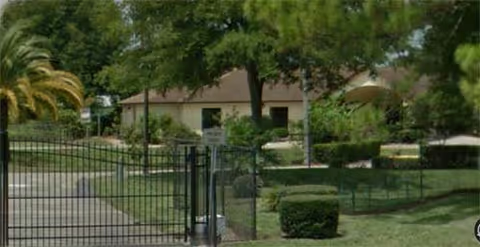
The Gardens Health and Rehab Center elicits strongly polarized impressions. Many families and patients praised clinical strengths: a highly regarded wound-care team, robust physical and occupational therapy programs that often produce measurable functional gains, and numerous individual staff members (nurses, CNAs, therapists, and certain administrators) who are described as compassionate and attentive. The facility's exterior, courtyard and some common areas are frequently described as clean and welcoming, and several accounts highlight effective coordination for transportation, discharge planning and therapy-related follow-up.
At the same time, there is a recurring pattern of operational weaknesses that families flagged. Staffing levels and skill mix appear inconsistent across shifts: daytime therapy and nursing coverage often receives positive comments, while overnight and later shifts are described as understaffed or less responsive. This uneven staffing correlates with delays in assistance response times, slow attention to urgent needs, and inconsistent implementation of care plans. Several reviews cite missed or delayed medications and other coordination gaps between clinical staff and pharmacy or families.
Dining and nutrition are another mixed area. Some reviewers note improvements and acceptable meals, but others cite inconsistent food quality and failure to adhere to prescribed diets (for example, diabetes-specific meal requirements). Nutritionist involvement is perceived as variable. Families frequently say they bring supplemental foods or medications from home to ensure continuity.
Facility- and equipment-related issues appear in multiple accounts. While the grounds and some public areas are well maintained, interior conditions and equipment are described as uneven: peeling paint, holes in walls, aging beds and medical equipment, and occasional shortages of basic supplies. Sanitation and incontinence-care concerns are raised repeatedly, as are specific gaps in catheter and ostomy care training and supply availability. Noise control—especially persistent televisions and nighttime disturbances—is another environmental complaint.
Management and communication patterns are mixed. Several reviews commend responsive administrators, a supportive director of nursing and staff who engage families; other accounts describe poor phone etiquette, limited communication about plans of care, and instances where families felt they had to advocate vigorously to secure appropriate attention. Documentation and written treatment plans are sometimes absent or inconsistent, and discharge medication coordination has been a point of friction. A subset of reviews also raise administrative concerns such as billing irregularities and insurance-switch confusion.
Notable patterns to weigh: the facility shows clear operational strengths around wound care and rehabilitative therapy, and many individual staff deliver commendable, family-centered care. However, recurring themes—shift-to-shift inconsistency, response-time delays, medication and documentation gaps, sanitation and supply shortages, and variable management follow-through—indicate areas of systemic vulnerability. Prospective residents and families should consider visiting at different times of day, observing multiple shifts, asking for written care and medication plans, and clarifying dietary and supply responsibilities before admission. If clinical complexity or high acuity care is needed, families may want to confirm physician/APRN engagement and on-site clinical oversight in advance.