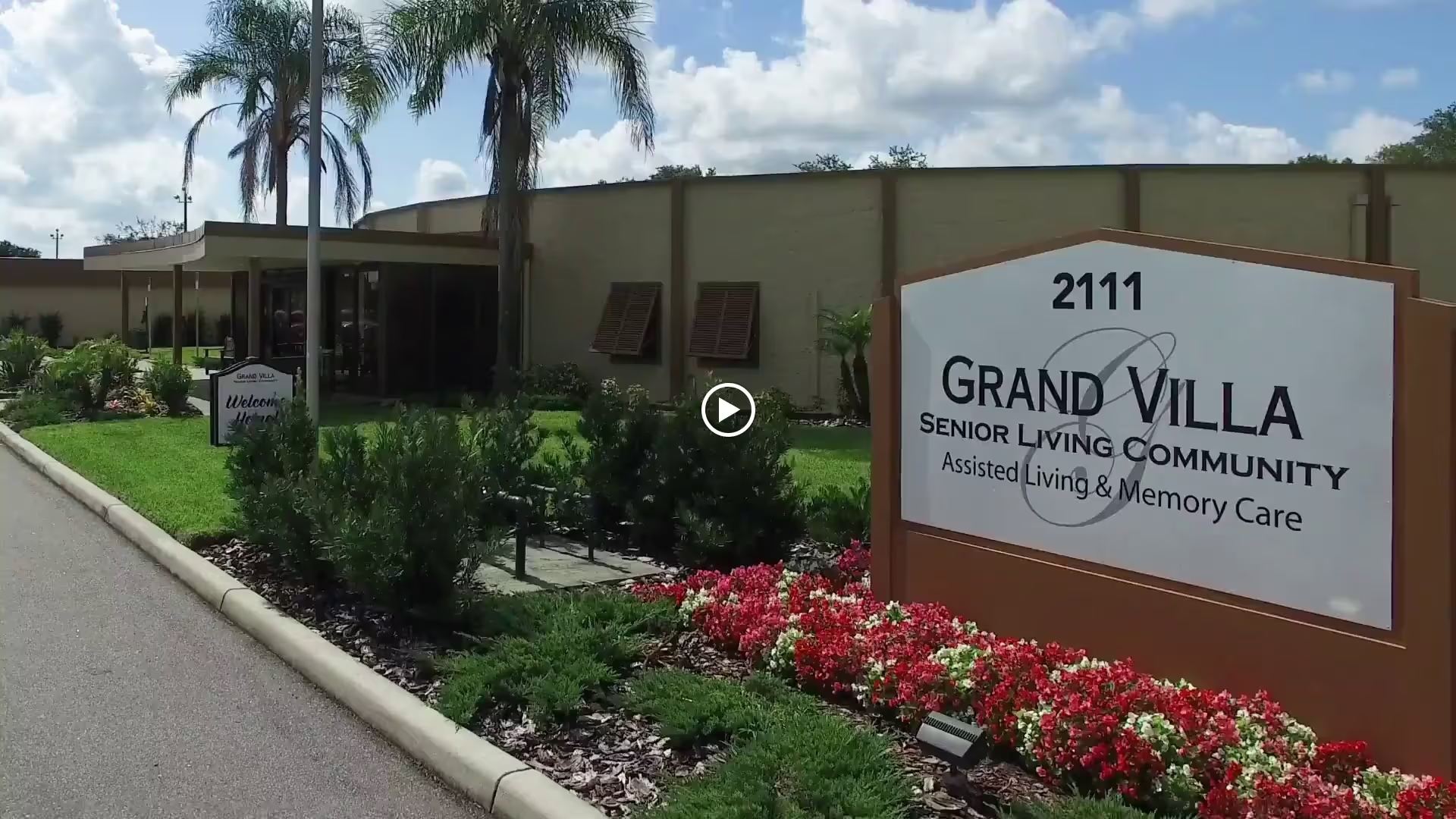
Overall sentiment across the provided review summaries is mixed and notably polarized. Several reviewers describe Sunshine Manor as a small, family-like assisted living that feels like a group home, with a caring owner/manager and staff who focus on residents’ comfort. Those positive reports highlight a clean, pleasant-smelling facility, flexibility to accommodate individual needs, pet-friendly visitation, and specific praise for dining (Ram the cook) and for care of an Alzheimer’s resident. Conversely, other reviewers express strong dissatisfaction: calling the facility the "worst ALF," citing unprofessional or rude staff, temper issues, locked doors, bad smells, and allegations that care is motivated more by money than residents' well-being. There are also claims that residents have left because of how they were treated and suggestions that positive reviews may have been manipulated.
Care quality: Positive summaries emphasize resident-focused care, accommodating staff, and a familial atmosphere where loved ones felt at home. One summary specifically notes good care for an Alzheimer's patient, which suggests staff capability with memory-care needs in at least some cases. However, these positives are tempered by equally strong criticisms that suggest inconsistent quality — some reviewers felt mistreated or saw prioritization of revenue, and at least one reviewer gave an extremely negative overall judgment. The result is an unclear, uneven pattern of care quality that appears to vary by experience and possibly by time or personnel on duty.
Staff and management: Multiple reviewers praise the owner/manager as loving and caring, and others describe staff as attentive and having residents' best interests at heart, creating a family-like environment. At the same time, other reviewers report unprofessional or rude interactions, staff with temper problems, and concerns that staff decisions may be financially motivated. The juxtaposition of these perspectives points to significant variability in staff performance or differences in individual expectations and interactions. Additionally, the allegation of review manipulation raises questions about transparency and reliability of the public feedback available for the facility.
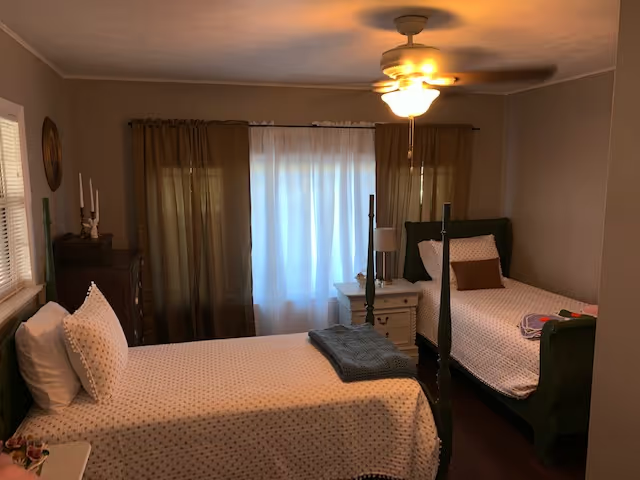
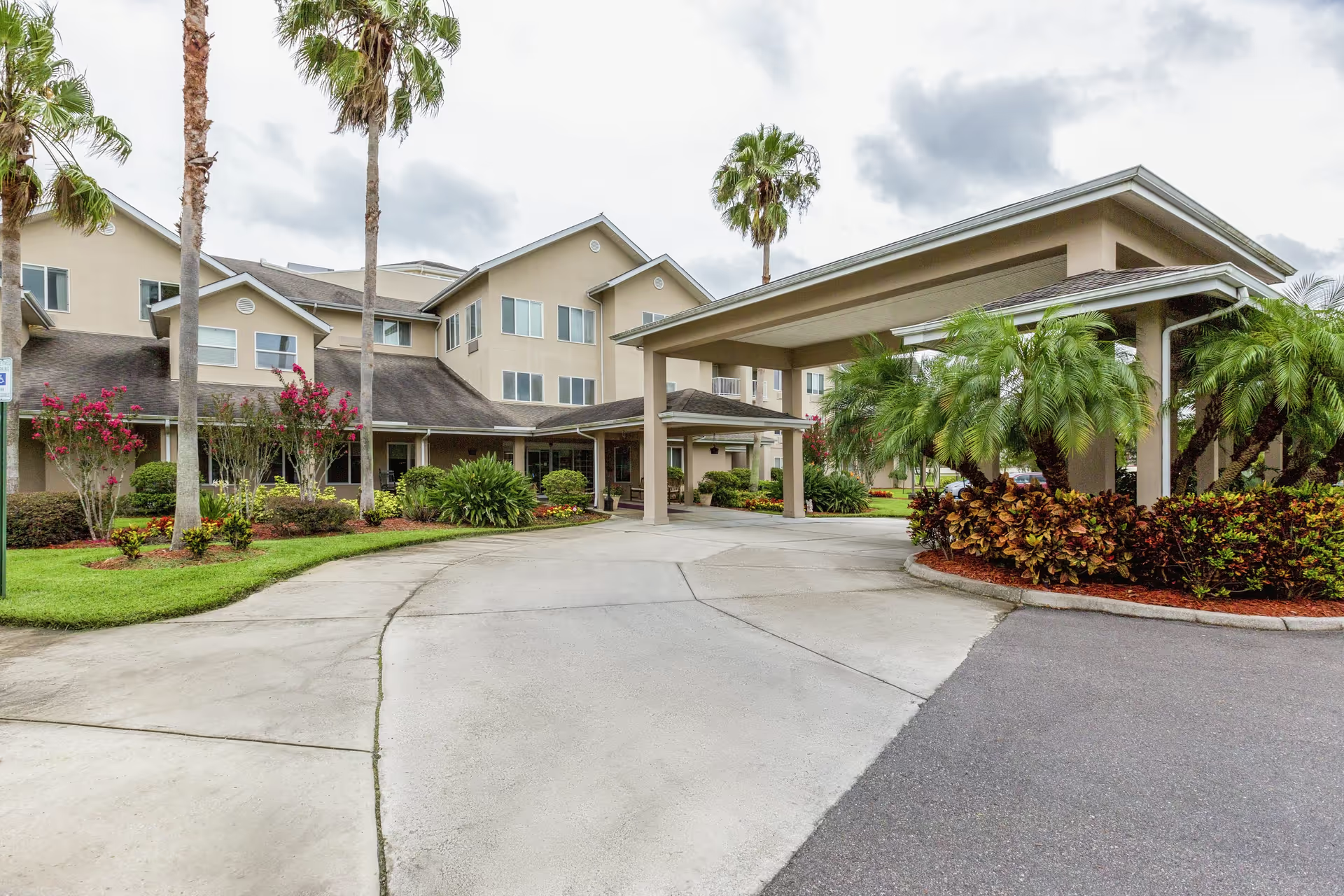
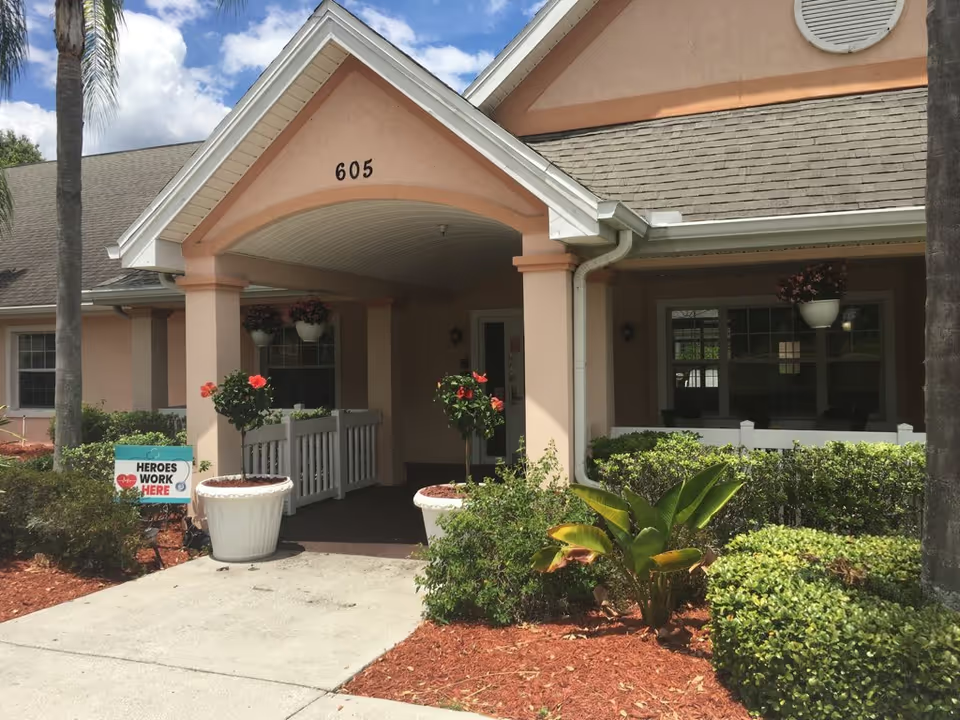
Facilities and safety: Some reviewers report the facility is clean and smells good, while others report bad odors — indicating inconsistent upkeep or variable perceptions among reviewers. The repeated mention of "doors locked" is a concrete safety/access concern in the negative summaries; locked doors may be intended for resident safety but, as reported, can also create frustration or concerns about restrictive access. Pet-friendly visits are a clear positive for families who want animal interactions. Overall, the physical environment seems to receive both praise and criticism, again suggesting inconsistent experiences or changes over time.
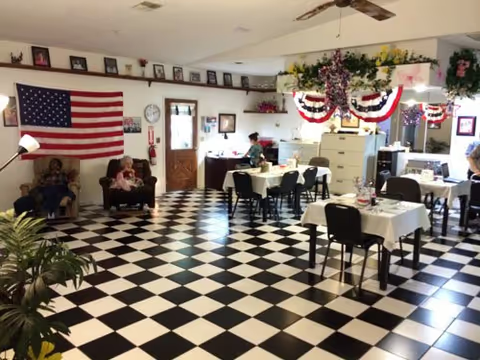
Dining and activities: The only explicit dining-related praise mentions a cook named Ram and favorable impressions of meals. There is little specific information about activities or therapeutic programming in the summaries; the phrase "group home atmosphere" implies more intimate, possibly less institutional activities, but details are lacking. Prospective residents should request specifics about daily schedules, recreational and cognitive activities, and dietary accommodations during a visit.
Notable patterns and concerns: The dominant pattern is polarization — many strongly positive comments contrasted with very strong negative reports. This could reflect changes in management/staffing over time, differing expectations among families, isolated incidents versus systemic problems, or potential bias in how reviews were posted (the allegation of review manipulation is particularly important to note). The presence of both high praise for individualized, Alzheimer’s-competent care and accusations of money-driven, unprofessional treatment suggests that experiences may depend heavily on which staff members are working, specific units or rooms, or temporal factors.
Given this mixed picture, anyone considering Sunshine Manor should undertake careful due diligence: schedule multiple visits at different times of day, meet the owner/manager and direct-care staff, observe meal times and common areas, inquire about staffing ratios and turnover, ask for references from current families (especially those with memory-care needs), and request written policies on admission, locked-door procedures, behavior management, and fees. Also ask how the facility handles complaints and whether there have been recent staffing or management changes. The reviews contain both credible, specific praise (family-like care, a good cook, accommodating staff, and successful Alzheimer’s care in at least one case) and significant red flags (rudeness, temper issues, access/locked-door concerns, odor problems, and claims of financially driven care or manipulated reviews). These mixed signals warrant in-person assessment and direct follow-up with current residents’ families before making placement decisions.