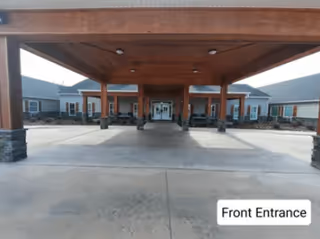
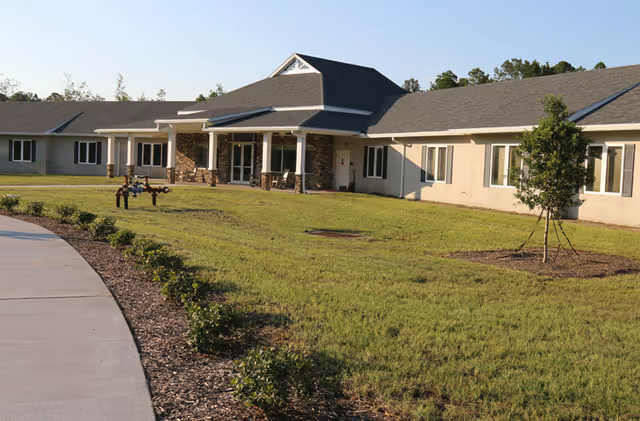
Reviews present a strongly mixed picture: many families and residents characterize Addington Place of Brunswick as a warm, attractive community with an active social program and attentive caregivers, while others describe operational gaps that affected clinical safety and family trust. The property and common areas are frequently praised as clean, house-like, and well maintained, with landscaped grounds, an enclosed garden/patio, single-level common spaces, and amenities such as on-site beautician services and live entertainment. There is consistent positive commentary about social programming, a variety of activities, and a sense of neighborhood and belonging in the memory-care neighborhood.
Care quality is described in polarized terms. Positive accounts highlight personalized attention, compassionate CNAs, helpful nursing staff, and a transition process that put some residents at ease. However, a recurring pattern of clinical concerns appears in multiple accounts: delayed responses to call bells, inconsistently completed two-hour/night checks, a pattern of falls and fall-related injuries, and lapses in medication administration for some residents. There are also several remarks about the facility’s handling of hospice and end-of-life coordination that indicate opportunities for clearer processes and timelier family communication.
Staff are often described as warm, engaged, and resident-focused; specific employees are repeatedly commended for going above and beyond. At the same time, reviewers frequently note staffing shortages, especially on nights and weekends, and high staff turnover. Those operational staffing issues are tied in the reviews to delayed responses, incomplete monitoring rounds, and variable skills among on-shift caregivers. Management receives mixed feedback: some families find administrators approachable and responsive, while others describe inconsistent leadership, limited follow-through on inquiries, and perceived inexperience among operational managers.
Dining and household services elicit both praise and critique. Several reviewers commend the dining program for good variety and fine-dining presentation, while others report a perceived decline after a change in food-service provider. Housekeeping and laundry are generally included in the monthly fee and are appreciated, although a number of families reported lost laundry or inventory concerns.
Communication and business practices are a notable area of concern. Multiple accounts describe delays or failures in communicating incidents to families, disputes over billing and accounting entries, and difficulties obtaining itemized inventories or tracking for resident possessions. Those issues have led some families to escalate concerns and, in a few cases, to move residents to other providers. Reviewers advise scrutiny of billing practices, documented incident-reporting procedures, and policies for resident property accountability.
Notable patterns: (1) strong community and activity strengths coexisting with operational weaknesses; (2) consistent praise for specific caregiving staff alongside reports of staffing instability; and (3) clinical-safety themes tied to monitoring, fall prevention, and medication administration. For prospective residents and families, the reviews suggest confirming current staffing ratios and turnover, asking for written protocols on monitoring and fall prevention, reviewing medication-administration policies, clarifying hospice coordination and incident-notification timelines, and requesting sample billing statements and inventory procedures before admission. Overall, Addington Place of Brunswick offers many community and lifestyle strengths but also presents measurable operational risks that families should evaluate relative to a prospective resident’s clinical needs.