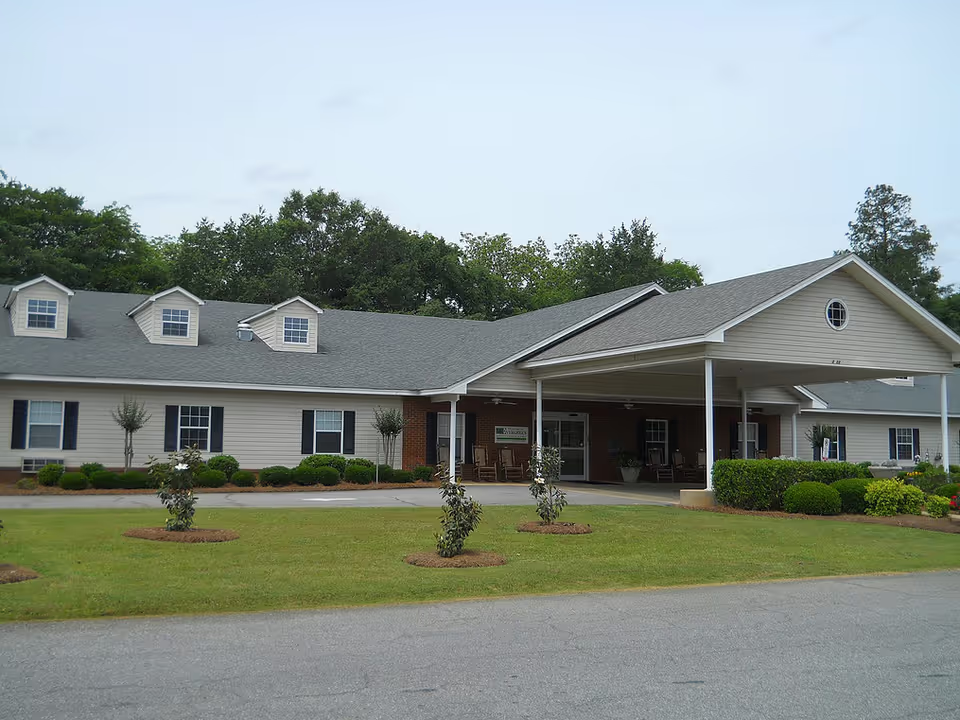
Overall impression The Oaks at Oakland Plantation is consistently described as a modern, well‑maintained senior community with a strong emphasis on social programming and resident engagement. Reviewers highlight a compassionate, family‑oriented staff and knowledgeable admissions/tour personnel who make initial visits positive and informative. The campus offers many built‑in amenities—movie/theater spaces, salon/barbershop services, music and game rooms, exercise facilities, and on‑site rehabilitation and therapy—that support active lifestyles and functional recovery.
Care quality and staff Care and daily support are frequently characterized as attentive and capable, with on‑site nurses and therapy staff noted as strengths. Memory‑care programming is highlighted as a particular asset, with activity integration and physical access between assisted living and memory care cited positively. At the same time, a pattern of variable staff continuity and occasional lapses in responsiveness emerges in several comments; families describing strong, consistent relationships with staff coexist alongside accounts of rushed or unfamiliar personnel. There are also concerns about clinical oversight systems and medication‑management controls; these are reflected in remarks about past medication errors and related family anxiety. Isolated allegations of missing personal items have been raised and point to the need for clearer asset‑protection processes.
Dining and activities The community offers a broad schedule of activities—arts and crafts, movies, choirs, outings, devotions, and seasonal events—and many reviewers praised the activities coordinator and the sheer variety of programming. Dining is described as restaurant‑style and flexible, and many found meals attractive and well presented. However, perceptions of food quality are mixed: some residents and families found meals plain or not consistently strong, and several noted pricing concerns relative to perceived value.
Facilities and layout The built environment is widely praised: newer construction, landscaped grounds, and thoughtfully appointed common areas create a comfortable atmosphere. One‑bedroom apartments and larger units receive positive comments for space and layout. Conversely, studio units are described as compact with limited in‑room amenities, and some floor plans place apartments at a substantial distance from dining and shared areas—an accessibility consideration for residents with limited mobility.
Management and operational patterns Management and administrative responsiveness receive mixed feedback. Many reviewers commend specific staff and leaders for going above and beyond, while other comments indicate inconsistent leadership presence, spotty follow‑up, and occasional unprofessional communication. Cleanliness and housekeeping are usually described positively, but there are intermittent sanitation and odor concerns in some areas that prospective families should observe on a tour. Pricing is considered premium by some families relative to expectations of value.
What to watch for and questions to ask Prospective residents and families should weigh the strong social programming, therapy services, and amenity set against operational items that can affect day‑to‑day experience: inquire about staffing continuity, clinical oversight and medication‑management protocols, room‑security and lost‑item procedures, and the typical distance from prospective units to dining and activity spaces. Ask for current menus and sample activity calendars, and request references from recent families when possible.
Conclusion The Oaks presents as a resource‑rich, community‑oriented facility with many strengths in staffing compassion, therapy services, and recreational programming. Those positives are balanced by operational areas worth clarifying—particularly around staffing consistency, clinical controls, security of personal items, and unit layout—so targeted questions during a tour will help determine fit for an individual resident's needs.