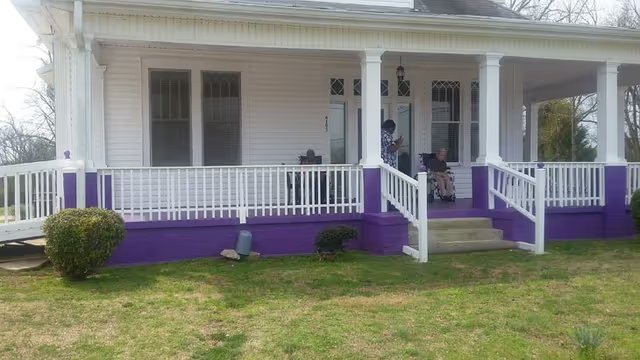
The Yellow Brick House presents as a family-owned assisted living and memory-care community with a long tenure in the local market. Many reviewers highlight strengths in daily caregiving: staff are described as caring, attentive, and person-focused, with frequent mentions of individual caregivers and a leadership team that is visible and engaged. The facility emphasizes dementia-focused care, monthly nurse-practitioner oversight for memory care, individualized activities, and a household feel for many residents. Several comments describe pleasant common spaces — a large dining room with murals, a porch with French doors, a courtyard and gardens — and a generally clean, comfortable environment.
Care quality is characterized by consistent praise for hands-on staff, direct resident engagement (walks, one-on-one activities), and coordinated end-of-life or hospice services. Families commonly cite good medication management under physician orders and helpful administrators who provide transition guidance. At the same time, reviewers point to operational pressures: staffing levels and workload are uneven at times, and management effectiveness is described as variable, which can lead to delays or uneven responsiveness. There are also isolated serious allegations about management of illness events and post-incident communication that prospective families should investigate directly with facility leadership and outside advocates.
Dining and activities are a mixed but generally positive area. Many reviewers appreciate home-style, nutritious meals, homemade desserts, and a strong dining-room atmosphere. Activity programming is noted to include piano, group exercises, craft or sensory items (maracas), and outings; however, activity frequency and the size of activity spaces appear uneven. Some families feel the facility is lively and community-oriented, while others find it too large for their loved one or that memory-care activity space is limited.
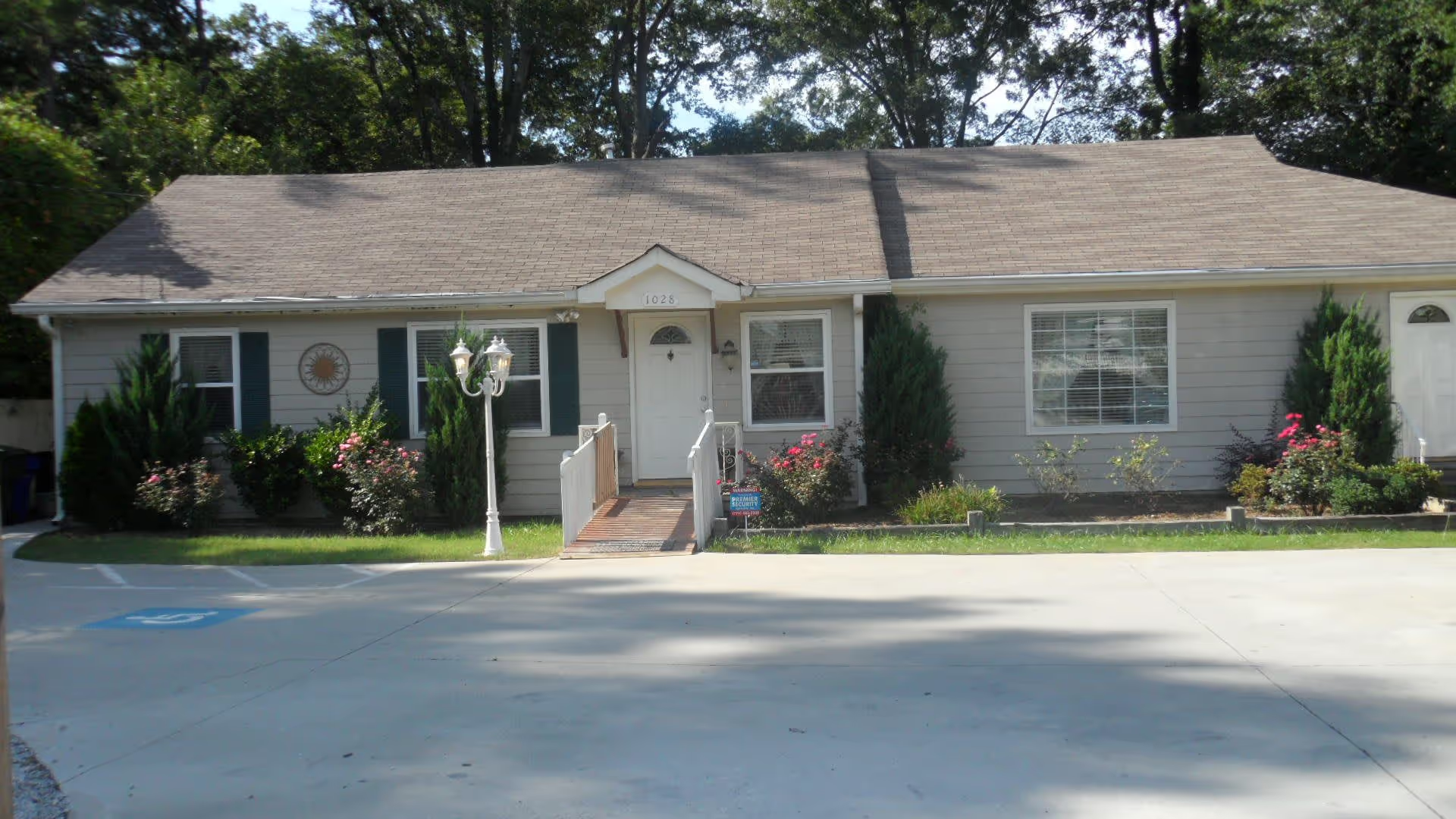
The physical plant elicits mixed impressions: the building has attractive features and is well maintained in many areas, but it is an older facility with a layout that some describe as institutional (long hallways, variable room sizes). Room configurations range from spacious studios to smaller, more clinical-feeling rooms. Prospective residents should tour multiple room types to assess fit and accessibility, and confirm policies such as scooter use and private-room availability.
Management and administration receive both praise and critique. Several reviewers commend an engaged director and owner who prioritize resident dignity and transitions. Conversely, there are recurring operational concerns: inconsistencies in staffing and communication, instances of pricing or billing that differ from initial quotes, occasional HR irregularities, and questions about the handling of belongings and financial matters. Infection-control transparency and policy consistency were also raised as areas needing clarification. These themes suggest variability in day-to-day operations rather than uniform failure.
Overall, Yellow Brick House appears to offer strong person-centered care, particularly for residents who benefit from memory-focused programming and a home-style environment. The primary cautionary patterns are operational: inconsistent staffing and managerial follow-through, variability in meal and activity delivery, and occasional administrative or transparency issues. Prospective families should schedule an in-person visit, request current staffing ratios and activity calendars, review billing and admission paperwork closely, ask about infection-control and ombudsman procedures, and meet clinical leadership to confirm how the facility’s stated practices align with individual care needs.