Hale Nani presents a mixed profile: many families and short-term rehabilitation patients describe attentive, compassionate care and strong therapy outcomes, while others report operational and consistency challenges that affect longer stays. The facility receives repeated praise for its physical, occupational, and speech therapy teams; rehabilitative programs are frequently credited with measurable mobility gains and restored independence. Recreation services are also a clear strength — an active recreation department runs daily engagement opportunities, group games, and social events that contribute positively to resident mood and engagement. Several reviewers singled out supportive social workers and admissions staff who facilitate transitions and communication.
Clinical and caregiving staff are often described as caring and personable, with a core of long‑tenured employees who foster close staff–resident relationships and continuity of care. At the same time, reviewers describe variability in staff responsiveness, tone, and attentiveness: common themes include delays answering call lights, variability in bathing, dressing, and toileting assistance, and occasional reports of missed medication or delayed clinical follow-up. These concerns point to inconsistent operational performance rather than a single type of failure — some units or shifts appear well managed while others are stretched thin.
Dining and nutrition receive mixed marks. Some residents and families report varied menus and satisfying meals; others note service problems (cold meals, oily or salty preparations, food sitting prior to service) and a desire for more fresh produce and vegetable options. Meal‑service continuity and temperature control are areas where operational improvements could reduce dissatisfaction.
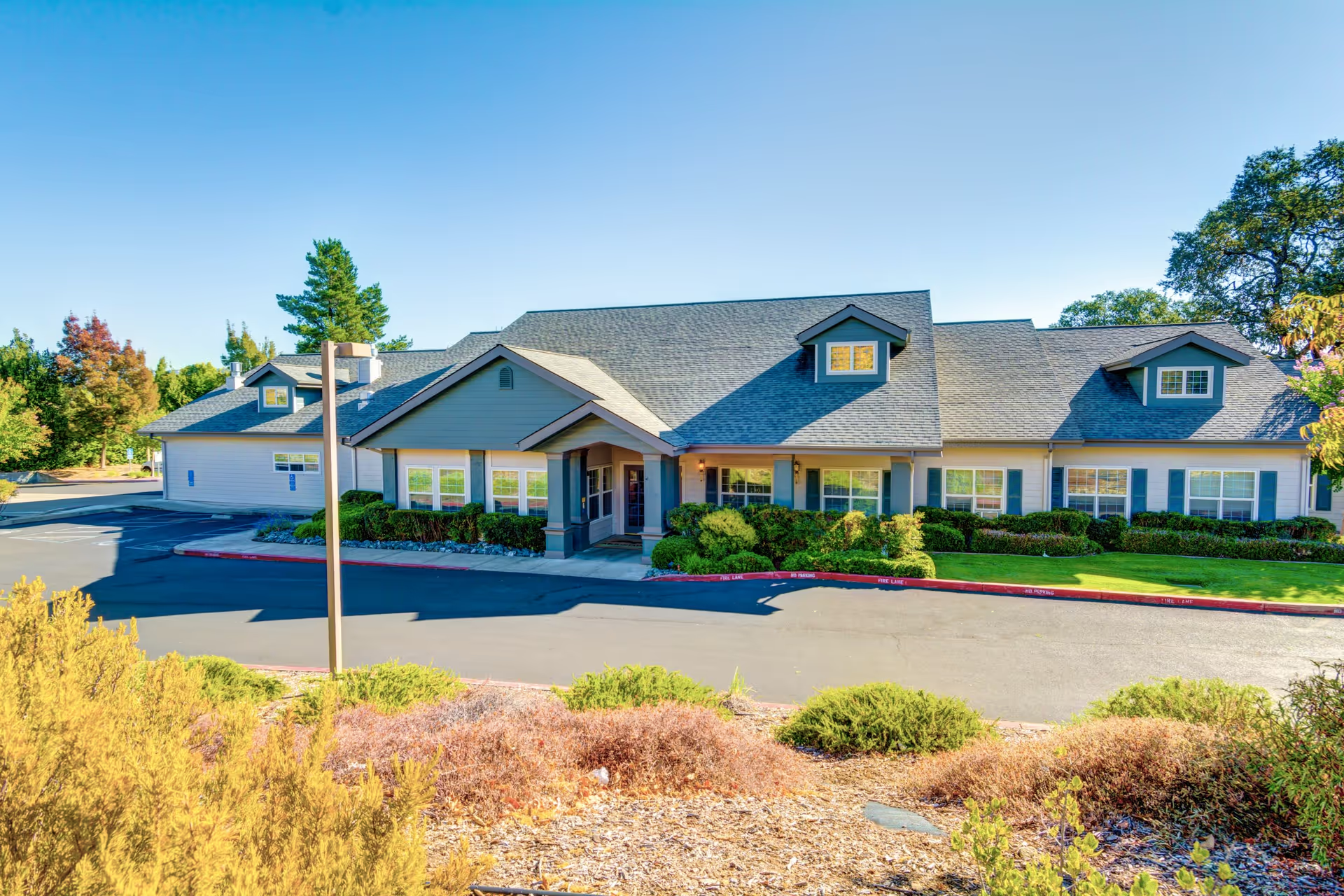
Facility condition and logistics are recurrent issues. Hale Nani is a relatively large, densely configured center with multiple‑occupancy rooms and limited private-room availability; reviewers describe crowded hallways and shared spaces that can be noisy and limit privacy. There are repeated references to aging infrastructure — worn beds, HVAC outages, vent or ventilation concerns, and needed renovations — as well as isolated maintenance lapses. Parking and access for visitors is another consistent logistical challenge, although a few recent management changes were credited with improvements by some families.
Management and communication are described in divergent ways. Some administrators and social workers receive strong praise for clear explanations, prompt outreach, and proactive problem solving; others are perceived as unresponsive or dismissive when concerns arise. That divergence contributes to polarized family experiences: excellent coordination and advocacy in some cases, and unresolved complaints or discharge disputes in others. Operational themes tied to patient safety include inconsistent equipment storage and supply practices and occasional transfer or equipment‑use concerns, suggesting opportunities to strengthen protocols and quality oversight.
In summary, Hale Nani appears to offer high-quality rehabilitative care and an engaged recreation program supported by many empathetic caregivers and experienced clinicians. Prospective residents or families should weigh those strengths against recurring operational weaknesses: inconsistent responsiveness, meal-service reliability, facility age and crowding, staffing pressures, and variability in management responsiveness. For short-term rehab stays the facility’s therapy and recreation strengths are likely to be beneficial; for longer-term placements, families may want to confirm unit staffing patterns, room assignment options, maintenance plans, and specific care protocols before admission.