Canyon West of Cascadia elicits a broadly mixed but clearable profile: many families and residents praise the hands-on care teams and the therapy-driven rehabilitation program, while a distinct set of operational and consistency issues recur across reviews. The facility's therapy staff (PT/OT/speech) and activity programming are frequent strengths; reviewers describe measurable progress in mobility and successful discharges home. Social work and case-management staff receive positive mention for coordination and family contact in many cases, and renovated areas and certain rooms are described as clean, accessible, and well-suited for medical equipment.
Clinical care quality is uneven. Numerous accounts highlight attentive nursing, effective wound care, and proactive therapists. At the same time, reviewers note inconsistent practices around medication and pain management, and a subset of serious clinical concerns has prompted allegations and calls for regulatory review. Nursing performance appears variable by shift and team: some families describe compassionate, communicative nurses, while others report lapses in follow-up and concerns about conduct and responsiveness.
Communication and staffing patterns are a prominent theme. Where dedicated staff members provide regular updates, families report satisfaction; where communication lapses occur, families report frustration—examples include difficulty reaching the facility by phone, welcome materials missing on admission, and calls about items perceived as lower priority while higher-priority matters go unaddressed. Staffing continuity is uneven, with reviewers noting understaffing at times, particular challenges on night shifts, and occasional leadership turnover that affects handoffs and team cohesion.
Dining and engagement are similarly polarized. The activities program is frequently singled out for creativity and resident engagement, including outdoor events and holiday programming. Dining receives mixed feedback: some reviewers praise the cooks and meal variety, while others describe small portions, slow service, limited between-meal snack availability, or occasional unappetizing offerings. Service timing and portion consistency appear to be operational areas needing attention.
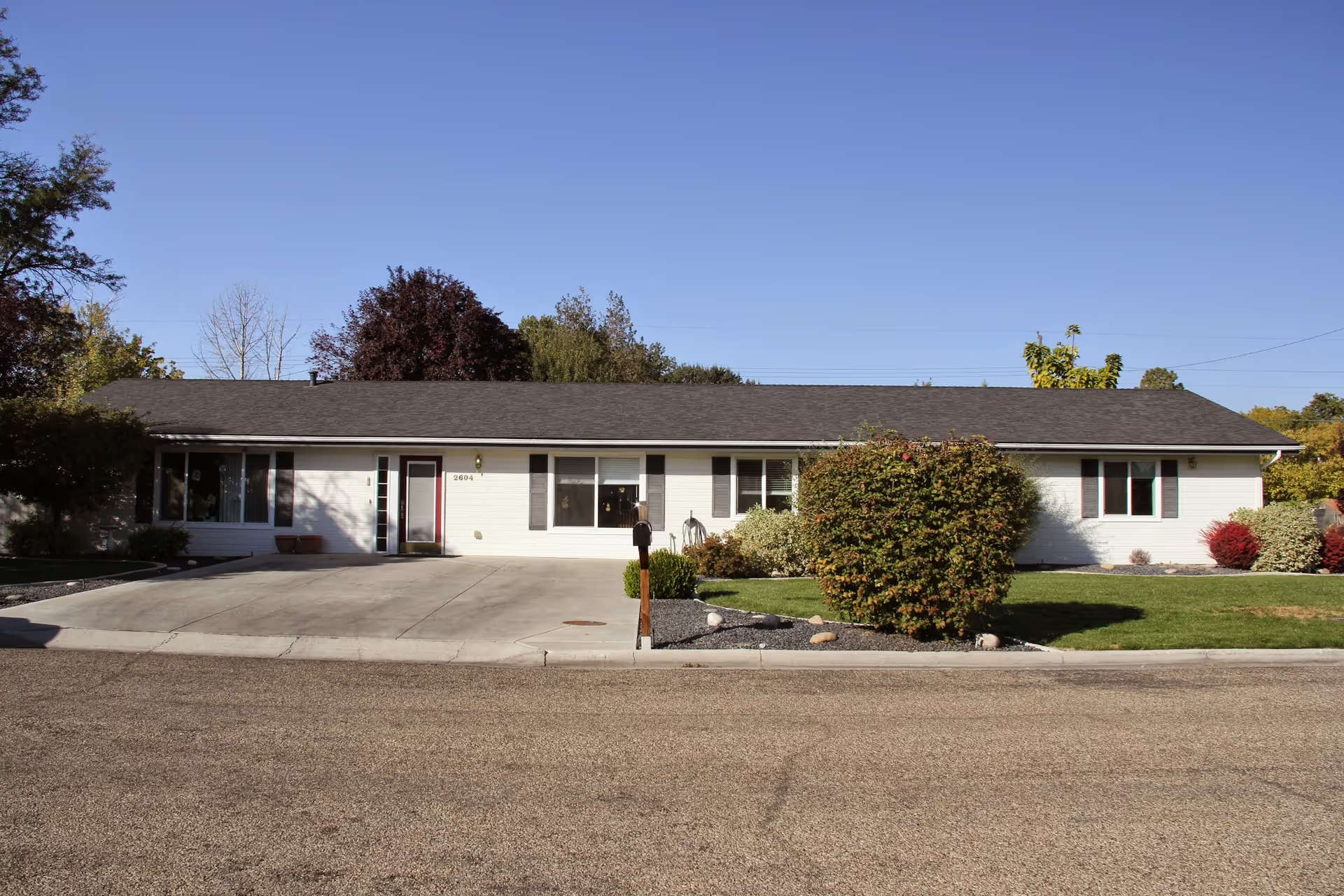
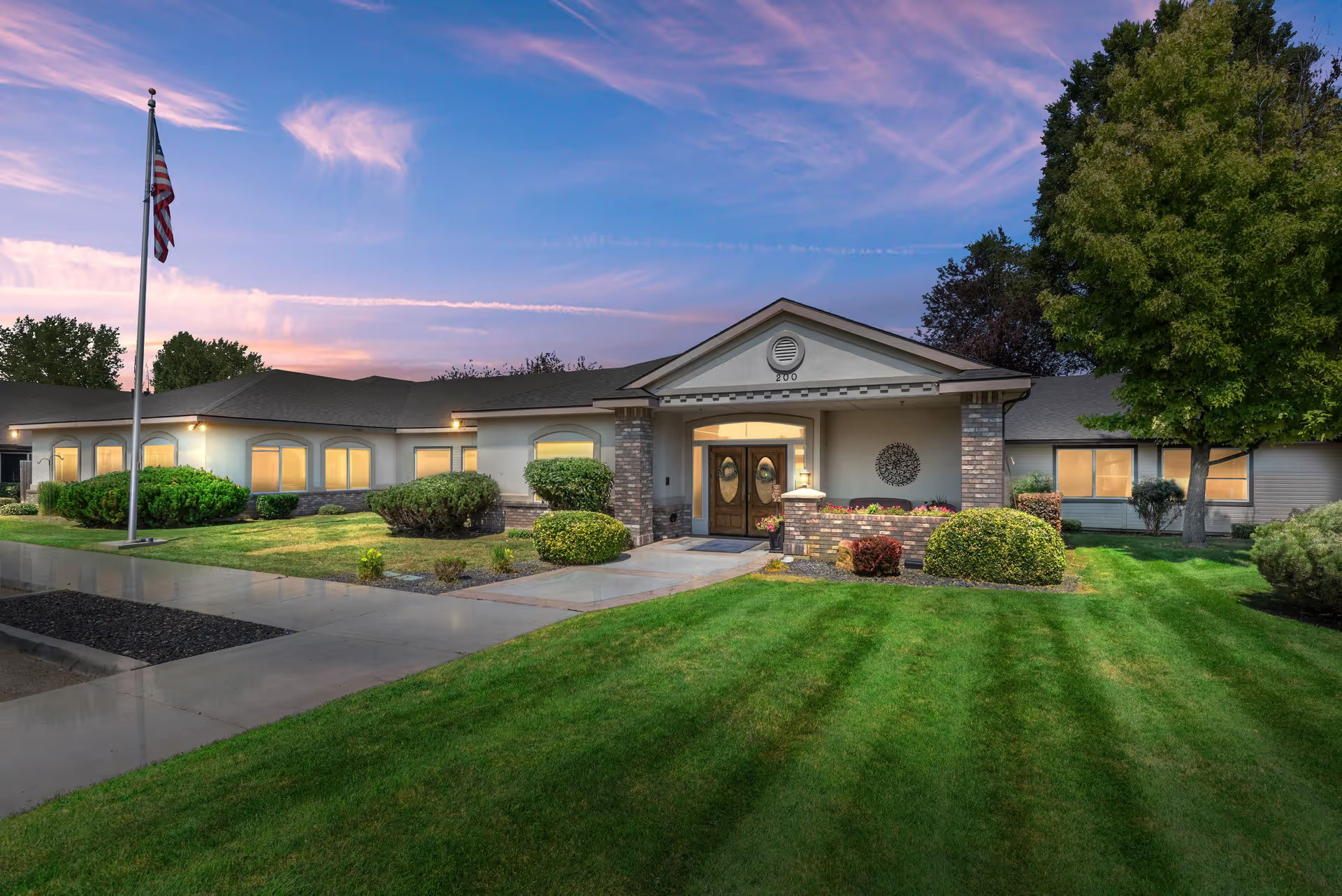
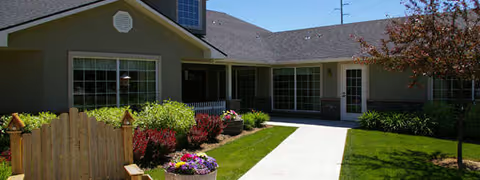
Facility condition and housekeeping vary by unit. Several reviewers commend recent remodels, shiny floors, and tidy rooms in renovated areas; others describe older sections, shared-room layouts, sticky floors, housekeeping lapses, and odor concerns in some common areas and bathrooms. Personal-effects management and laundry tracking have been identified as recurrent operational weaknesses (missing clothing, inconsistent labeling).
Management and admissions show strengths and weaknesses. Admissions and some leadership figures are described as helpful and personable, and new ownership/renovation activity has improved several aspects. Conversely, reviewers cite missing admission materials, uneven welcome procedures, and unclear incident-reporting pathways. Taken together, Canyon West of Cascadia demonstrates strong rehabilitation and relationship-focused caregiving in many cases, but prospective residents and families should weigh those strengths against documented variability in communication, staffing consistency, environmental maintenance, and certain clinical-process areas. A site visit focused on current staffing patterns, medication and incident-reporting protocols, dining samples, and housekeeping practices is recommended to assess how recent improvements have addressed the noted concerns.