Paul House and Healthcare Center elicits a wide range of experiences. Positive accounts concentrate on the facility’s hands-on caregivers and rehabilitative services: many families praise compassionate CNAs and attentive nursing, accessible social work, and a rehabilitation team that includes highly regarded occupational and physical therapists. The newer rehab wing and larger private rooms receive specific commendation, and reviewers cite smooth transitions from hospitals and prior facilities, effective hospice coordination, and helpful Spanish-speaking staff as practical strengths.
Staffing and culture are frequently described as mission-driven, with several long-tenured employees and leadership members singled out for strong, personal communication and family outreach. These strengths underpin many families’ trust in daily care, wound management, and therapy outcomes. Therapy-led activities and motivated therapists are a recurrent positive, and common spaces such as a large dining room, spacious lobby and chapel contribute to a comfortable environment for some residents.
However, reviewers also describe variability in core operational areas. Administrative responsiveness and communication are inconsistent: while some families report direct lines to executive leadership and thorough outreach, others experienced unanswered calls, delayed callbacks, and unease about ownership or leadership changes. Staffing patterns contribute to uneven care; frequent use of agency staff and periods of understaffing were linked to slower response times and a perception of reduced continuity.
Clinical and environmental concerns appear as recurring themes. Several accounts cite inconsistent medication administration, missed medications, or gaps in clinical follow-up (for example, delayed imaging or therapy). Sanitation and odor concerns, pest-control issues, and the need for building repairs were reported in some units, contrasting with other reviewers who called the facility very clean. Dining quality is similarly mixed: many families describe above-average meals, while others cite cold food, seasoning problems, or inconsistent meal service and occasional pest-control observations.
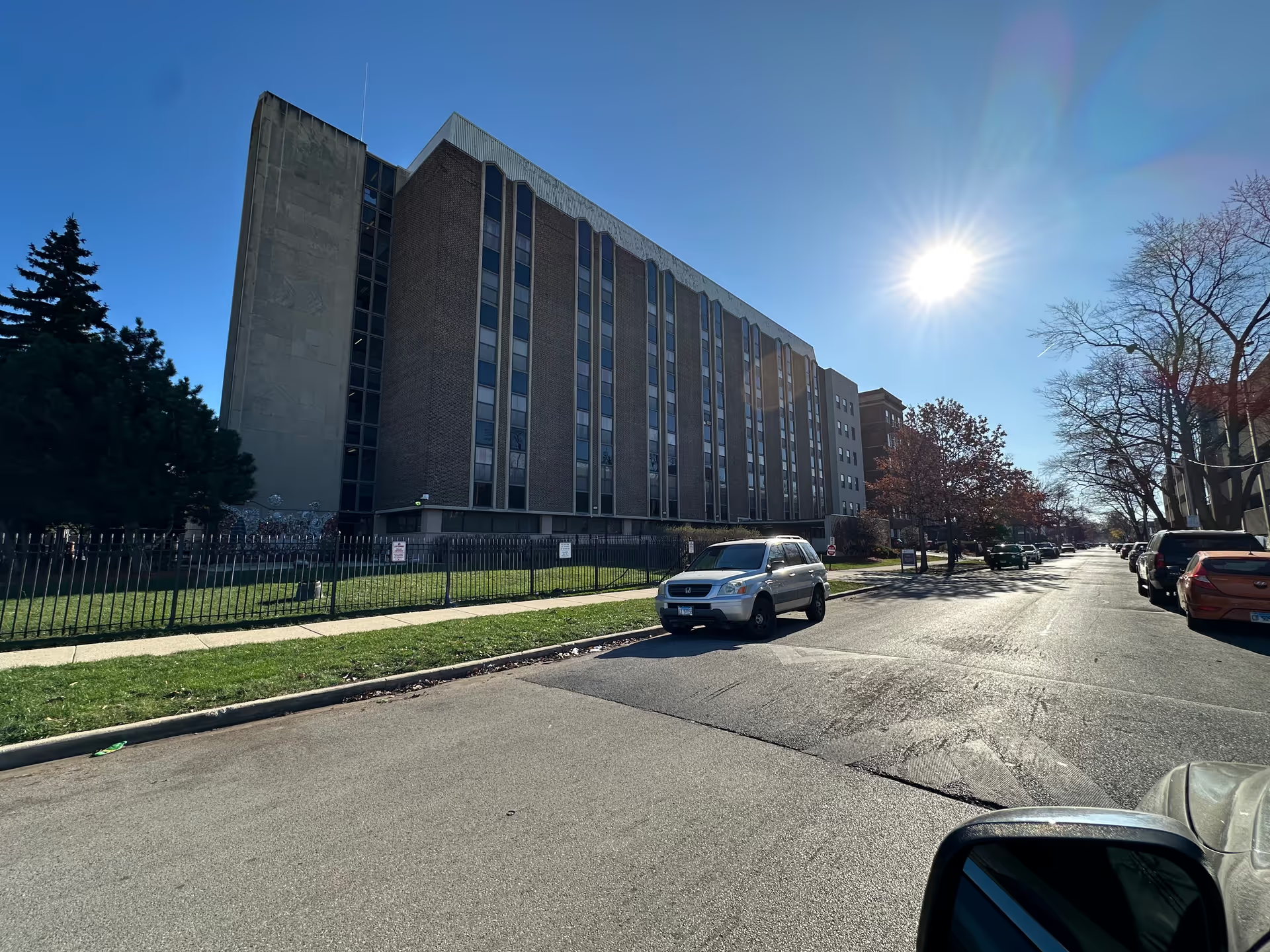
Facility layout is another notable pattern: the new rehab wing offers larger, more upscale rooms and therapy spaces, while older sections have smaller, more modest rooms and common areas. This creates an uneven experience depending on room assignment. Additional operational issues that families raised include limited or uneven social programming for some residents, rigid visitation policies during infection-control events, and concerns about billing transparency and financial communications. A small number of serious individual allegations—including theft and withheld basic-care elements—appear in reviews; these are significant and should prompt direct inquiry during a tour.
For prospective residents and families, the facility’s strengths are most evident for those prioritizing skilled rehab, close therapist involvement, and compassionate front-line caregivers. To assess fit, visitors should ask about current staffing ratios, agency-staff usage, medication-administration protocols, sanitation and pest-control measures, the exact location and amenities of prospective rooms, recent inspection records, and billing practices. Meeting the unit leadership and social worker and requesting references from families with similar care needs can help clarify whether Paul House’s documented strengths are consistently delivered for a given resident.