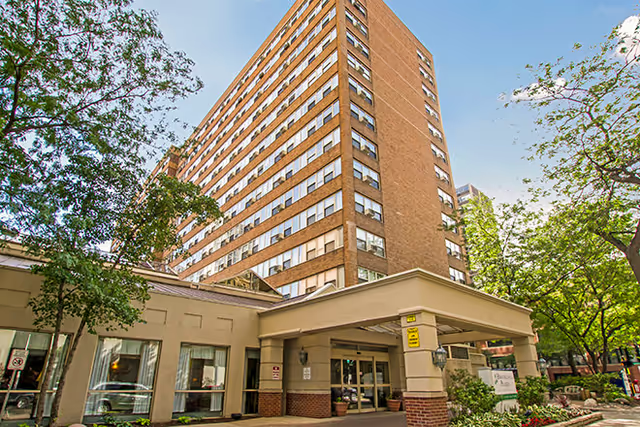
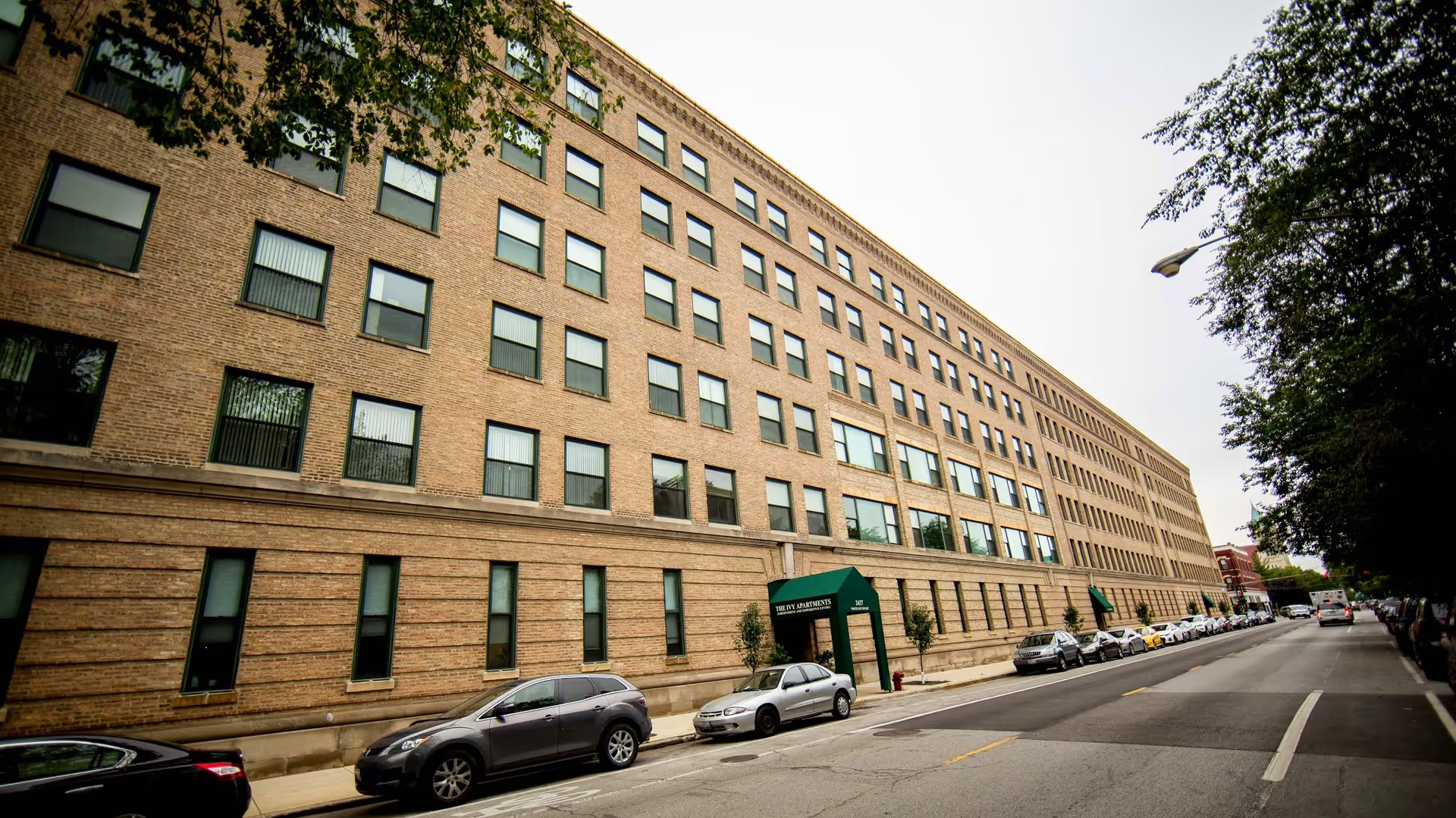
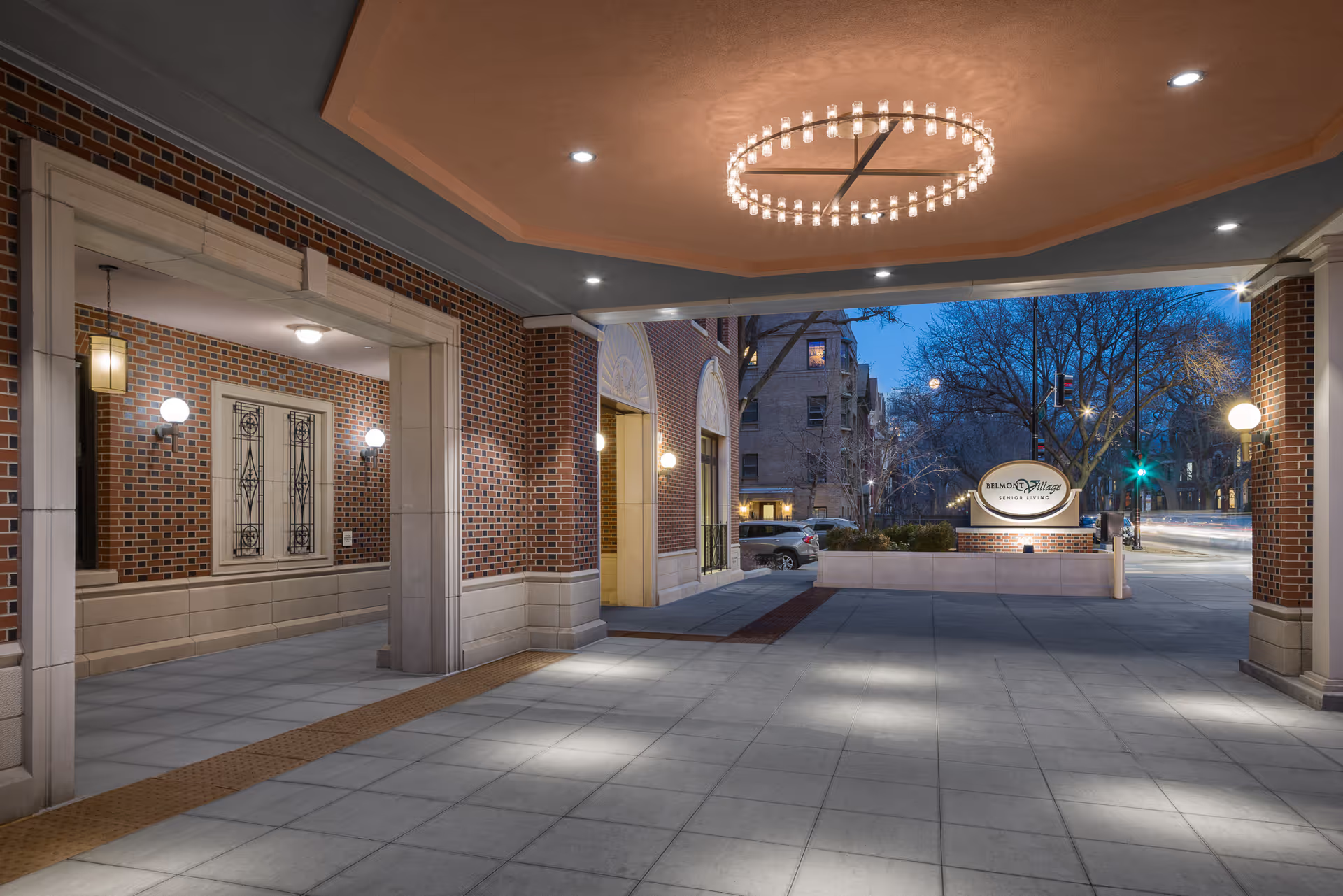
Overall impression Selfhelp Home is described as a long-established, culturally focused continuing-care community that many families find warm and well organized. The campus offers multiple levels of care (independent living through assisted care and short-term rehab), kosher kitchens and ongoing Jewish programming, and attractive communal spaces such as a top-floor activity room, roof patio with lake views, and a spacious lobby. Cleanliness and general building maintenance are commonly praised.
Care and staff Care quality and staff demeanor are consistently cited as the facility’s primary strengths. Reviewers highlight compassionate, attentive nurses and CNAs, proactive social-work support, and a coordinated approach to transitions back to assisted living or home. The on-site rehabilitation program (physical and occupational therapy) is frequently singled out for producing meaningful functional gains, and staff are described as going above and beyond for families. Low staff turnover and experienced personnel contribute to a family-like atmosphere. That said, a subset of accounts points to staffing and scheduling inconsistencies (for example, limited nurse coverage on certain days) and occasional concerns about timeliness of medication or pain-management interventions. These indicate variability in clinical continuity rather than a uniform pattern of poor care.
Dining and activities Activity programming is a clear strength: concerts, opera programs, book clubs, social events (ice cream socials, story groups), frequent outings, and regular Shabbat services create a rich, culturally oriented schedule. Dining receives mixed feedback. Several reviewers praise home-style kosher meals, accommodating dietary staff, and pleasant communal dining areas on lower floors; however, other reviewers describe inconsistent food quality or cafeteria-style service on certain floors and cite temperature problems in dining spaces. Prospective residents should expect strong programming but evaluate meal service for the specific unit or floor they are considering.
Facilities and operations The physical plant is generally described as well-kept, clean, and up-to-date, with pleasant common areas and accessible therapy spaces. Operational issues that recur across accounts include noise-management gaps (early-morning generator runs, maintenance activity, and late-night deliveries) and temperature-control variability in both dining rooms and apartments. Parking availability and handicapped-parking access have also been identified as limitations. Administrative operations are often viewed as helpful and accommodating—particularly reception and discharge planning—but some families reported delays in administrative tasks and perceived uneven follow-up on complaints or concerns. Cost is noted as relatively high compared with alternatives, which is an important practical consideration for many families.
Notable patterns and guidance The dominant themes are very strong interpersonal care, effective rehabilitation services, and a culturally rich activity environment, balanced against operational inconsistencies that mainly affect daily comfort and convenience (noise, meal variability, HVAC, parking) and occasional gaps in scheduling or administrative responsiveness. For families prioritizing rehabilitation, coordinated transitions, culturally specific programming, and a supportive staff culture, Selfhelp Home appears to be a strong option. Those highly sensitive to dining consistency, nighttime/early-morning noise, parking, or exacting administrative responsiveness should raise these topics during a tour and request unit-specific information (e.g., kitchen service model by floor, nurse staffing schedules, noise mitigation practices) before deciding.