Reviews of Crestwood describe a polarized set of experiences: several families and residents report attentive, accessible staff and helpful administrative support, while others describe recurring operational problems that affect care continuity. The pattern suggests that the facility can provide good short-term rehabilitation and individualized assistance under certain circumstances, but that performance appears inconsistent across shifts or units.
Care quality and clinical oversight are recurring areas of concern. Positive comments emphasize timely responses and staff who make residents feel safe, and some families specifically praised individual caregivers and the facility’s assistance with insurance and Medicaid. Conversely, multiple accounts highlight delays in attending to resident needs, inconsistencies in medication administration, and gaps in monitoring that families associated with adverse clinical outcomes. A small number of reviewers described a hospitalization following an infection; these are serious individual claims and warrant direct inquiry during any evaluation.
Staffing and workplace climate are frequently mentioned. Positive notes cite available leadership and staff who are willing to address concerns, while negative accounts point to apparent understaffing, high turnover, and low staff morale—factors that reviewers linked to slower response times, limited nighttime oversight, and variability in care tasks such as bathing and repositioning. These contrasting impressions indicate that staffing stability and shift-to-shift coverage may be a key driver of residents’ experiences.
Dining and therapies show similar variability. Several reviewers reported appropriate rehabilitation outcomes and effective therapy coordination, and some felt the facility met short-term rehab goals. At the same time, there are consistent complaints about meal quality and service reliability, including meals served cold, diet orders not being followed (for example, diabetes-specific diets), and food presentation concerns. Therapy services were described by some as misrepresented or inconsistent with expectations, suggesting a need for clearer therapy plans and measurable goals.
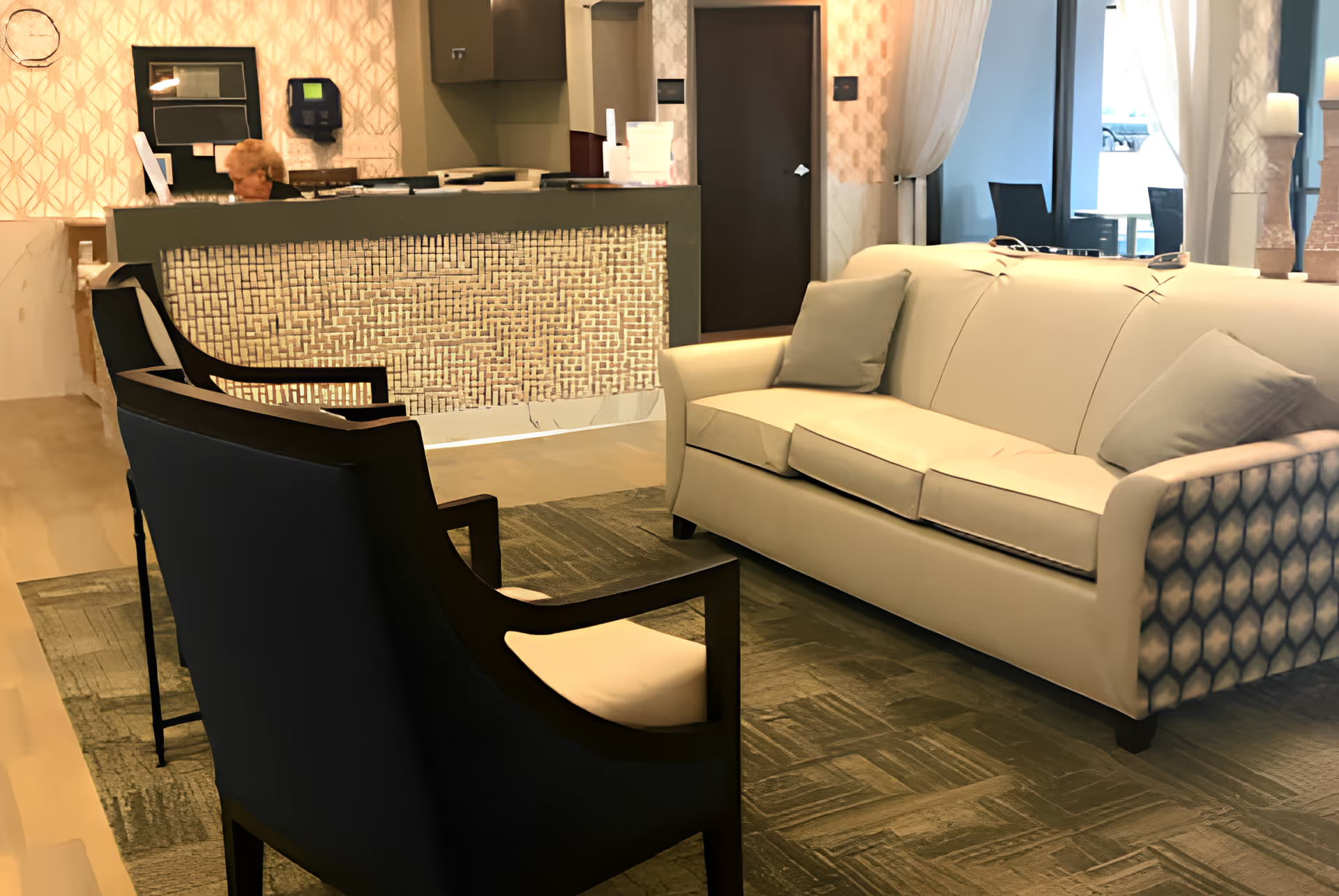
Facilities and personal-property management emerge as operational weaknesses. Multiple reviewers mentioned odor concerns in hallways and common areas, maintenance issues with aging or broken furniture, and privacy or noise disturbances such as loud televisions. A recurring theme is inadequate controls over residents’ belongings: lost or missing clothing, chargers, glasses, and pillows were reported, and at least one reviewer described billing for services that were not delivered—an allegation families should verify with billing and administrative records.
Management and communication practices are mixed. Several people praised administrators who were accessible and assisted with paperwork and Medicaid enrollment. Others described difficulties reaching leadership, delayed or absent incident notifications, and reimbursement issues that were not promptly resolved. These communication gaps heighten family anxiety when clinical or property concerns arise.
Overall, Crestwood presents as a facility with the capacity to deliver good care and effective short-term rehabilitation when staffing and management systems are functioning well, but with notable operational inconsistencies that have significant impact when they occur. Prospective residents and families should consider an in-person visit, ask for current staffing ratios and recent inspection or complaint history, request written care and therapy plans with measurable goals, clarify dietary procedures for special needs, and discuss property-management and billing procedures before admission.