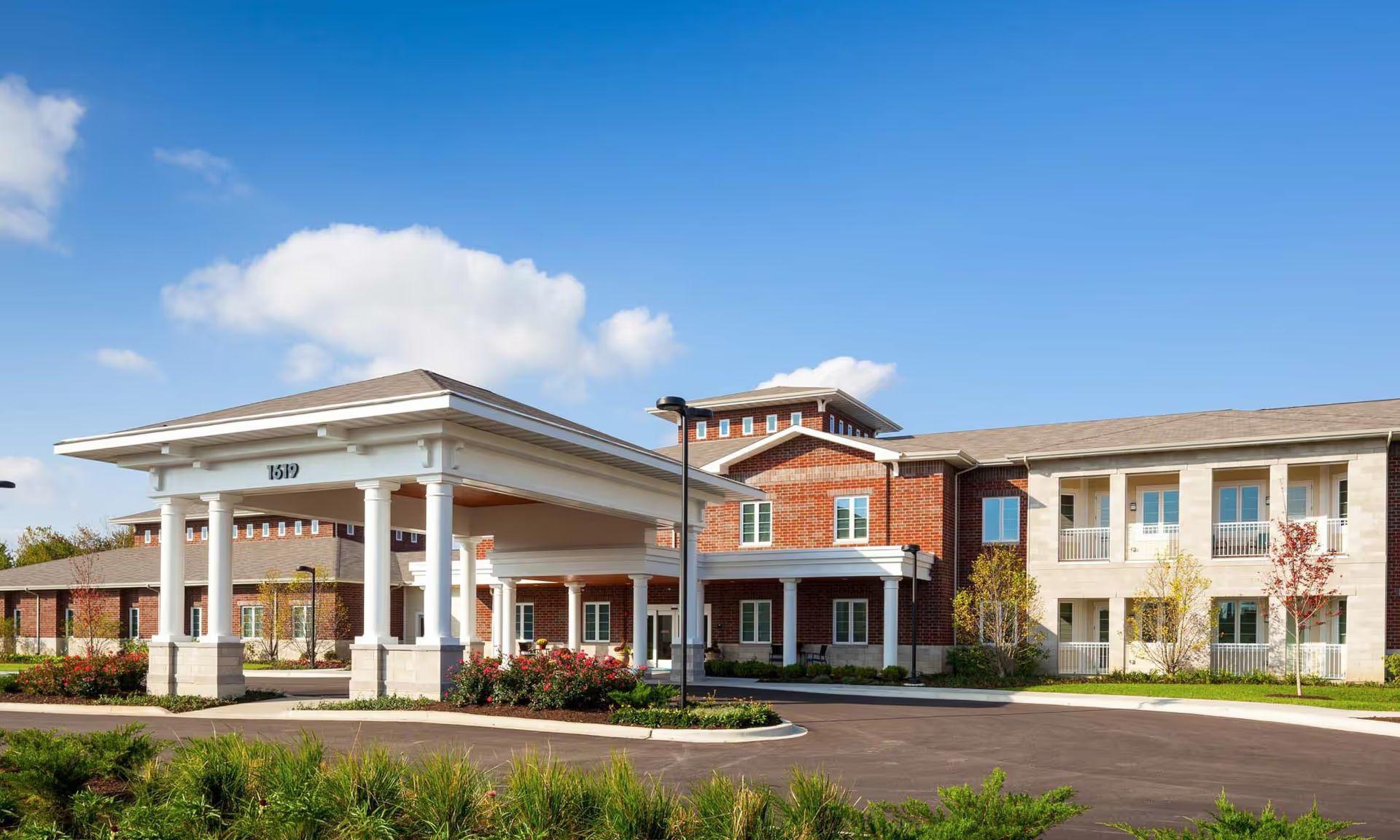
Overall impression: Arbor Terrace Naperville presents as a high-amenity, hospitality-oriented senior living community with a clear emphasis on social engagement and clinical services. Families and visitors commonly describe the building and grounds as attractive, clean, and well maintained, and the community is frequently characterized as welcoming and family-like. The facility's offerings — theater, salon, exercise spaces, courtyard, on-site therapy, and a branded Bridges memory-care program — support a broad range of resident interests and care needs.
Care and staff: Care quality is a consistent positive in the comments. Many families praise the nursing team, CNAs, and individual caregivers for being compassionate, attentive, and skilled; multiple staff members are singled out by name for exemplary work. Clinical supports such as on-site therapy and physician services receive favorable mention, and call-button responsiveness and end-of-life support are described positively. That said, reviewers also identify an operational pattern of staffing instability and short-staffing. This manifests as occasional delays in routine care tasks, missed or limited assisted showers, and variability in who provides care. Reviewers describe strong individual caregivers and teams alongside concerns about turnover and staffing reliability.
Dining and nutrition: Dining receives mixed but generally favorable comments. Many families appreciate the presentation and specific menu items, and white-tablecloth service and specialty desserts are noted as strengths. At the same time, there are recurring concerns about consistency and coverage: main-course shortages at times, portion sizes, and a lack of clearly sufficient diabetic/low‑sugar menu and snack options. These comments suggest the kitchen delivers high-quality offerings when fully resourced, but operational gaps can affect menu continuity and dietary accommodation for medically restricted residents.
Activities and social life: The life-enrichment program is one of the community's most consistent strengths. Engagement staff are frequently praised for creativity and personalization, and the calendar is described as varied and robust (concerts, outings, themed meals, craft activities, fitness classes). The Bridges memory-care activities are also noted as effective. Operational limits that affect participation include restricted transportation availability for outings (driver scheduled only limited days) and physical-access barriers for residents who live farther from common areas. Some families desire expanded weekend and evening programming beyond movie nights.
Facilities and operations: The physical environment is a clear asset — modern, well-decorated, and stocked with amenities. A few operational issues recur: occasional maintenance delays, water spots on glassware, and a cramped physical-therapy room cited by visitors. Administrative themes include generally responsive admissions and front-desk teams but intermittent concerns about billing transparency, extra-fee practices (for additional showers, meals, or pharmacy billing), and variable tone or communication from some administrative or clinical managers. These operational concerns coexist with reports of hands-on executive leadership and prompt responses when escalations occur.
Notable patterns and suitability: Arbor Terrace Naperville appears to be a strong fit for families seeking an active, hospitality-style community with visible daily programming and hands-on clinical supports, including memory-care services. Prospective residents with intensive mobility or dietary needs should clarify assisted-care scheduling, transportation availability, and diabetic/low‑sugar menu options during touring and contracting. Families should also review the fee schedule and billing practices carefully and ask about staffing patterns and contingency plans for shift coverage to ensure expectations for routine assistance are met.
Bottom line: The community earns repeated praise for compassionate staff, robust activities, and a high-quality physical environment, while operational issues — primarily staffing consistency, certain dining accommodations, transportation limits, and billing transparency — are the most frequently cited areas for improvement. Prospective families will likely find the facility attractive and well resourced but should validate specific care routines and fee arrangements relevant to their loved one’s needs prior to move-in.