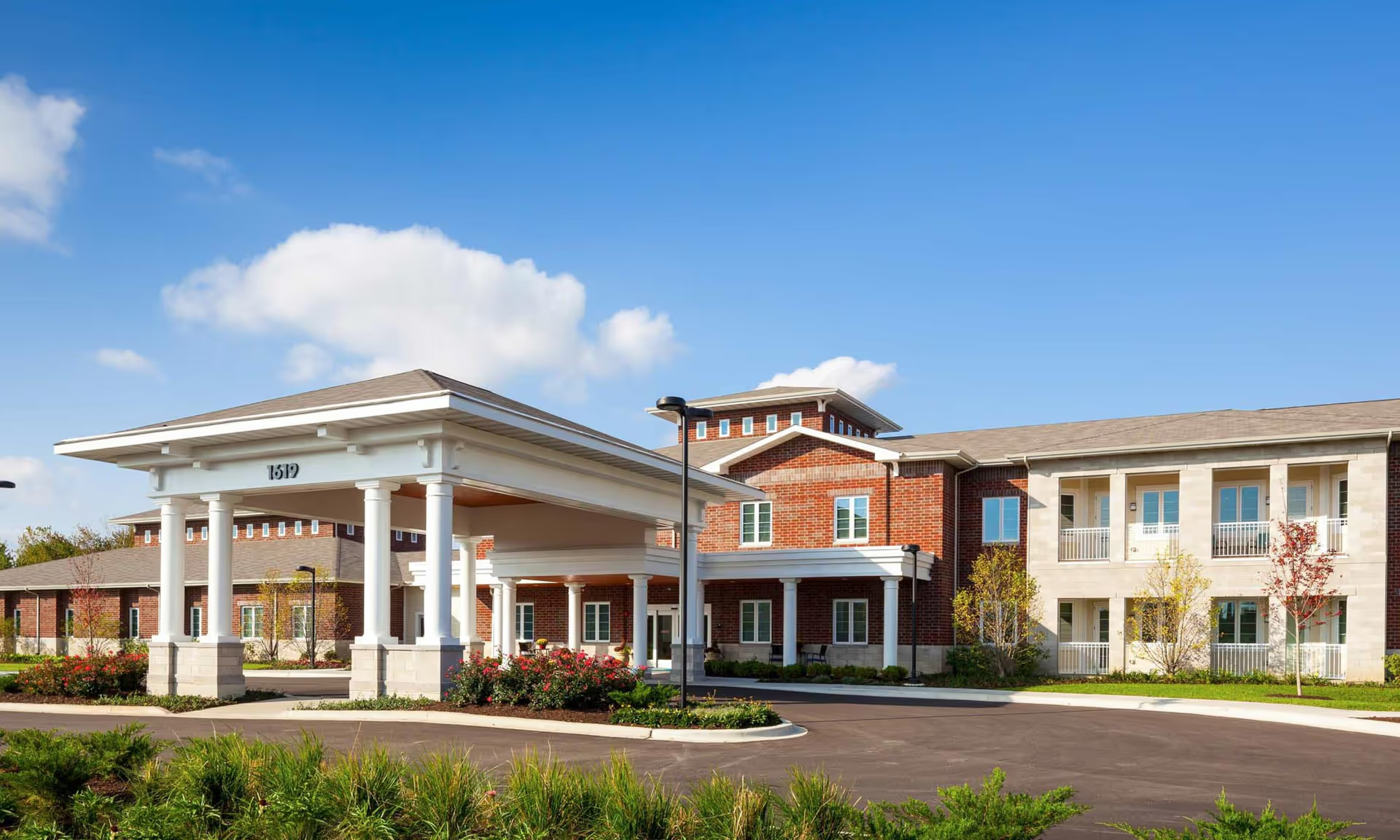
Sunrise of Naperville elicits a broadly positive view of daily life for many residents, with consistent praise for the caregiving staff and clinical support. Families frequently describe caregivers and nurses as compassionate and attentive; several accounts specifically note effective nursing oversight, medication-safety interventions, and 24/7 clinical availability that provide families with reassurance. Move-in support and trial-stay options are highlighted, and some care managers and leaders receive particular commendation for proactive coordination during hospital transitions and outreach during the COVID era.
Dining and programming are prominent strengths for many residents. The facility's restaurant-style dining, multiple menu selections, and personalized service are commonly appreciated, as are the active calendar of activities (balloon volleyball, arts & crafts, outings, mindfulness and evening programs) and on-site wellness services such as massages and manicures. The community atmosphere is described as home-like and warm, with cozy communal nooks, a library, porch seating, and seasonal decor that contribute to a friendly, small-community feel. The campus setting — townhome-style entrances, landscaped grounds, and walking paths — is repeatedly noted as pleasant and conducive to outdoor activity.
Several operational patterns warrant consideration. Staffing inconsistencies and turnover are reported, and reviewers link these to slower response times, delayed callbacks, and occasional gaps in supervision—particularly in memory-care areas where fall-prevention and oversight were raised as concerns. Communication with administration is uneven: while many families report clear, proactive updates and collaborative care planning, other accounts describe messages not returned and limited post-admission follow-up. These mixed experiences suggest variability in administrative responsiveness across cases.
Dining quality is viewed variably: while the service style and meal presentation are often praised, multiple accounts note that meal taste and consistency can be uneven across service periods. Apartment layouts are another trade-off: many families appreciate the intimate, smaller scale and multiple apartment sizes, while others find rooms compact and desire larger floorplan options or living-room-style layouts. Transportation also appears limited; the community does not consistently provide mass transit or routine transport to off-campus activities such as some religious services, which may matter for residents who expect built-in shuttle services.
Cost and value are recurring themes. Several families feel the monthly fees reflect the high standard of staff and amenities, but others consider the pricing high relative to certain operational limitations (staffing variability, room size, or meal consistency). A small number of reviews raise sanitation or odor concerns in specific areas; these are outliers in the context of many comments praising cleanliness, but they indicate occasional lapses in environmental maintenance. Overall, the pattern is of a community with strong person-centered caregiving and an active social program, paired with operational areas — staffing consistency, communication, transportation, and dining uniformity — where prospective residents and families should ask targeted questions during tours and decision-making.