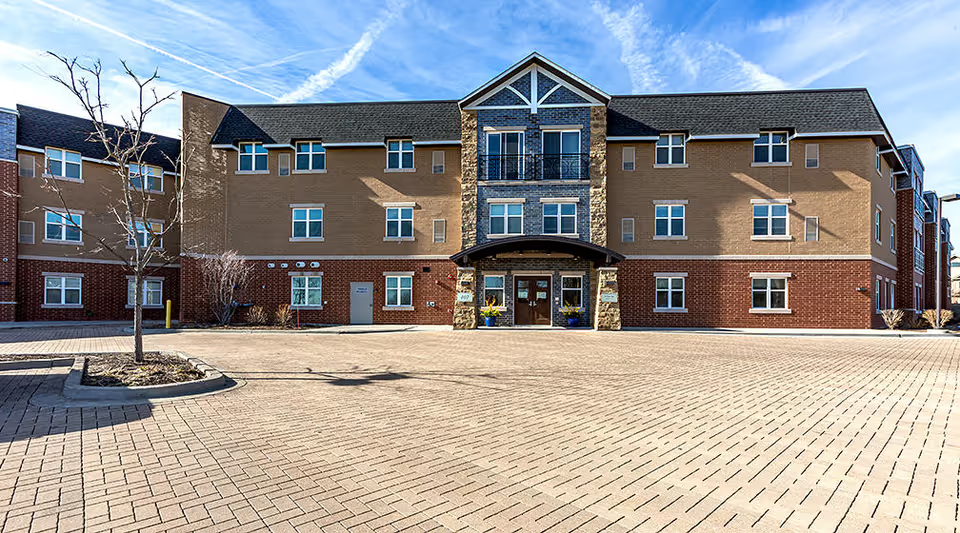
Cedarhurst Senior Living of Naperville presents as a largely new, well‑appointed community with many of the physical and social features families seek. The building and apartments are frequently described as clean and modern, with a range of resident amenities including a movie theater, gym/PT room, activity spaces, and kitchenette options in some units. On‑site therapy (PT/OT) and a restaurant‑style dining room are consistent strengths, and several families highlighted strong admissions and move‑in coordination that helped transitions go smoothly.
Life‑enrichment is a pronounced positive: the community offers regular social hours, live entertainment, field trips, and MemoryCare‑specific programming that reviewers called creative and engaging. Dedicated activity staff and named directors received frequent praise for programming that fosters socialization and family involvement. Dining presentation and portion sizes are often commended, and the dining team is recognized for accommodating special requests and offering a la carte options, although taste preferences vary.
Care relationships are described as warm and individualized in many accounts. Staff are frequently characterized as compassionate, personable, and willing to go above and beyond; families praised direct caregivers, concierge services, and some clinical staff for advocacy and responsiveness. The community appears to be a reasonable fit for residents with moderate nursing needs and for short‑term rehabilitation, where on‑site therapy was noted as a value.
However, a clear pattern of operational concerns emerges across reviews. The most consistent issue is workforce instability: high turnover among frontline staff and multiple leadership changes were linked to gaps in continuity of care. That instability has been associated with inconsistent staffing levels, longer call‑button response times, and variability in housekeeping and laundry schedules. Several reviews describe medication delays, miscommunication between clinical staff and family, and instances where clinical competency for higher‑acuity needs was questioned, indicating gaps in clinical processes and training when resident needs escalate.
Interdepartmental communication and operational oversight are further areas of concern. Reviews cite breakdowns between MemoryCare and food service, occasional meal‑service shortages or delays, and inconsistencies in follow‑up from management. Building and amenity readiness also drew criticism in some accounts: unfinished facilities, delayed gym or clinic openings, and isolated maintenance issues point to uneven facility operations. Additionally, there are notes about personal‑property labeling controls and occasional post‑admission price increases that prospective families should clarify.
In summary, Cedarhurst of Naperville offers many tangible strengths: modern spaces, robust activities and MemoryCare programming, on‑site therapy, and generally compassionate staff. These positives make it a good option for residents seeking social engagement and rehabilitation services. Prospective residents and families should, however, evaluate current staffing stability, clinical oversight for higher‑acuity needs, housekeeping consistency, and management communication practices during touring and contracting. Asking for current staffing ratios, turnover metrics, examples of recent clinical training, and written explanations of billing policies will help determine if the community’s operational performance matches the facility’s physical and programmatic strengths.