Reviews for Big Meadows present a polarized picture: some families describe highly positive care experiences while others raise significant operational concerns. On the positive side, reviewers frequently highlight direct-care staff who are described as kind and accommodating, and some families express strong satisfaction with the individualized care their relatives received. The facility’s activities program is noted as engaging and offered regularly, and several comments reference clean, well-maintained common areas and an overall supportive environment for residents.
Conversely, a prominent pattern in the critiques involves staffing and communication. Multiple reviewers point to inconsistent staffing levels and delays or gaps in responsiveness, which appear to influence family perceptions of reliability and timeliness of care. Relatedly, there are repeated concerns about the tone and professionalism of some staff interactions, including front-desk/phone and document-handling communications. These communication issues are described as unhelpful or brusque and have eroded confidence for some families.
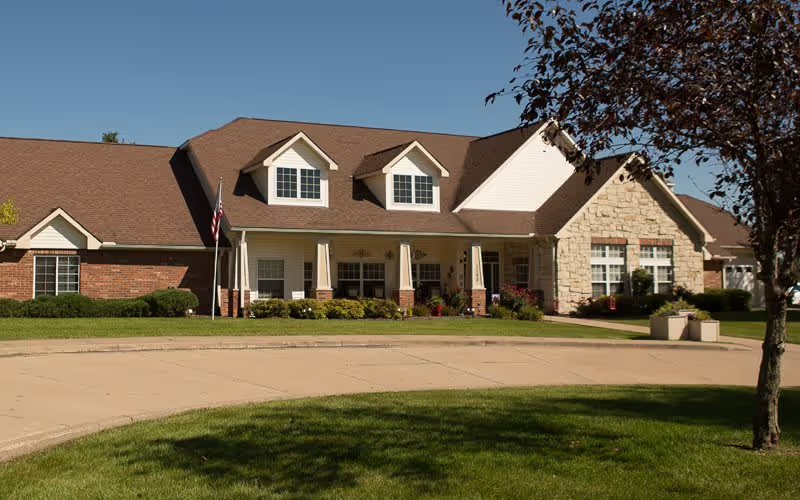
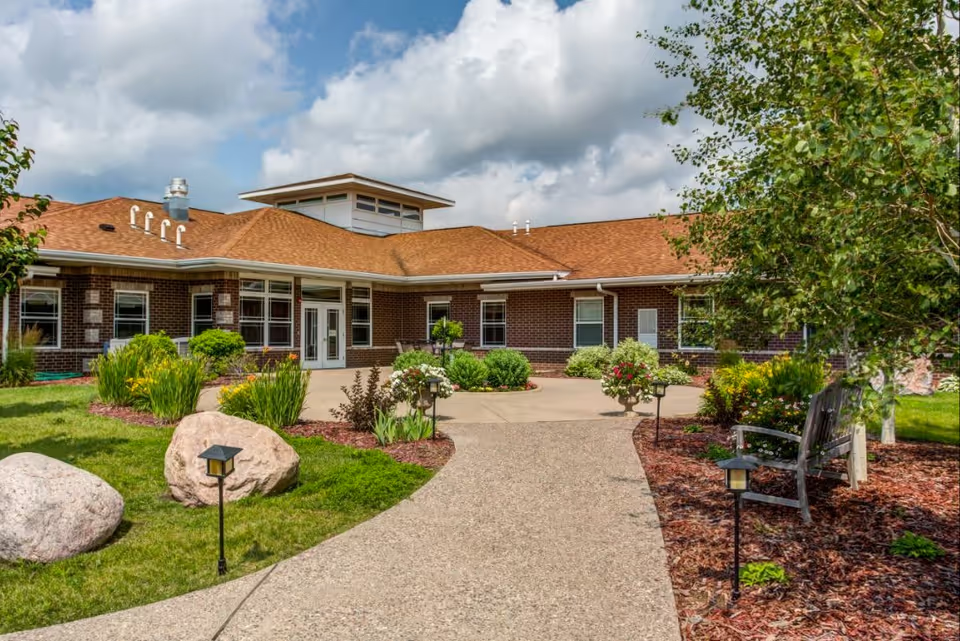
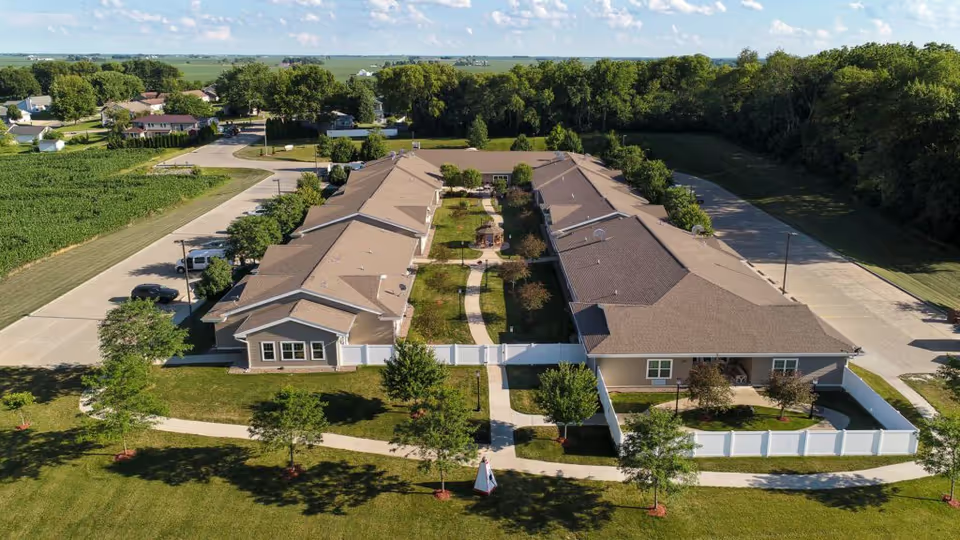
Management and administrative practices emerge as another area of concern. Reviewers indicate weaknesses in oversight and transparency, which they link to inconsistent staff conduct and mixed experiences when seeking information or resolution. Dining was not a prominent topic in the available comments; prospective families should request current menus and sample meal service during a tour. Facilities and common areas receive generally favorable remarks for cleanliness and upkeep, but operational reliability and customer-service consistency are uneven according to reviews.
In sum, Big Meadows appears to provide positive day-to-day care and activities for some residents, with strengths in staff compassion and facility upkeep. At the same time, recurring issues around staffing consistency, communication tone, front-desk responsiveness, and management oversight warrant attention. Prospective residents and families would benefit from targeted questions during a visit about current staffing ratios, complaint-resolution pathways, examples of staff training and supervision, and recent family-communication practices to assess whether those operational concerns have been addressed.