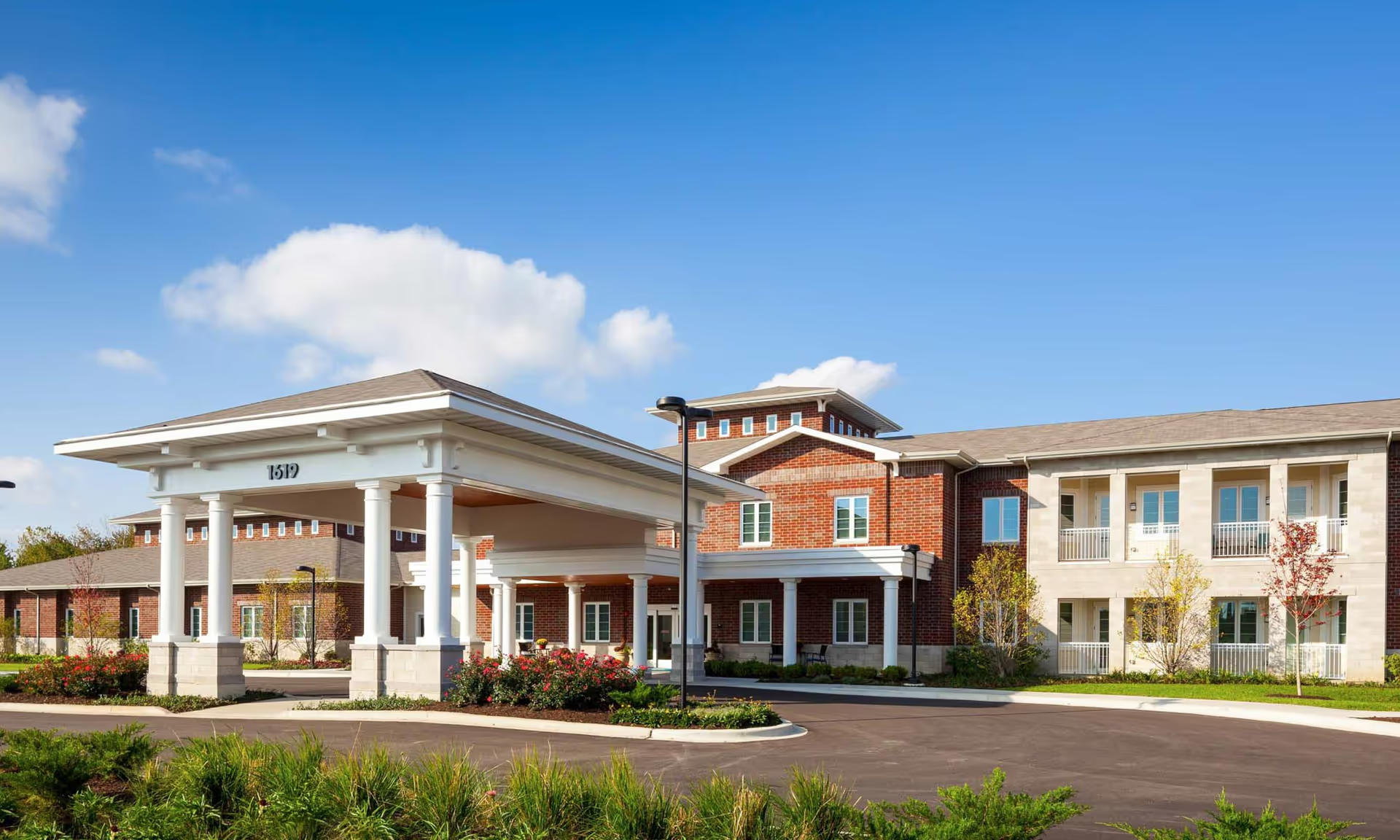
Reviews for West Chicago Terrace present a strongly mixed picture. Several reviewers describe a supportive, team-oriented staff and a robust resident community: daily creative programming, leadership roles for residents, holiday events, and opportunities for vocational or educational advancement are repeatedly cited. Multiple accounts credit staff and clinical teams with meaningful recovery outcomes, reduced hospitalizations, and improved mental health for some residents. Reception and frontline staff receive frequent positive mention, and some units are described as clean and well maintained.
At the same time, there are consistent operational concerns that affect quality of care. Clinical coordination appears uneven: reviewers describe missed appointments, infrequent psychiatric follow-up, and instances where requested care or specialist scheduling did not occur. Medication-administration controls and consistency of personal-care assistance (bathing, clothing support) are described as unreliable in some cases. Laundry handling and property controls are a recurrent worry, including reports of missing or damaged clothing. These issues point to gaps in day-to-day care processes and oversight.
Facility infrastructure and maintenance are another recurring theme. Several reviewers reported HVAC failures and indoor-air-quality complaints, intermittent water pooling in corridors, and slow or inadequate maintenance responses. Transportation and mobility support were also criticized when vehicles were unavailable or in disrepair, with knock-on effects for appointments and activities. Sanitation and odor concerns in specific wings, along with inconsistent housekeeping in shared spaces, contribute to an uneven experience across the building.
Dining and programming receive mixed appraisals: some residents praise social events, parties, and volunteer support, while others describe repetitive activities, limited variety, and inconsistent meal quality or portion sizes. Therapy and rehabilitation services are viewed as helpful by some residents but insufficient or unavailable by others, indicating program variability or limited capacity.
Staff culture is a notable point of divergence. Many reviewers describe compassionate, hardworking teams and a family-like atmosphere; the facility is cited as a positive workplace by several staff accounts. Conversely, there are repeated complaints about unprofessional conduct by certain employees, poor phone and front-office communication, inadequate staff screening, and supervision gaps that allow problem employees to remain. Safety supervision for residents with behavioral needs is a recurring operational weakness, as are concerns about conflict between residents and inconsistent incident response.
Finally, a few reviewers raise serious claims about financial controls and property loss; these are described with language suggesting alleged misconduct and should be investigated by families and regulators as needed. Overall, the pattern is one of significant variability: strong, person-centered care and community engagement exist alongside notable operational and oversight deficiencies. Prospective residents and family members would be well served by an in-person tour, specific questions about staffing ratios, medication protocols, laundry/property safeguards, HVAC reliability, psychiatric and therapy schedules, and examples of how the facility manages behavioral risks and complaint resolution.