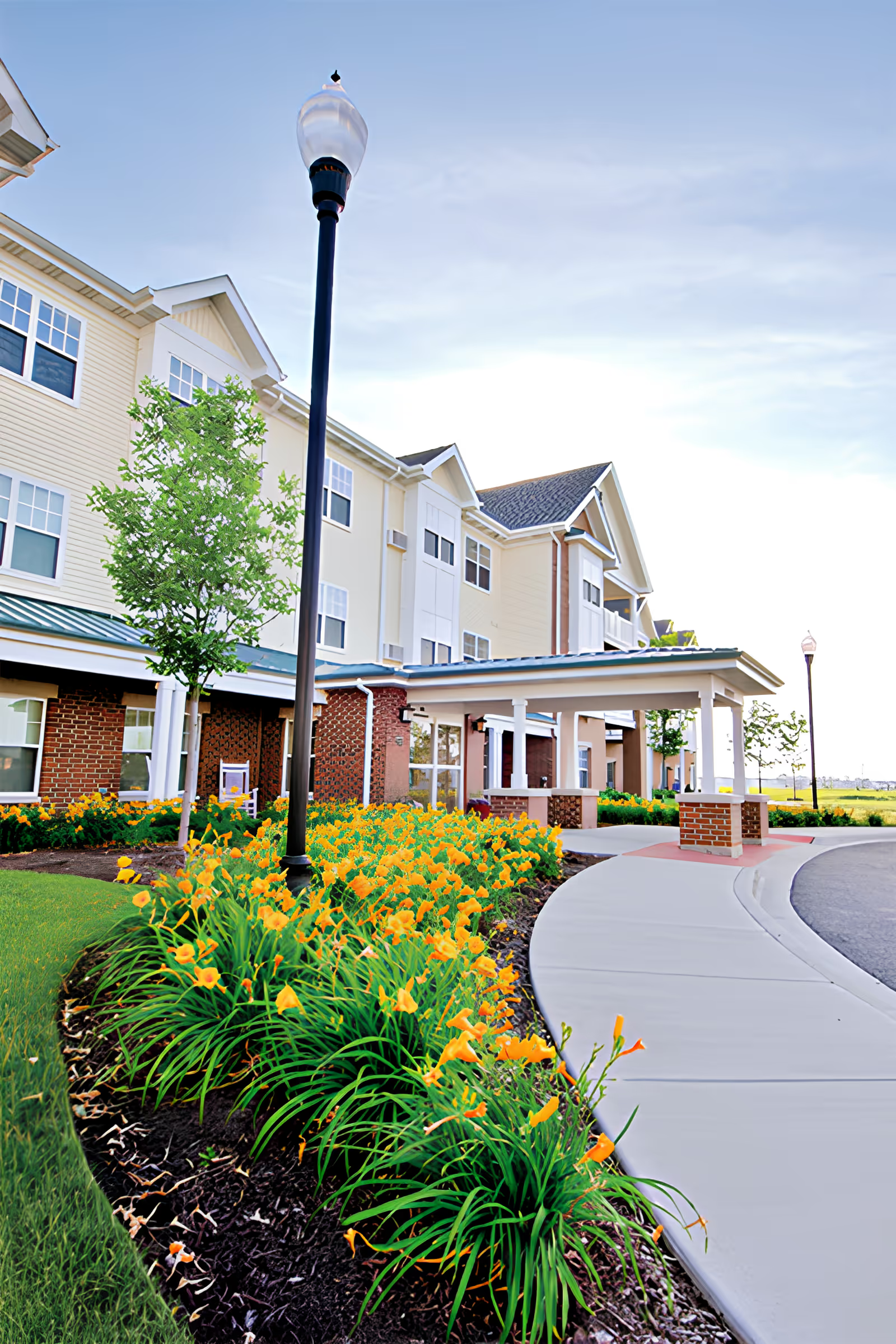
Cedarhurst of Yorkville presents as a modern, well‑equipped senior living community with many elements families often seek: a newly built, clean campus; attractive communal spaces including a courtyard, movie theater, and dining room; on-site therapy and physician visits; and a broad range of amenities such as salon services, laundry, and family‑focused events. Numerous families emphasize the facility’s warm, family‑style atmosphere and describe staff who learn resident names, participate in activities, and provide compassionate hands‑on care. Leadership and certain administrative staff are frequently singled out as supportive, and the community uses a real‑time communication platform (Caremerge) that many family members find helpful for updates and photos.
Dining and programming are clear strengths for many residents. Reviewers describe diverse menus, breakfast options, accommodated special diets (including pureed meals), and a steady schedule of activities — crafts, exercise classes, movie nights, live bands, pet therapy, and frequent outings. Activity staff appear active and engaging, with multiple social opportunities for family involvement. Clinical supports such as an on‑site therapy department and an interdisciplinary team approach are also noted as positive contributors to resident well‑being.
At the same time, a pattern of operational concerns emerges across assessments. Staffing instability and turnover are commonly mentioned and are associated with gaps in basic service delivery. Families describe issues ranging from missed checks and delayed responses to incidents, to inconsistencies in medication oversight and monitoring. These items point to uneven execution of routine clinical safeguards rather than a uniformly poor care model; in many accounts attentive caregivers compensate, but the variability is a recurring theme.
Communication and management practices show mixed impressions. While some families praise an engaged executive director and collaborative interactions, others cite administrative unresponsiveness, brusque communication tone, or perceived aggressive admissions and marketing behavior. Financial concerns also appear, with perceptions of rising prices and occasional billing or charge transparency problems.
Food quality and housekeeping largely receive praise, but there are intermittent complaints about declines in meal consistency, limited beverage variety, and isolated cleanliness or linen issues. The facility’s capacity to manage progressive cognitive decline is another salient pattern: while individualized dementia programs and engaged staff are described positively, there are serious allegations from some families that memory‑care needs were misrepresented or that the community struggled to accommodate worsening dementia — a claim that warrants careful inquiry by prospective families.
In summary, Cedarhurst of Yorkville offers many facility and programmatic strengths: an appealing physical environment, broad activity programming, visible clinical supports, and a commonly described warm, family‑oriented staff culture. Prospective residents and families should balance these positives against operational variability: confirm current staffing levels and turnover, ask for specifics on medication and incident‑response protocols, review billing practices, and verify the community’s dementia‑care capabilities against the resident’s projected needs. Scheduling a tour during activity hours and speaking with current family council members can help assess whether the day‑to‑day execution aligns with the community’s advertised strengths.