Betz Nursing Home elicits a strongly mixed set of impressions. Many families and residents praise the frontline caregivers, describing compassionate, attentive aides and nurses as well as an energetic therapy department that supports rehabilitation goals. The facility appears to offer meaningful programming — bingo, exercise, outings (including group trips to local restaurants and haircuts), and memory-care supports — that several reviewers credited with improving residents’ mood and function. Some units are described as having a home-like atmosphere with private, quiet rooms and frequent family-friendly events, and a number of accounts reference recent positive changes under new leadership and nursing direction.
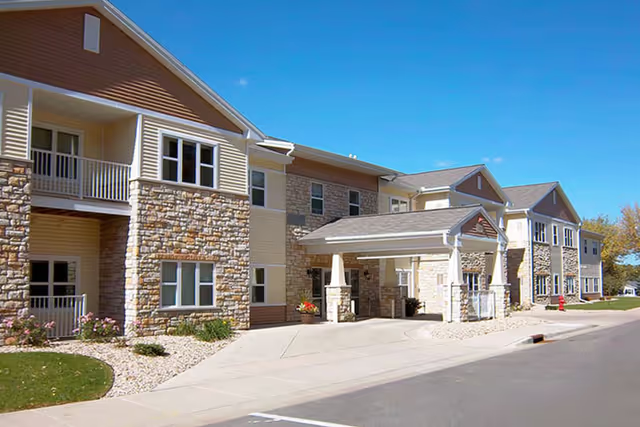
Conversely, there are persistent operational concerns centered on the physical plant and basic housekeeping. Reviewers distinguish between an older section that is perceived as run-down (paint chipping, dim lighting, shared bathrooms, small rooms) and a newer section that may offer better conditions. The combination of building-age issues and inconsistent housekeeping produced repeated sanitation concerns and odor issues in some areas. Exterior maintenance and parking-lot conditions were also called out as potential safety and accessibility problems for seniors and visitors.
Staffing and clinical-care patterns are inconsistent across reports. While many families describe caring, responsive staff and good night communications, other accounts raise issues with staffing levels, timeliness of responses to calls, and the tone or professionalism of certain employees. Several reviews describe clinical gaps such as delays or lapses in skin/wound oversight, concerns about medication and end-of-life symptom management, and problems communicating with families around hospice transitions. These items point to variability in clinical processes and communication practices across shifts or units.
Dining and food-service impressions vary widely: some residents report warm, adequate meals and outings for dining, while others describe poor meal quality and service problems. Administrative issues also surface in multiple areas, including billing disputes, confusion during Medicaid admissions, and questions about how the facility manages its public reputation; one theme includes allegations of incentivized positive reviews. Finally, unit-level variation is a notable pattern — the newer wing and rehab unit receive the most positive comments, while the older wing and certain long-term units attract the majority of facility-level complaints.
For prospective residents and families, the key considerations are unit selection and direct verification of operational issues. A focused tour that inspects the specific unit, asks about housekeeping and infection-control protocols, reviews staffing ratios and wound-care processes, inquires about end-of-life medication and hospice communication procedures, and clarifies billing and admissions steps will help align expectations. Betz offers clear strengths in caregiving, therapy, and activities, but the facility also exhibits measurable variability in sanitation, maintenance, food service, and administrative consistency that families should evaluate during an in-person visit.