Reviews reflect a mixed picture of care at this facility. Several comments highlight an active programming schedule and an interior layout that enables residents to move about easily; some residents expressed general satisfaction with day-to-day assistance. At the same time, substantive operational weaknesses are described that warrant attention.
Care quality concerns center on medication management and clinical documentation. Reports include incorrect medication administration, missed doses of pain medication, and instances of inaccurate information being conveyed to physicians. These indicate weaknesses in medication-administration controls, verification processes, and clinical communication that can create safety risk and erode family confidence.
Staff behavior and responsiveness are recurring themes. Reviewers describe an unsatisfactory tone of interaction and concerns about how some residents were handled; there are also accounts of slow or inconsistent responses to resident needs. One review includes an allegation of rough conduct. Together these items suggest a need for reinforced training on resident-centered communication, handling techniques, and escalation procedures.
Dining impressions are uneven. While activities and social programming are characterized positively, food quality is inconsistent, with specific negative feedback about certain menu items. This points to opportunities to standardize meal preparation and solicit regular resident input on menu planning.
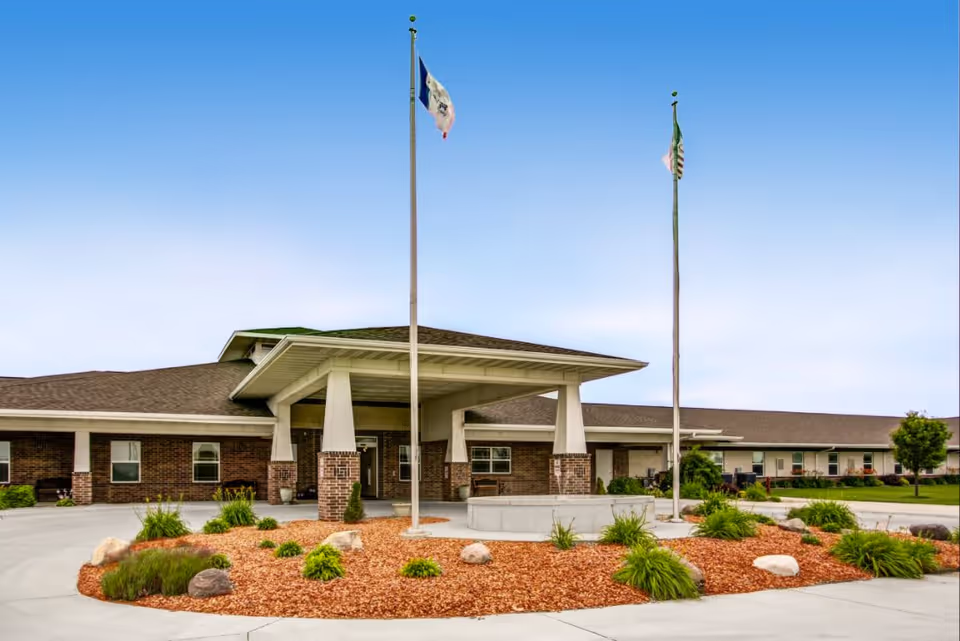
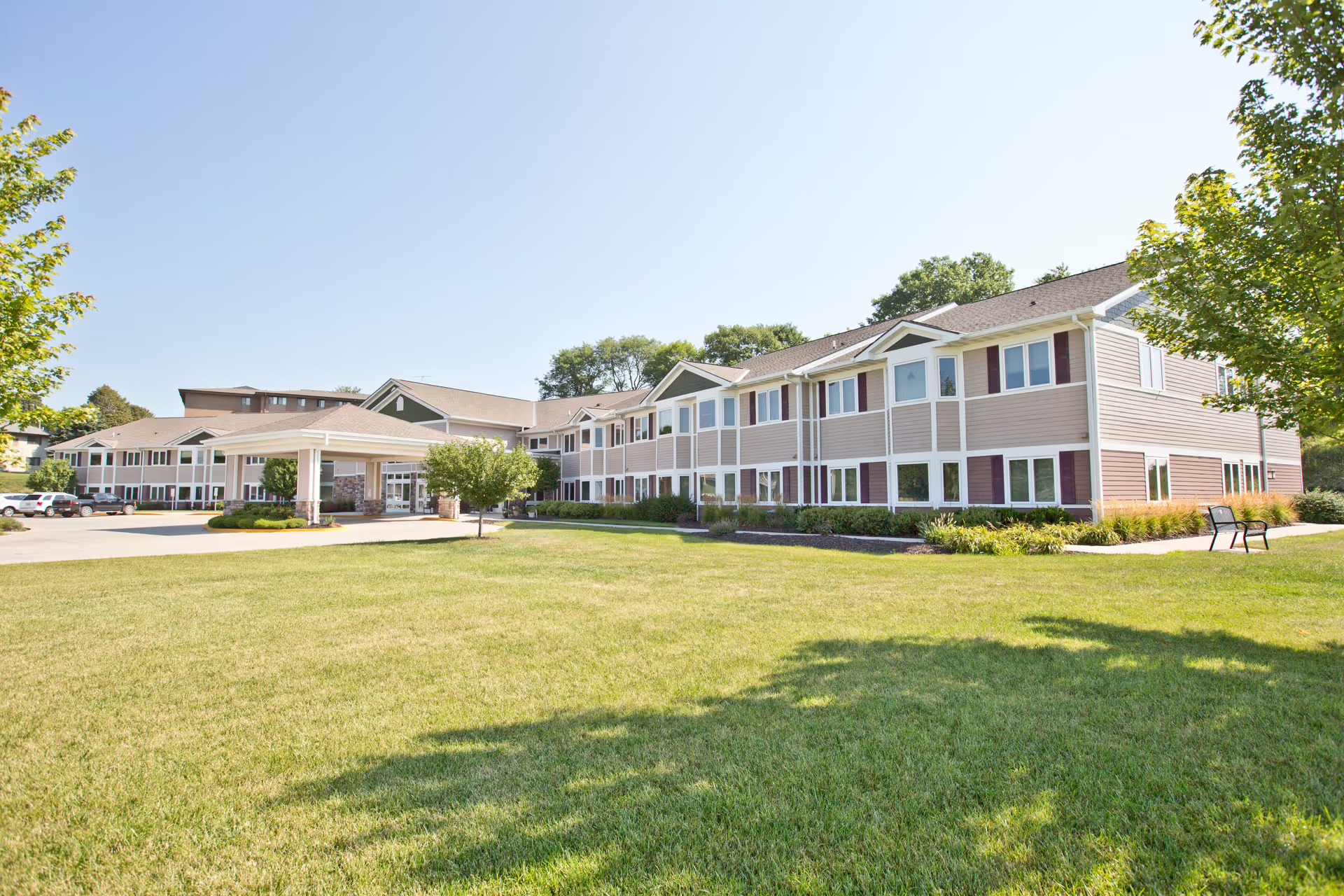
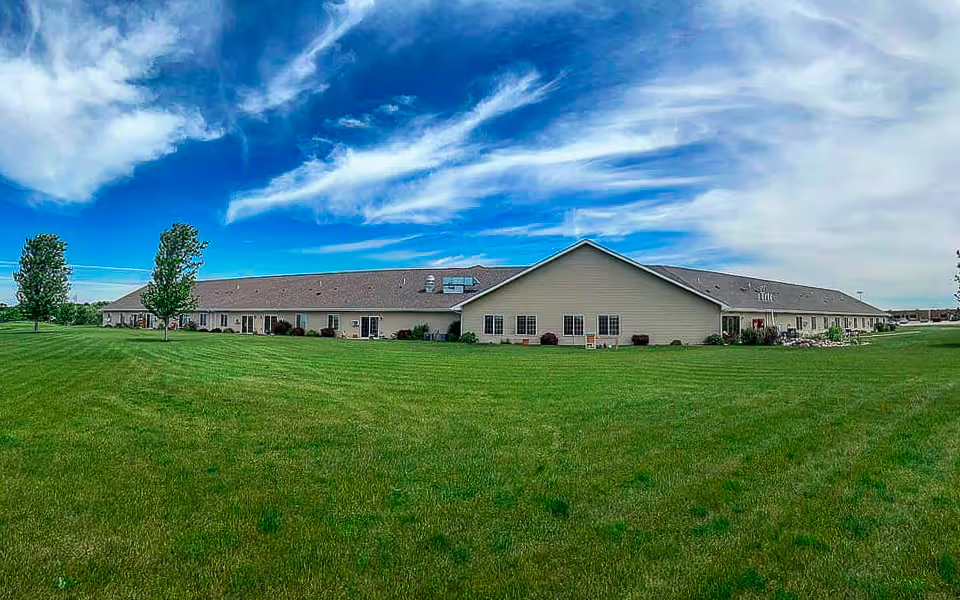
Facility-level issues include sanitation and cleanliness concerns alongside accessibility strengths. Although the physical layout appears favorable for mobility, reviewers noted cleanliness problems in resident areas. In addition, safety-monitoring practices show gaps: examples include malfunctioning or disabled chair sensors and at least one fall-related incident. These items suggest attention to equipment maintenance, monitoring protocols, and fall-prevention programs.
Management and oversight are also described as areas needing improvement. Families indicated they had raised concerns in leadership meetings without seeing effective follow-through, and some reported contacting state regulators. Taken together, these patterns point to gaps in incident response, communication with families, and accountability pathways.
In summary, prospective residents and their families will find strengths in the facility's activity program and accessible layout, but should also carefully evaluate clinical safety systems, staff conduct and training, cleanliness standards, dining consistency, and management responsiveness. If considering placement, request documentation of medication-safety protocols, equipment maintenance logs, staff training records, recent inspection results, and examples of how the facility follows up on family concerns.