Harmony Waterloo presents a mixed but clear pattern: it is frequently praised for clinical rehabilitation and for many frontline caregivers, while operational and management weaknesses recur across reviews. Strengths most often cited include a strong therapy program — particularly physical and occupational therapy and speech-language services — that many families credit with successful short-term rehabilitation and return-to-home outcomes. Nursing assistants and several nurses receive repeated recognition for compassionate, attentive bedside care, and the facility’s in-house staffing model and consistent aide assignments on some units are noted as stabilizing factors. The activities program, and an on-site greenhouse used for resident engagement and public sales, are frequently described as meaningful quality-of-life assets.
Care quality is therefore characterized by high-performing therapy services and many diligent bedside staff, but reviewers also document operational gaps that affect clinical reliability. Common clinical concerns include medication-management weaknesses (wrong doses or slow administration), long waits for assistance via call lights, and delays in routine personal-care tasks such as bathing and sheet changes. Families describe variability in nursing competence and responsiveness between shifts, with daytime staff generally rated higher than some evening and night teams. Clinical documentation processes and the handling of off-site prescriptions or records are also cited as inconsistent, which can complicate care continuity.
Dining and activities show a mixed picture. The activities department receives strong, consistent praise for programming and resident engagement; the greenhouse is singled out as a unique therapeutic and social resource. Food quality and portioning draw inconsistent feedback: some families find meals good and varied, while others describe small portions and limited meal quality until raised by family advocacy. Therapy staff are repeatedly identified by name as professional and effective; these teams are a major driver of positive rehabilitation outcomes.
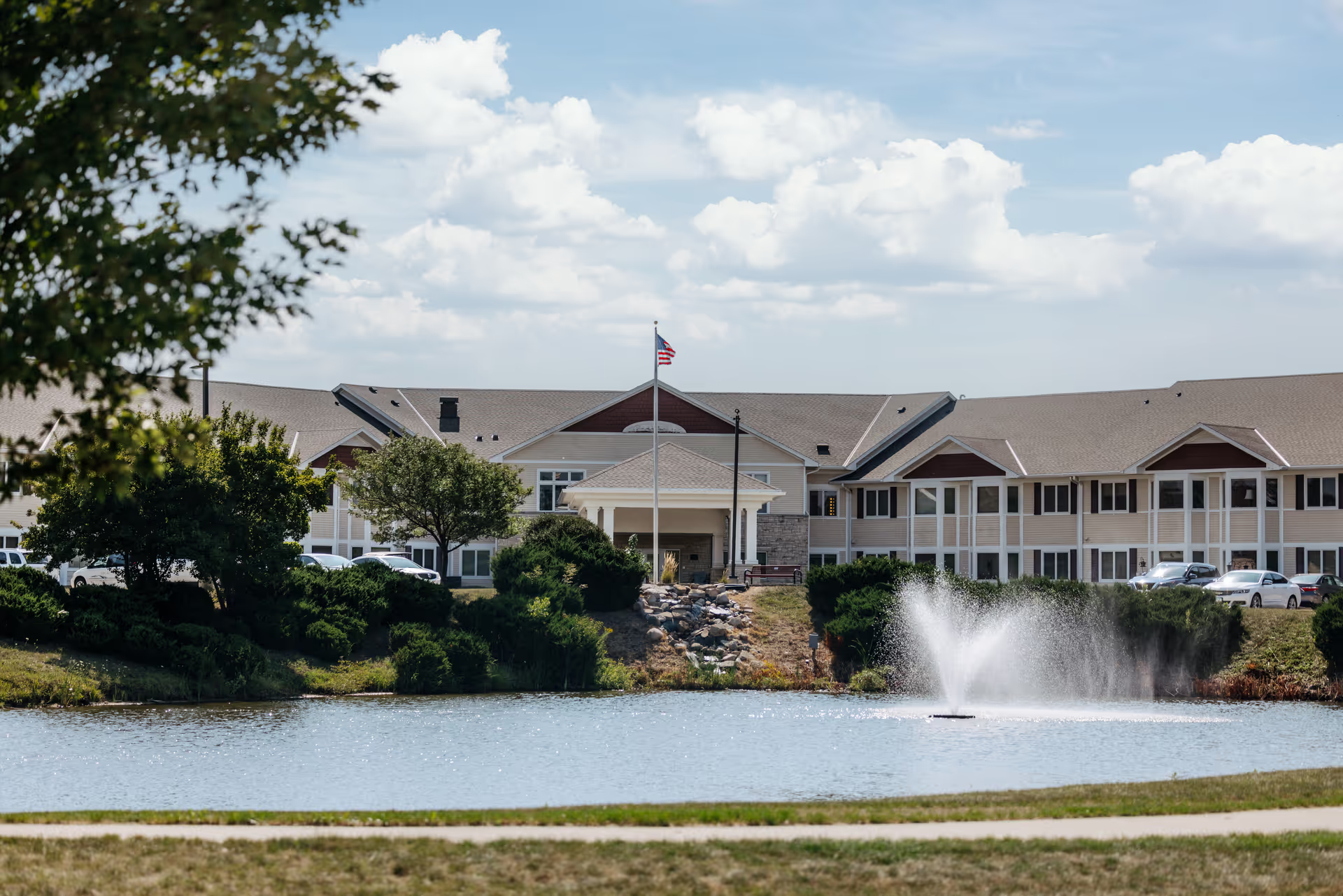
Facilities and maintenance present uneven performance. Public areas and many rooms are described as clean and pleasant, but other reviews cite sanitation concerns in resident rooms and bathrooms, inconsistent housekeeping supplies/linen availability, and slow responses to maintenance needs (tile repairs, vent and plumbing issues). These infrastructure delays sometimes intersect with clinical concerns and family advocacy to create safety and comfort issues.
Management and organizational culture are recurring themes. Several reviews describe a leadership environment that undermines staff morale, with specific complaints about disciplinary practices, firings that affect continuity, and a distrustful staff culture. There are also mentions of regulatory scrutiny and ombudsman complaints, which prospective families should review directly with the facility and public records. Communication experience varies: many families praise clear updates and transition support, while others report misinformation or difficulties obtaining medical records.
Overall, Harmony Waterloo offers strong rehabilitation services and many compassionate frontline caregivers, plus meaningful activity options that support resident engagement. However, the facility shows persistent operational risks — inconsistent staffing across shifts, variability in housekeeping and maintenance responsiveness, food inconsistencies, and concerns about medication handling and management culture. Prospective residents and families should observe staffing levels on all shifts, review the facility’s recent regulatory history, ask for specifics on medication and documentation procedures, and tour dining and resident areas at meal times to assess consistency before making placement decisions.