Care and clinical suitability: Reviews describe a facility that can and does provide appropriate memory-care services for some residents, with clinicians recommending placement and families remaining actively involved. Many families highlight attentive, compassionate caregiving from established staff members; however, staff turnover and the introduction of new personnel have produced variability in day-to-day care quality. Several accounts indicate that family members feel they must remain actively involved as advocates to ensure continuity of attention.
Staff and leadership: Staff behavior is a mixed picture. Direct care staff and the activities team receive positive comments for engagement and compassion, and the activities director in particular is singled out as a strength. At the same time, administrative leadership is described as inconsistent: assistant or senior administrators can be difficult to reach, and leadership visibility appears uneven. High turnover and gaps in supervision contribute to perceptions of unstable staffing and uneven care coverage.
Dining and daily living: Dining is not a prominent theme in the available summaries, and there is limited direct information about meal quality or consistency. What is clearer is that some families are supplementing basic household or personal-care tasks themselves, which suggests gaps in routine supports or housekeeping that affect residents’ daily experience.
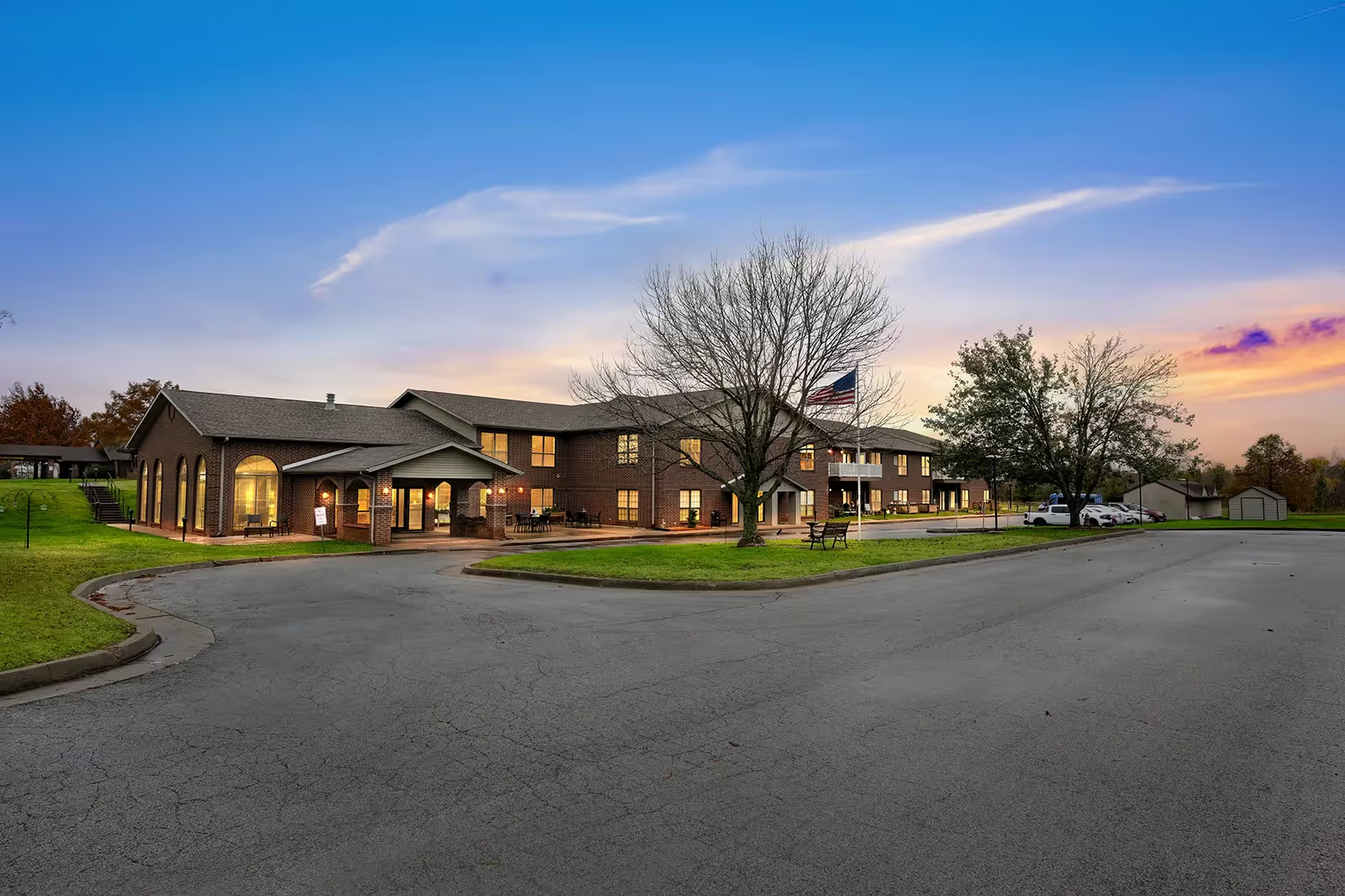
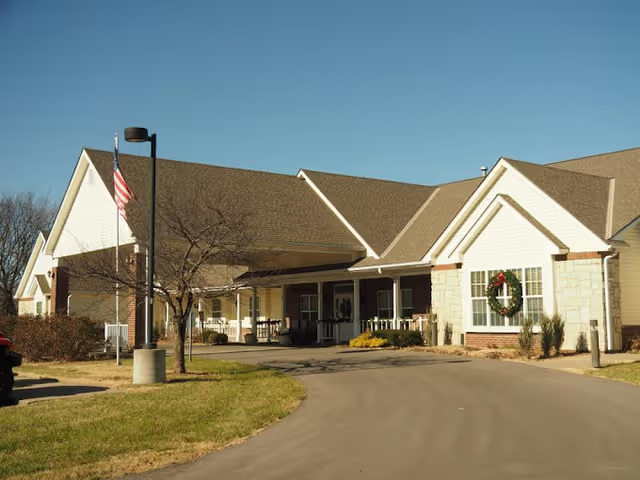
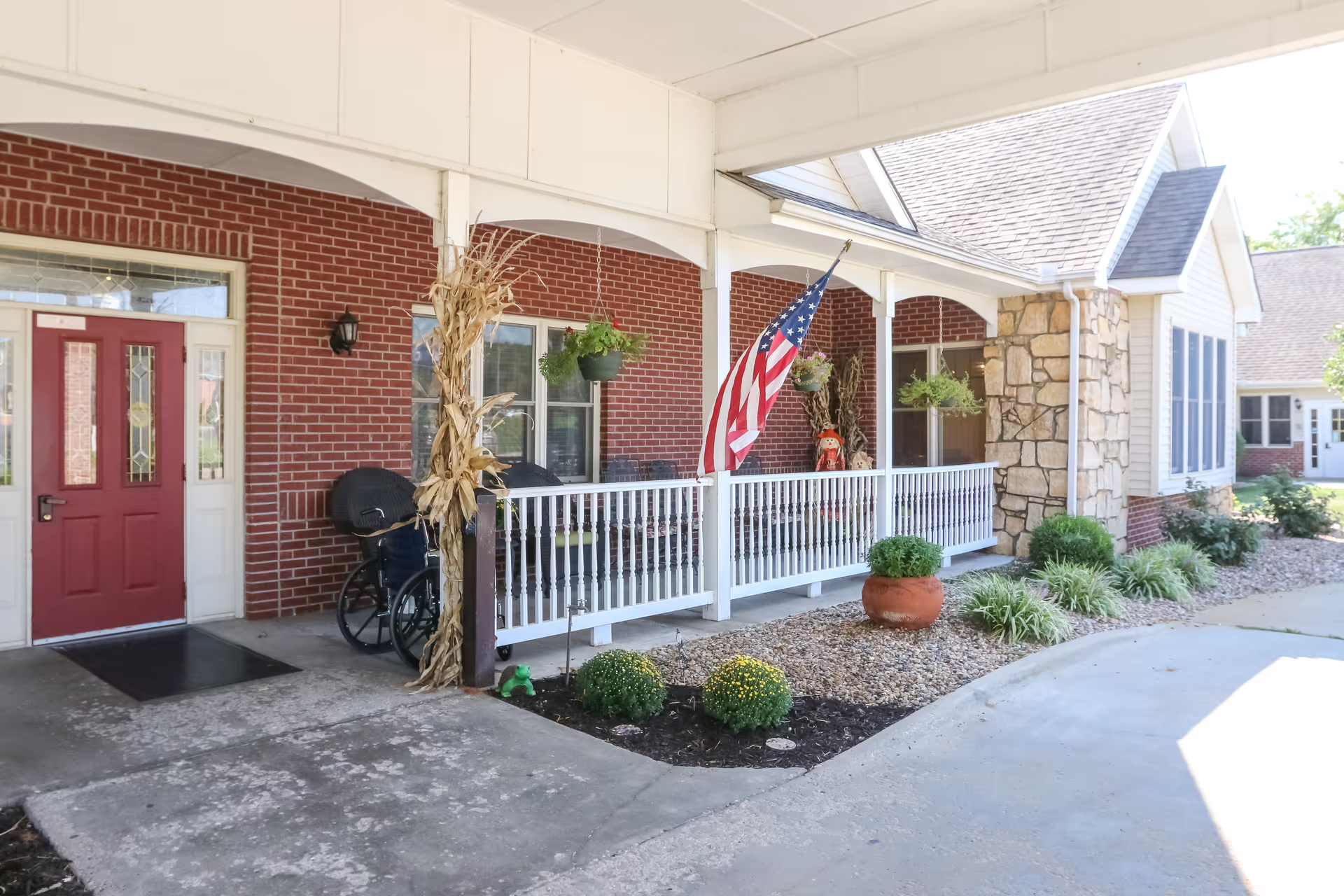
Activities and environment: The facility’s activity program and social environment are recurring positives. The community is described as open and welcoming, with a non-secured memory-care layout that some families prefer for accessibility and a less institutional feel. Physical spaces are characterized as pleasant and well-maintained, and reviewers note potential for the facility to perform at a high standard when operational issues are addressed.
Management, communication, and finances: A consistent pattern in the summaries is dissatisfaction with management priorities and communication. Fee increases and billing notices are highlighted as frequent points of contact from administration, contributing to perceptions that financial considerations are taking precedence over operational transparency. Families report limited proactive clinical updates and find administrative responsiveness uneven. These factors, combined with perceptions of profit-driven policies, have undermined confidence among some families despite positive remarks about individual caregivers.
Notable patterns and decision factors: Prospective residents and families should weigh the facility’s strengths in caregiving, activities, and physical environment against operational concerns: staffing instability, supervisory gaps, limited administrative accessibility, and a pattern of substantial fee increases. For families who value active visitation and advocacy and who prioritize an open, less secured memory-care setting, the facility may be a reasonable fit. For those who want strong, consistent administrative communication and minimal reliance on family members for routine tasks, the operational weaknesses described may be significant factors to address during touring and contract negotiations.