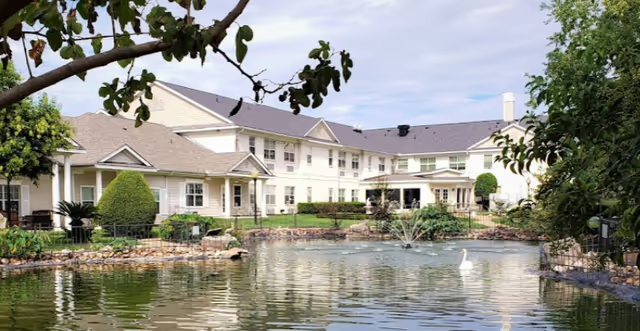
Reviewer feedback for Leslie Lakes Retirement Center is highly polarized, with distinct clusters of positive and negative experiences. Several families and former residents describe attentive, friendly caregivers, a well-regarded memory-care unit, active recreational programming (including bingo and social activities), and appealing private rooms with lake views. Those positive accounts emphasize helpful rehabilitation services, on-site beautician services, daily room cleaning, and staff who keep families informed and engaged; some families indicated they would choose the facility again for long-term placement.
Conversely, a number of reviews describe operational and clinical concerns. Key themes include sanitation and pest-control concerns in resident areas, inconsistent facility upkeep, and slow or limited maintenance coverage. Multiple accounts point to variability in staffing: while some staff are described as caring and responsive, others are described as rude or unprofessional. Reviewers raised concerns about staff conduct and boundary management, and there are allegations of employee integrity issues. Staffing reliability and inconsistent skill mix were also noted as contributing factors to gaps in daily care and responsiveness.
Clinical and safety-related issues appear repeatedly in negative accounts. Reviewers describe inconsistent clinical monitoring, including oxygen-therapy management, delayed checks on residents, and gaps in incident reporting and follow-up communication with families. Security and supervision for residents with cognitive impairment were also raised as a concern. These complaints indicate potential weaknesses in clinical protocols, transfer and monitoring practices, and escalation pathways; families emphasized having to intervene directly to secure needed care in some instances.
Dining and food-service experiences are mixed. Some residents praised meals and regular service, while others reported inconsistent food quality, small portions, and kitchen sanitation concerns. Maintenance and infrastructure issues—such as aging rooms, plumbing or hot-water irregularities, limited in-room amenities (phone/TV availability), and a single maintenance person with limited weekend coverage—were also cited as operational weaknesses.
Management and oversight emerge as a focal point. Positive reviews credit staff who communicate well and provide compassionate care, but negative feedback highlights perceived gaps in administrative responsiveness, limited on-site leadership presence, and insufficient follow-through on family concerns. Several reviewers described fear of retaliation when raising concerns, and others described needing to escalate matters to obtain appropriate clinical attention.
Overall, the facility appears to deliver good experiences for some residents and families, particularly in memory care, activities, and certain caregiving relationships. At the same time, there are recurring operational and clinical risk areas that prospective families should evaluate closely. Recommended questions for an on-site visit include: what are the facility’s pest-control and sanitation protocols; how are clinical monitoring and oxygen therapy managed and documented; what are staffing ratios and weekend maintenance coverage; what procedures exist for incident reporting and family notification; and what measures are in place to prevent elopement or wandering for residents with dementia. Conducting a focused tour of the specific unit of interest and speaking directly with nursing leadership and families of current residents can help clarify whether the facility’s strengths align with a prospective resident’s needs.