The reviews present a mixed picture of care at Kris-Leigh Assisted Living. Positive comments emphasize an active resident population, a busy activity calendar, adequate private rooms, and individual staff members who are described as friendly and compassionate. Several families strongly recommend the facility based on their direct experiences. At the same time, a substantial set of operational concerns recurs across reviews, producing a polarized overall impression.
Care quality and clinical supports appear inconsistent. Multiple accounts indicate delays or gaps in basic assistance (for example, help with meals and other personal tasks) and difficulty getting timely clinical follow-up. There are specific mentions of challenges in meeting the needs of residents with cognitive impairment; reviewers describe staff who lack specialized dementia/Alzheimer's training and an environment that may not reliably provide the additional supervision and support those residents require. Some families hired outside help to supplement onsite care, while others praised individual caregivers who were attentive and respectful — indicating variability in performance between staff members.
Staffing and workforce issues are prominent. Reviewers describe persistent understaffing, frequent turnover, long shifts or double shifts, and caregivers who feel overworked. These workforce pressures are linked in accounts to inconsistent responsiveness, missed care tasks, and limited time for individualized attention. At the same time, several reviewers singled out specific staff as strong contributors, suggesting a mix of committed caregivers alongside workforce instability. Compensation and staffing levels were described as factors that may contribute to recruitment and retention challenges.
Dining and hydration are areas of concern for many reviewers. Comments reference commonly prepared meals that feel overly processed or high in sodium, and some reviewers reported limited access to water or other beverages between meals. Conversely, some residents and families said the food was better than anticipated, so there appears to be variability in meal quality and resident satisfaction.
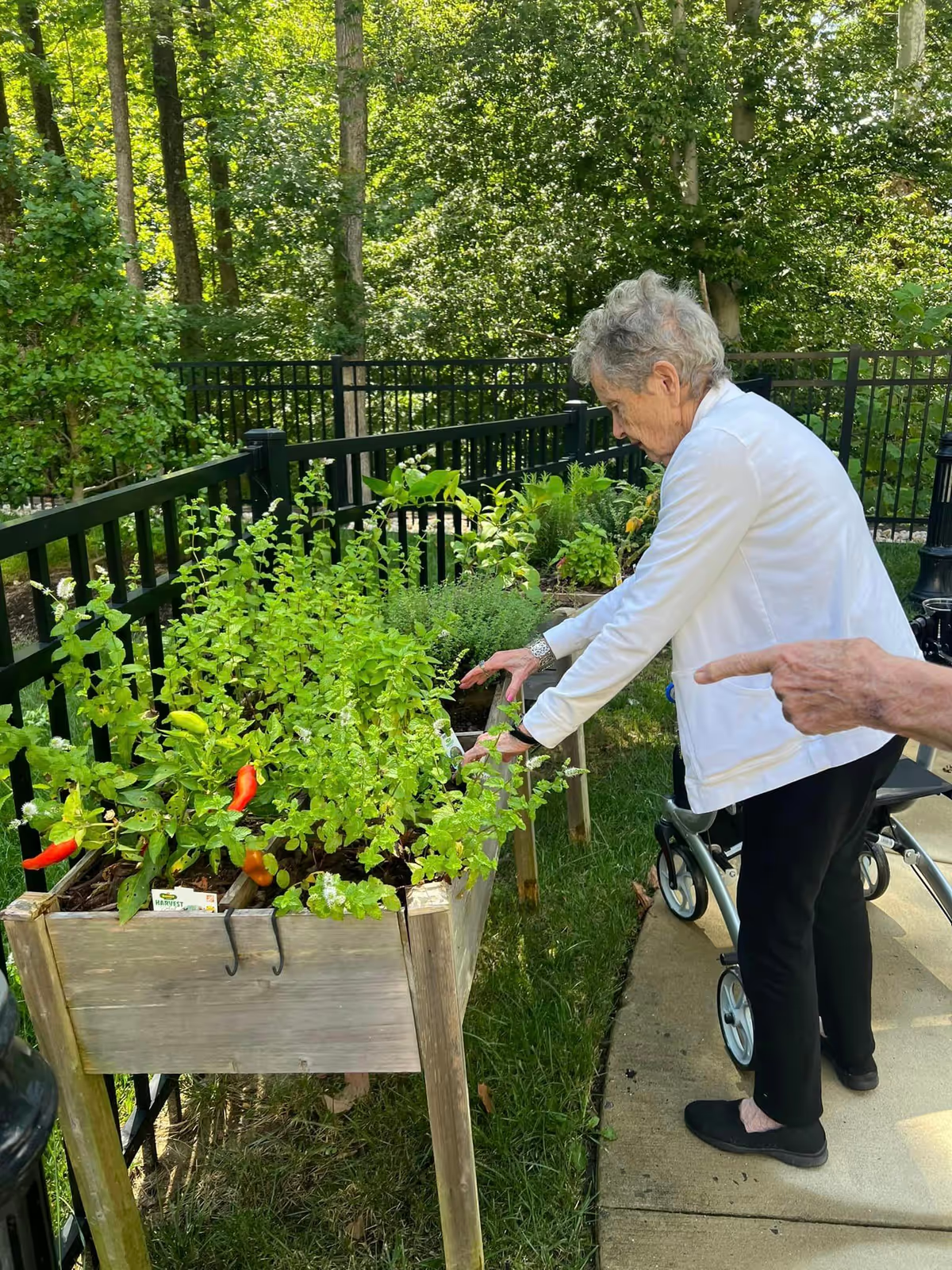
Programming and social life are frequently cited as a strength. Many reviewers describe a lively social environment, frequent activities, and an engaged resident community. For prospective residents who prioritize social engagement and events, these aspects are frequently noted as positive and meaningful.
Facility condition and maintenance issues are reported with some consistency. Concerns include sanitation and odor problems in common areas and furnishings, pest-control issues, evidence of mold or water-intrusion (including reports of sunroom flooding and unusable decks), and intermittent heating/air-conditioning reliability. These are operational and infrastructure issues that can affect resident comfort and safety and may require documented remediation plans from management.
Management, communication, and medical coordination are other recurring themes. Many reviewers describe limited communication from administration, delayed or absent responses to family inquiries, and frustrations with on-site medical follow-up (including difficulty getting return calls from clinical staff). Some accounts describe adversarial interactions with volunteers or family members and allegations of evasive administrative behavior. At the same time, a subset of families reported clear communication and positive administrative experiences.
Notable pattern: experiences are polarized. Some families report excellent care, active programming, and respectful staff; others report systemic operational weaknesses that materially affect daily life and care. Prospective families should consider an in-person tour focused on observable operational factors (cleanliness and odors, staffing levels during shift changes, meal sampling and hydration access, activity participation), request staffing ratios and training documentation (especially for dementia care), ask for pest-control and maintenance records, and speak with current residents and family members about recent changes and management responsiveness. Documentation of how the facility addresses maintenance and clinical follow-up concerns will be important for evaluating whether the recurring problems described have been or are being remediated.