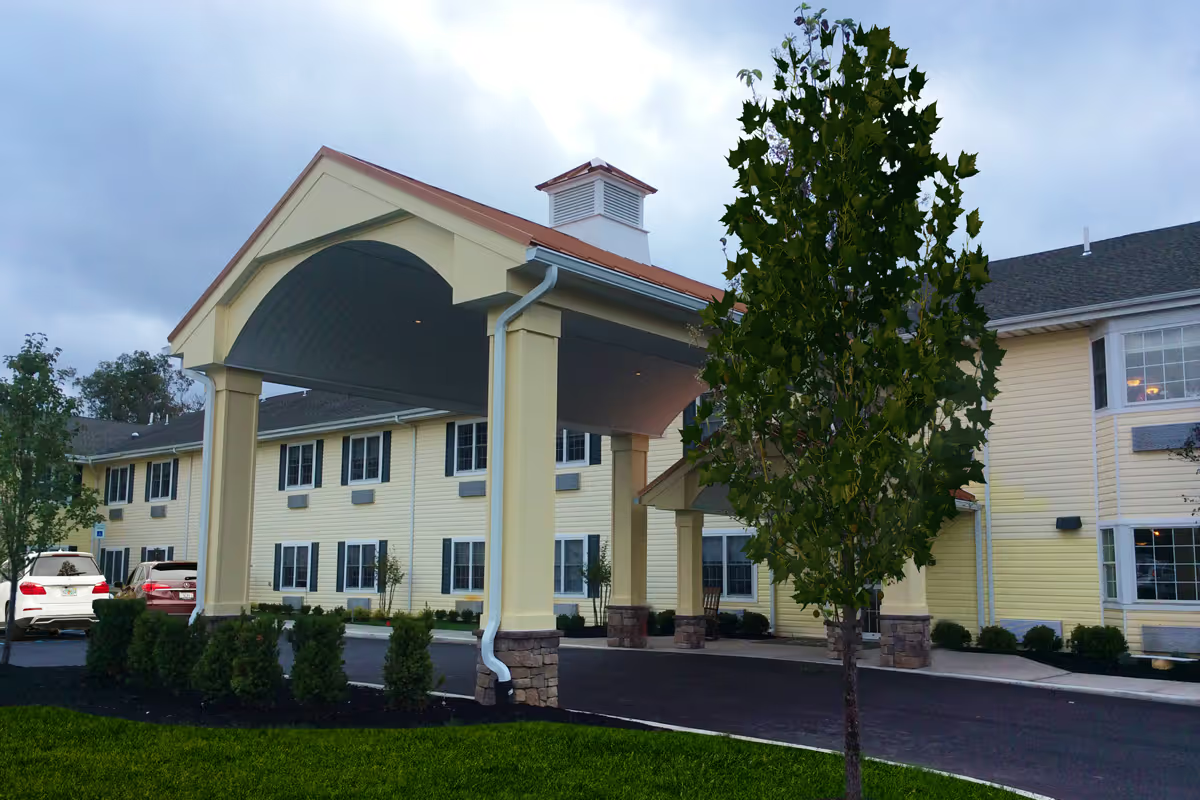
The reviews of Bay Harbor Post Acute present a strongly mixed picture. On the positive side, many families and residents praise the clinical therapy teams and several individual staff members for compassionate, attentive bedside care and strong rehabilitation outcomes. Physical and occupational therapy, and specialty programs for stroke, orthopedic, pulmonary, and memory care, are frequently singled out as strengths. Multiple comments describe renovated and modernized common areas, improved equipment, active volunteer and activity programming, and admissions staff who facilitate transitions effectively.
Counterbalancing those positives are recurring operational concerns that span clinical, housekeeping, and administrative domains. A notable pattern is inconsistency: some units and shifts are described as well-run and clean, while others exhibit sanitation and odor concerns, pest-control issues, and visible maintenance deficits such as climate-control failures, damaged finishes, and broken furniture. Several reviews describe inconsistent personal-care routines (for example, bathing frequency, linen changes, and laundry handling) and slow responses to call bells, which reflects broader staffing and responsiveness variability.
Clinical practice and safety concerns appear in multiple reports. Reviewers raised issues with timely medication administration, dosing practices, and IV procedures, as well as delayed escalation to higher levels of medical care in some cases. There are also descriptions of rough or hurried transfers and uneven adherence to individualized care plans. While the facility has praised nursing staff and named individuals who provide high-quality care, reviewers also cite variability in staff conduct and communication tone across units and shifts.
Dining and food-service quality are inconsistent: many reviewers note cold or poorly prepared meals, occasional food-handling concerns, and variability in meeting dietary restrictions. Conversely, therapy-supported dining and social meal experiences are described positively in other accounts. Activities and social programming receive largely favorable comments, with examples of monthly events, therapy-led activities, and volunteer engagement enhancing resident life.
Management and administrative themes are mixed. Several reviews highlight recent leadership changes, renovations, and initiatives that appear to be improving the environment and customer service; named administrators and admissions staff receive praise. At the same time, recurrent complaints involve billing disputes, unclear financial communication, delayed family notification, and front-desk unresponsiveness. A small number of serious allegations — including medication-related actions and billing mismanagement — were raised; these are notable and merit verification through regulatory records or direct inquiry with the facility.
Taken together, the pattern is one of significant variability between units, shifts, and time periods. Prospective residents and families should prioritize an on-site visit that includes observing the unit(s) where the resident would be housed, reviewing staffing levels and medication-administration protocols, auditing housekeeping and pest-control measures, tasting meals or reviewing menus, and asking for documentation of recent quality-improvement actions and inspection history. Listening for names of consistently praised staff and asking about continuity of care, billing practices, and escalation pathways will help assess whether Bay Harbor’s positive attributes are consistently realized for a particular placement.