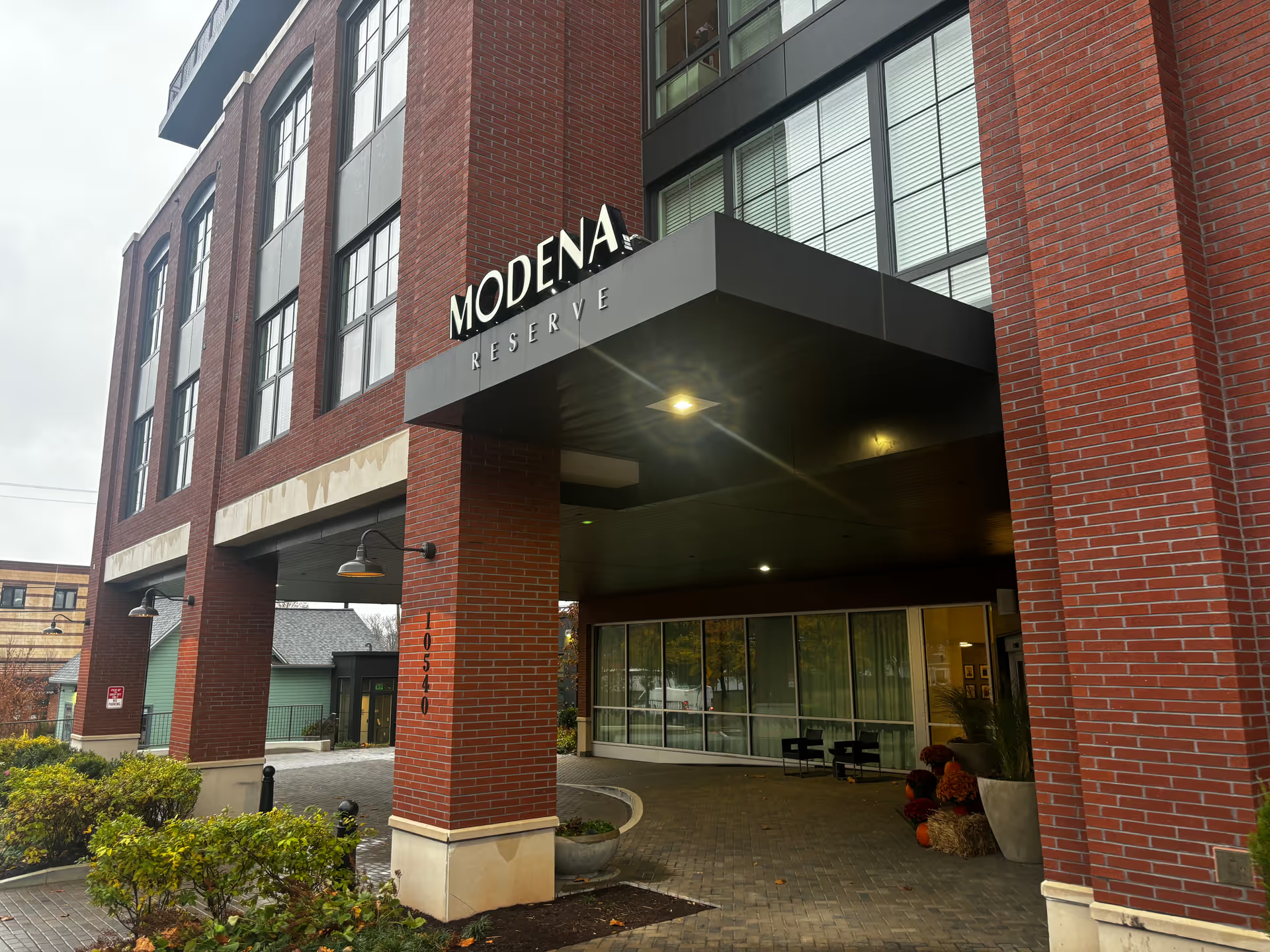
Autumn Lake Healthcare at Arcola elicits strongly mixed impressions. Many families and patients praise the facility's rehabilitation services, describing an effective PT/OT program and a rehab-focused approach that produced measurable functional gains. Individual nursing staff, aides, and activity personnel are frequently characterized as compassionate, patient, and personally engaged; several reviewers singled out specific staff and leaders for proactive communication, thoughtful care, and efforts to create a homelike, festive environment.
At the same time, a consistent pattern of operational weaknesses emerges. Staffing and coverage are uneven: reviewers described adequate daytime care and strong therapy teams but identified recurrent problems on certain shifts—notably nights—where responsiveness, supervision, and bedside attention were inconsistent. These staffing gaps are tied to several clinical concerns, including lapses in post‑operative care knowledge, delays in wound management coordination, missed therapy sessions, and incontinence‑care delays. Some reports raised serious safety and clinical‑monitoring concerns (for example, equipment maintenance and oxygen-monitoring issues); while these appear not to be the norm for every stay, they are important to note as potential risk areas.
Dining and activities are a relative strength with regular live entertainment, engaged programming, and an activities director who connects residents and families. Many residents enjoyed home‑style meals and flexible menu options; however, meal-service reliability is inconsistent in practice—complaints include late or cold meals, limited menu choices at times, and supply shortages. The memory‑care dining space is described as small and occasionally crowded, which can affect mealtime experience for residents with cognitive impairment.
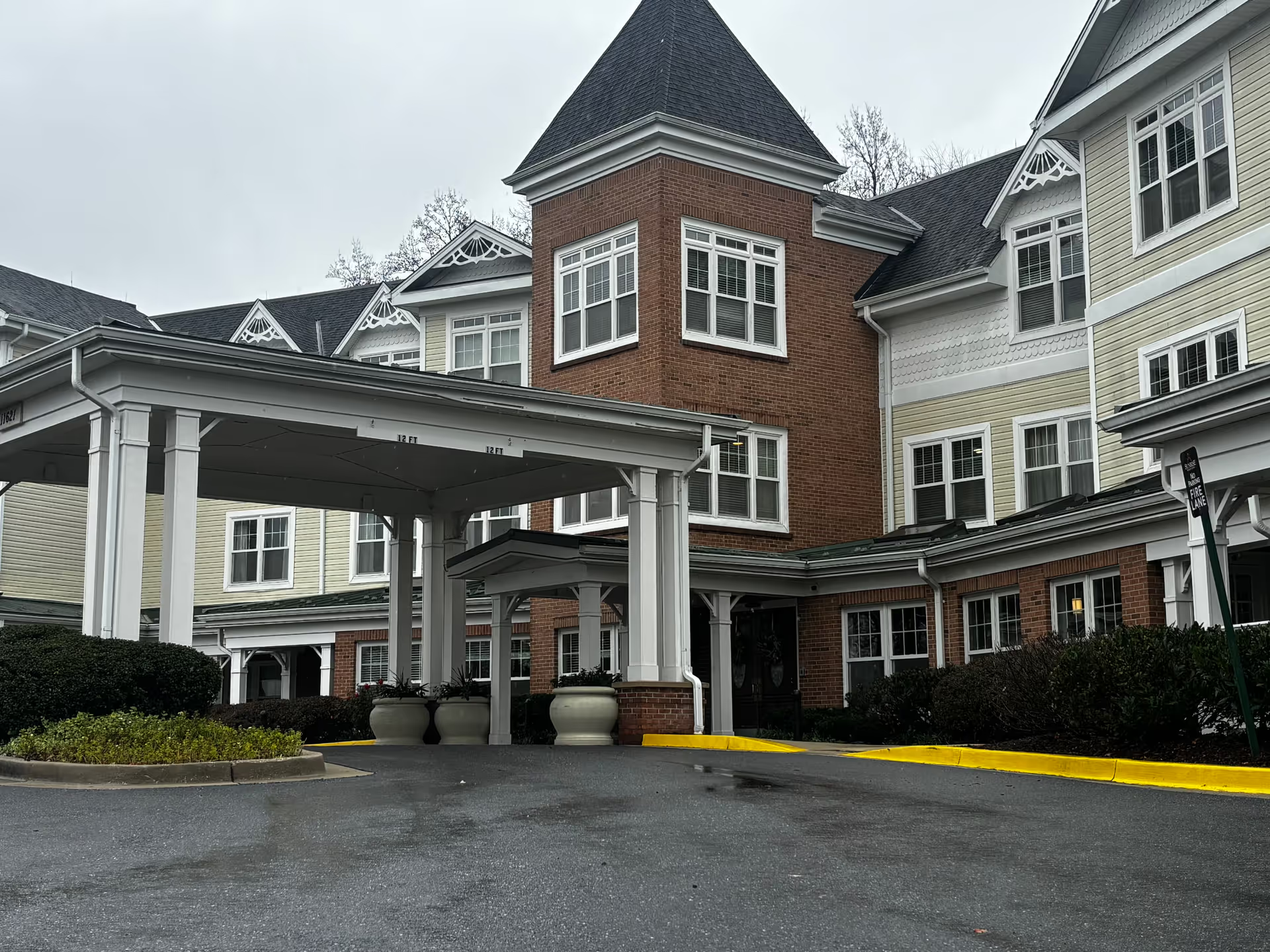
Facility condition and administration present a mixed picture. Common areas and grounds are often clean and attract positive comments, and leadership—particularly the executive director and some social‑work staff—received praise for communication and family outreach. Conversely, the building shows signs of aging in places (broken furnishings, dated rooms, malfunctioning window shades) and some reviewers cited supply-management problems. Administrative friction points included front-desk responsiveness, phone‑system issues, and occasional inconsistency in documentation or locating residents in electronic systems.
Notable patterns to consider: the facility appears capable of providing strong, rehabilitation‑oriented care and excels when staffing and leadership are engaged, but outcomes are highly dependent on shift, unit, and individual staff members. Families are advised to inquire specifically about staffing ratios, wound‑care and post‑op protocols, equipment maintenance practices, and night‑shift supervision when evaluating placement. Observing mealtime, visiting during evenings or weekends, and asking for recent examples of clinical-incident responses may help prospective residents and families assess whether the facility’s strengths align with their care needs.