The reviews for Autumn Lake Healthcare at Oakview present a strongly mixed picture. Many families and short‑term rehab patients praise the therapy team and certain front‑line staff, citing measurable functional gains and positive interactions at admissions and the front desk. At the same time, a substantial set of operational and environmental concerns appears across accounts, producing wide variability in resident experience depending on unit, shift, and individual staff members.
Care quality shows a clear split. Physical and occupational therapy services receive consistent praise for effective rehabilitation and progress toward independence; several families attributed marked improvement to the therapy teams. Conversely, nursing and basic personal‑care delivery are frequently described as inconsistent. Themes include delays in assistance with toileting and hygiene, inconsistent help with meals, instances of slow or absent responses to call buttons, and concerns about wound and skin‑integrity management. These issues are often linked to staffing levels and shift coverage rather than to the therapy programs specifically.
Staffing and staff conduct are similarly mixed. Numerous reports describe compassionate, attentive CNAs and nurses who go above and beyond, and specific staff members receive strong commendation. At the same time, reviewers describe variability in professionalism, communication tone, and responsiveness; staffing shortages, particularly on weekends and holidays, are often cited as a driver of delays. Admissions and some administrative staff are frequently characterized as helpful and communicative, but other families describe difficulty reaching nursing or finance staff and frustrations with follow‑through.
Dining and activities also diverge. The activities program receives repeated positive notes for engagement, extracurricular options, and individualized attention; volunteers are seen as a helpful supplement. Meal quality is more uneven in reviewers’ accounts: some describe acceptable food and accommodation for preferences, while others describe institutional or limited meal options and instances where families supplemented meals. In‑room amenities such as HDTVs and a TV‑centric recreational environment are noted as positives for resident comfort.
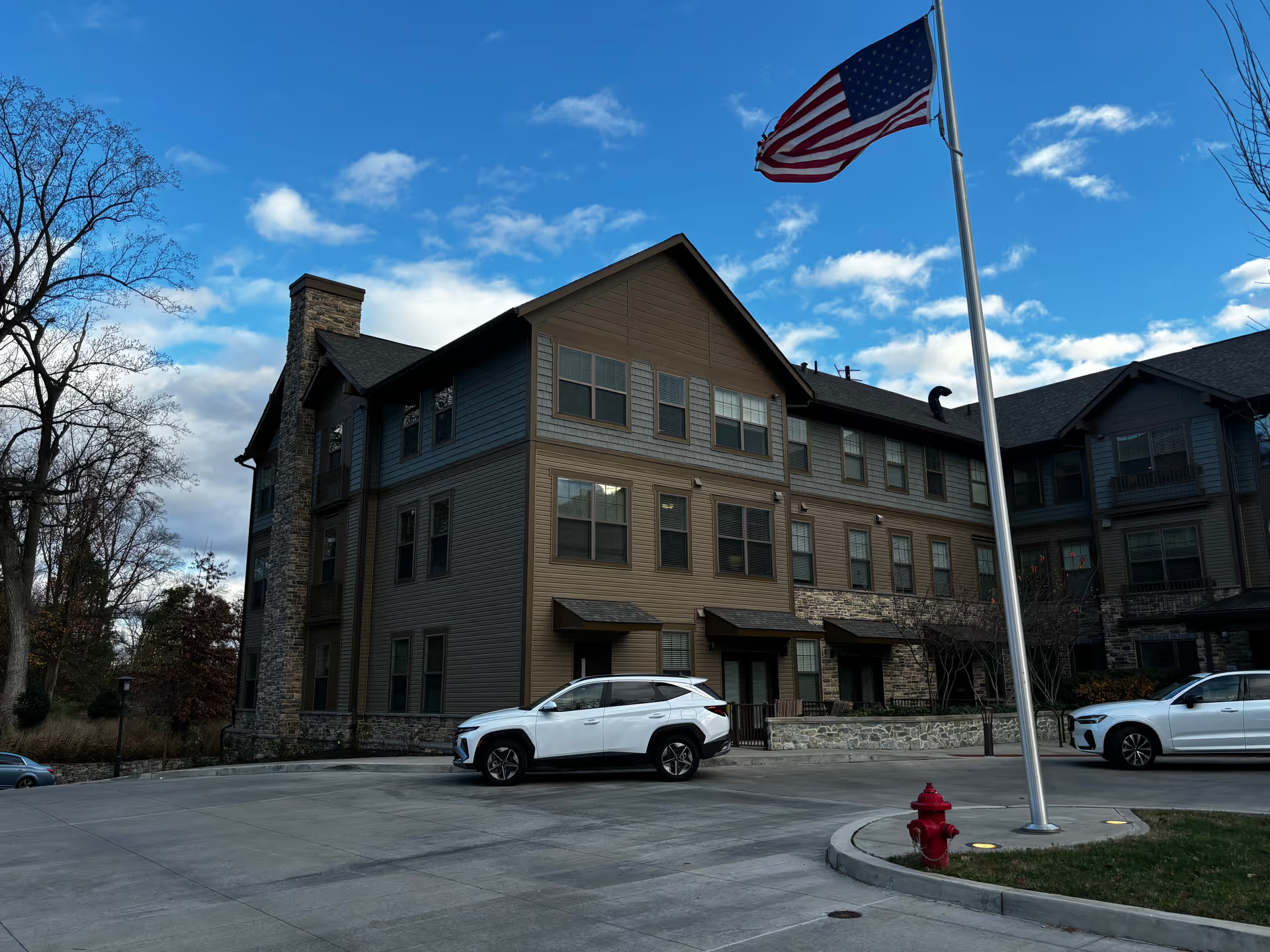
Facility condition and operations raise recurrent concerns. Many reviewers describe an older, institutional environment with maintenance issues—broken elevators, dated furniture, and areas needing renovation. Cleanliness and sanitation are called out repeatedly with reports of odors and inconsistent housekeeping; there are also mentions of pest‑control concerns in specific areas. Double‑occupancy rooms and limited amenities in some units were noted as constraints on privacy and comfort.
Management and administration receive mixed evaluations. The admissions process and certain coordinators draw favorable comments for professionalism and helpfulness, and some families report robust communication tools (video calls) and responsive problem‑solving. However, others describe unresponsive finance and administrative communication, unclear complaint‑handling, and limited evidence of consistent staff retraining or coaching. There are also allegations of missing personal items and related concerns about property security that families should monitor closely.
Notable patterns: positive outcomes cluster around the therapy teams, engaged activity staff, and particular compassionate caregivers; negative patterns cluster around inconsistent nursing coverage, housekeeping and sanitation variability, maintenance issues, and lapses in communication/coordination. Prospective residents and families would be well served to tour the specific unit they are considering, ask about staffing levels on nights/weekends, review current infection‑control and sanitation practices, confirm care‑plan adherence and therapy schedules in writing, and identify preferred points of contact in administration for ongoing communication.