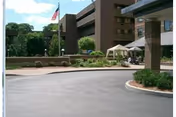
The set of reviews for Wachusett Rehabilitation and Nursing Center is highly polarized, with a recurring pattern of strong rehabilitation and compassionate day‑to‑day care on one hand and operational and clinical lapses on the other. The facility's rehabilitation services and selected care staff receive the most consistent praise: reviewers frequently highlight an effective physical and occupational therapy program, goal‑oriented therapy plans that facilitate discharge home, and named clinicians and therapists who are motivating and competent. Social work and admissions staff are also commonly cited as advocates who facilitate transitions, coordinate care, and provide useful family communication and discharge planning.
Clinical quality impressions are mixed. Positive accounts describe attentive nurses and CNAs who provide dignified, individualized care and regular progress updates. Conversely, several reviews describe delays or inconsistencies in clinical monitoring, wound care, and medication administration, including concerns about pharmacy delivery timing. Infection‑control practices and timely escalation of acute medical issues (including transfer to higher levels of care) are noted as unreliable in some reports. These patterns suggest variability in clinical oversight and responsiveness rather than uniform performance across the facility.
Operational and environmental concerns recur across the reviews. Housekeeping frequency, cleanliness of some resident and common areas, trash removal, and overall sanitation are described as inconsistent; reviewers note that housekeeping schedules and responsiveness vary by unit and shift. Bathing and hygiene schedules are another area of inconsistency, with some residents receiving regular bathing while others experienced extended intervals without showers. Food service receives mixed feedback: some families praise meals and accommodations, while others note problems with meal temperature and presentation.
Staffing and management dynamics appear to contribute to the variability in experience. Several reviews point to staffing shortages or uneven coverage across shifts and units, which reviewers link to delayed care and reduced supervision. Family communication is generally cited as a strength when social work or specific administrators are engaged, but other accounts describe gaps in communication with families and delays in relaying changes in condition. Concerns about property management (lost or misplaced personal items), building maintenance needs, and potential privacy process weaknesses are also present and suggest areas where organizational policies and oversight could be strengthened.
For prospective residents and families, the contrasting themes suggest preparing targeted questions and observations during a tour: inquire about current staffing levels and shift coverage, observe cleanliness of the unit and common areas, ask about bathing and hygiene schedules, review medication‑administration and pharmacy procedures, clarify infection‑control protocols, and meet the therapy and social‑work teams. Many families report excellent outcomes when therapy and nursing teams are fully engaged; others recommend close monitoring of clinical response times and escalation processes. Overall, the facility demonstrates notable strengths in rehabilitation and individualized, compassionate care from particular staff members, but also shows operational inconsistencies that merit careful evaluation prior to placement.