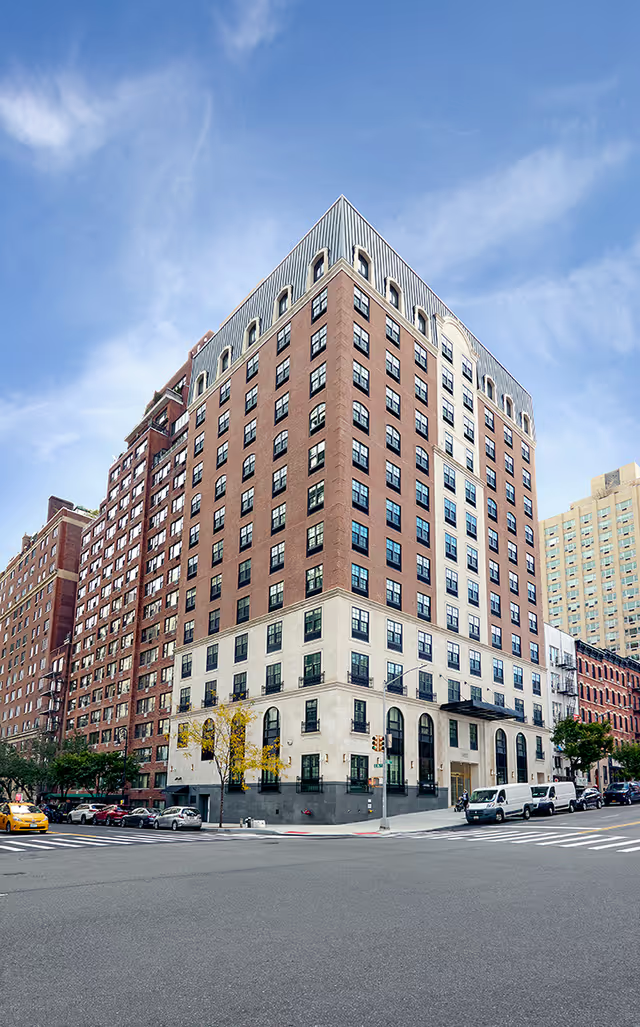
Optima Care Harborview elicits a strongly mixed set of impressions. The facility receives repeated praise for its rehabilitation services and many frontline staff: physical and occupational therapy teams are frequently described as effective at helping residents regain function and confidence, with measurable gains noted. Numerous reviewers also highlight compassionate, attentive nursing aides and caregivers who provide daily support, alongside active recreation programming and a social atmosphere that many families find welcoming. Several reviewers describe clean, well-maintained common areas and a pleasant terrace or view, and a number of accounts praise admissions staff and specific dietary staff members for accommodating needs and improving meal quality.
At the same time, a consistent pattern emerges around variability. Staffing levels and scheduling appear inconsistent, producing uneven resident responsiveness and delays in attending to call bells. Reviewers describe a broad range of staff competence: some clinicians and aides are singled out for exceptional care, while other shifts or individuals are characterized as less responsive or less skilled. These personnel inconsistencies are closely linked to operational weaknesses: delayed assistance, inconsistencies in bathing and incontinence care, and occasional lapses in safety practices or transfer coordination.
Clinical and administrative processes show both strengths and vulnerabilities. Positive notes include attentive clinicians who manage infections and provide clear progress updates; however, there are also serious concerns about medication-administration controls, documentation, and clinical-incident follow-up. A few reviewers raised allegations of falsified medication records and difficulties with medical-record coordination, and others described delayed diagnostic steps or transfer decisions that affected outcomes. Communication with families is uneven: some administrators and social-work staff are praised for responsiveness and an apparent turnaround in practices, while other accounts describe unresponsive front-desk staff, restricted feedback opportunities, and inconsistent family coordination.
Dining and housekeeping present mixed signals. Several reviews report poor or inconsistent meal quality and challenges accommodating special diets, while others emphasize an improving kitchen, strong dietary staff, and specific high-quality menu options. Similarly, sanitation and maintenance comments vary widely: many describe clean, organized rooms and attentive housekeeping, but a notable subset of reviews raise sanitation, odor, and pest-control concerns and cite variability across units.
Facility-level logistics and safety considerations also appear in the feedback. Parking and driveway access have been called out as problematic for emergency access at times. A few reviewers mentioned environmental or equipment concerns (temperature control and oxygen-equipment handling), underscoring the need to verify safety protocols. There are also recurring notes about operational coordination during discharges and transfers that prospective families should consider.
Overall, Harborview demonstrates clear strengths in rehabilitation, many dedicated frontline caregivers, and active engagement programming. The primary risks for prospective residents and families center on variability: inconsistent staffing and responsiveness, gaps in clinical documentation and medication controls, and mixed performance on dining and sanitation. Families considering Harborview should ask specific questions about current staffing ratios and turnover, medication-safety practices and documentation audits, dining accommodations for special diets, emergency access logistics, and how the facility addresses family communication and incident follow-up. Visiting during different shifts and speaking directly with therapy, nursing leadership, and admissions staff can help assess whether the current operational strengths align with an individual resident's needs.