The collected feedback portrays Caring Hearts Senior Housing Advisors as a highly engaged placement service that emphasizes personalized, family-centered transitions into assisted living and memory-care settings. The most salient strengths are the advisor-led, hands-on approach: advisors conduct thorough needs assessments, ask targeted questions, arrange and sometimes accompany families on facility tours, and remain available by phone for rapid coordination. Many families noted detailed follow-up after a move, including in-person visits and ongoing check-ins, which contributed to perceived continuity of care and family reassurance.
Care and staff at the referred facilities are described in warm, relational terms. Reviewers emphasize compassionate, attentive caregivers and a homelike, small-residence model in many placements. These environments were credited with preserving residents' dignity, providing individualized attention, and producing high levels of family satisfaction. Memory-care and specialized placements were identified where needed, and families reported that caregivers helped residents settle and adapt, with examples of small touches (anecdotally, homemade treats) that reinforced a family-like atmosphere.
Dining and activities are less consistently documented in the feedback, but anecdotal cues point toward home-style dining in some residences and personalized activity support rather than broad, standardized programming. Because many placements were into smaller residential homes, programming appears to be individualized and tied to staff availability and home size; families tended to value social comfort and attentive staff more than formalized large-scale activity offerings.
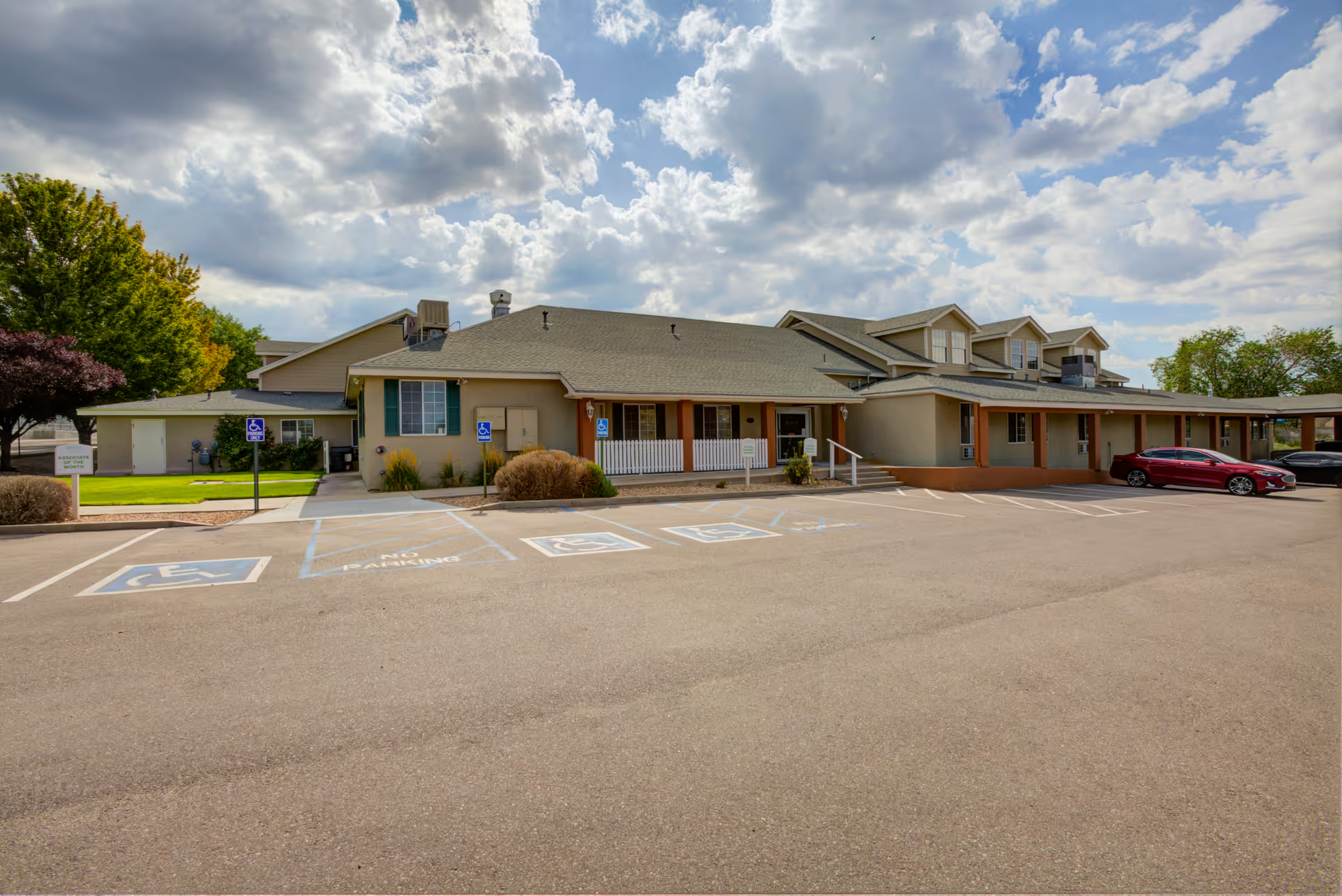
Facilities themselves are generally characterized as well-matched to the residents' needs: reviewers reference clean, comfortable rooms, smaller-scale homes, and settings where residents felt safe and happy. The small-home model is a recurring pattern and is associated with close staff–resident relationships and individualized supervision. That model, however, can imply limits on on-site clinical depth and amenity breadth compared with larger communities.
Management and the placement process receive consistent praise for responsiveness, local expertise, and logistical support. Advisors are credited with rapid lists of available beds, expedited scheduling, Medicaid-waiver guidance, and the ability to coordinate remotely for out-of-state families. A notable pattern is the reliance on knowledgeable individual advisors who provide continuity and hands-on advocacy; this contributes strongly to families' peace of mind.
Notable patterns and potential limitations inferred from the feedback: because many placements were into small, local homes, families sometimes needed to make timely decisions when rooms became available, indicating constrained bed availability in the local market. The small-home approach also appears to produce variability in on-site clinical services and in the scope of activities or formal programming between different homes. Finally, the placement service’s strengths are concentrated in the local geographic network referenced in the reviews, which may limit options for families seeking placements outside that area. Overall, the product of the placement process is a high-touch, family-oriented transition that prioritizes individualized fit and ongoing advisor involvement, with trade-offs typical of smaller residential settings (capacity limits and variable specialized services).