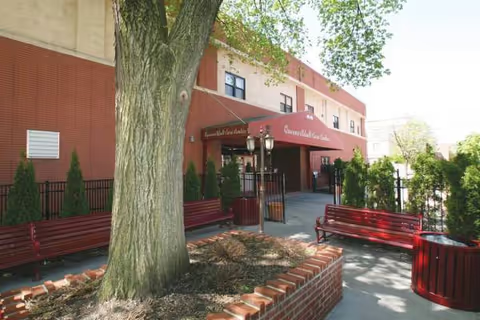
Bedford Center for Nursing and Rehabilitation presents a mixed profile: it earns consistent praise for rehabilitation, cultural programming, and many individual caregivers while also showing recurring operational weaknesses that families should probe before placement.
Care quality and clinical services: The facility is frequently commended for strong physical and occupational therapy, with multiple accounts of meaningful functional improvement and personalized therapy plans. Nursing leadership and many bedside caregivers are described as knowledgeable and compassionate; several families highlighted attentive vital monitoring and proactive follow-up. At the same time, reviews point to variability in clinical responsiveness across shifts — including delayed responses to call bells, slow diagnostic or lab follow-up, and gaps in documentation or transfer paperwork provided to hospitals. A number of reviewers raised concerns about infection-control consistency during outbreak periods and described serious clinical situations that families felt were mishandled; these items suggest the need to verify current protocols, staffing ratios, and incident escalation procedures.
Staff and conduct: Staff interactions elicit both strong positive and negative impressions. Many reviewers describe warm, family-like relationships, culturally responsive care (especially Jewish pastoral support, daily minyanim, and holiday programming), and helpful front-desk and social-work support. Translation services for Mandarin and Cantonese are praised. Counterbalancing this, there are repeated comments about inconsistent professionalism among some frontline employees, noisy or disruptive conduct at times, and defensive or uncommunicative behavior by certain supervisors. These patterns indicate variability in training, supervision, and shift-to-shift culture.
Dining and activities: Activity and spiritual programming are clear strengths. The recreation program, religious services, regular visits from clergy, and culturally specific events receive strong endorsement and appear to provide meaningful engagement. Dining feedback is mixed: several families praised kosher offerings and varied menus, while others reported inconsistent meal temperature/quality and occasional reliance on external food deliveries. Verify meal-service reliability and any extra-cost meal options if these are important to you.
Facilities and housekeeping: The building includes recently renovated rooms, modern in-room amenities, and generally bright common areas, which many families appreciated. However, there are recurring housekeeping and sanitation concerns in certain units (including isolated pest-control reports and inconsistent cleaning of rooms and common spaces). Families should ask about current cleaning schedules, pest-control contracts, and unit-specific conditions.
Management, administration, and logistics: Families noted strengths in discharge planning, on-site physician availability, and social-work advocacy in many cases. Conversely, administrative weaknesses appear as inconsistent family communication, billing or unexpected charges for certain services, issues with personal-belongings handling, and occasional difficulty reaching staff or leadership. Several reviews described restrictive or poorly communicated visitation practices during critical moments; others described delays in arranging tests or specialist follow-up. These are operational areas to confirm in advance — request written policies for visitation, billing, belongings, and escalation procedures.
Overall impression and guidance: Bedford Center may be a strong option for short-term rehabilitation patients and for families seeking robust Jewish cultural and spiritual programming alongside active therapy. The facility demonstrates clear clinical and programmatic strengths, but reviewers describe variability in housekeeping, staff responsiveness, shift-to-shift professionalism, infection-control consistency, and administrative communication. Prospective residents and families should tour the specific unit, ask about recent staffing and infection-control metrics, confirm meal policies and extra-cost options, review documentation-handling procedures for hospital transfers, and clarify belongings/inventory protocols. Speaking directly with the social worker and onsite clinicians about care plans and escalation pathways can help align expectations and reduce the operational risks noted in reviews.