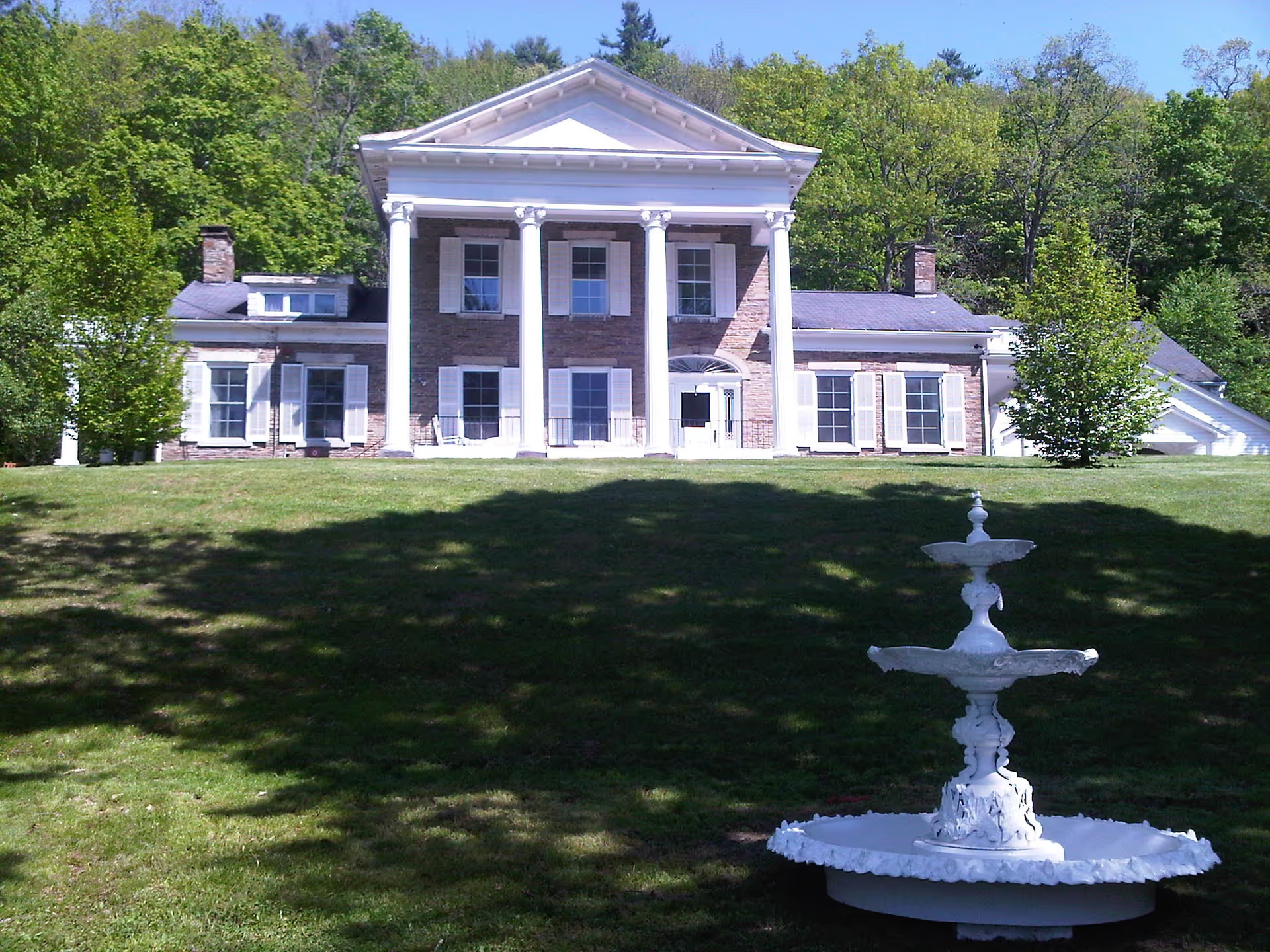
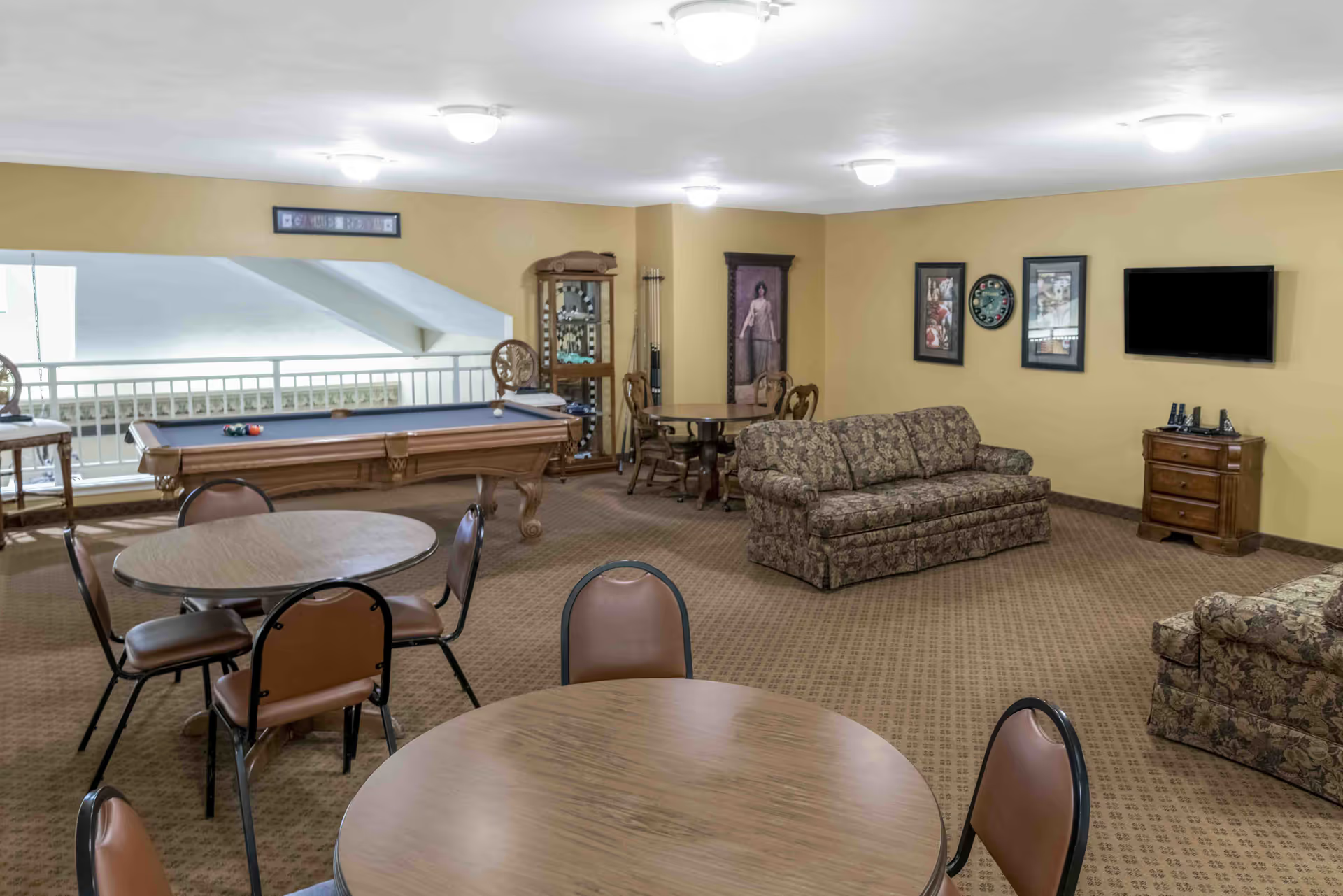
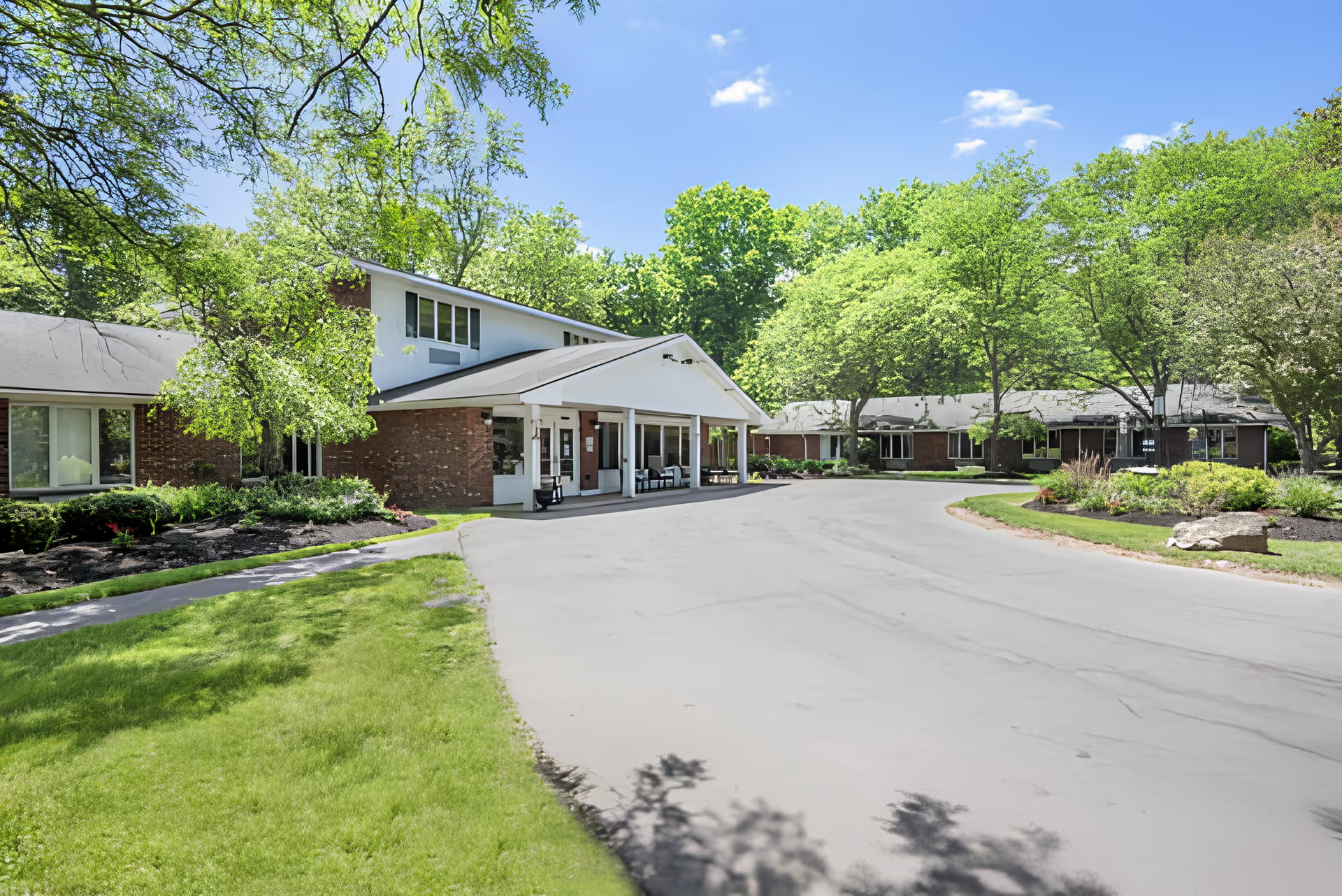
The reviews present a facility with pronounced variability across nearly all dimensions of care. Rehabilitation services—particularly physical, occupational, and speech therapy—are a consistently cited strength: many families praised therapy teams for helping residents regain function and return home. Numerous reviewers also described individual nurses, aides, and support staff as compassionate and attentive; concierge and transportation staff received repeated positive mention. The activities program and special events (live music, celebrations, holiday programming) are frequently described as engaging, and the courtyard and ability to personalize rooms contributed to positive resident experiences.
At the same time, a significant pattern of operational weaknesses appears across reviews. Staffing levels and staff responsiveness are inconsistent: families reported long waits for assistance, delays with toileting and turning, and variable performance between shifts and individual staff members. These staffing inconsistencies are linked in several accounts to clinical-safety concerns, including falls, delays in transfer assistance, and delays in addressing wounds or infections. Several reviews raise concerns following serious clinical incidents, including hospital transfers and a resident death; in a few cases reviewers described prolonged delays before clinical attention. There are also recurring comments about gaps in clinical oversight and on-call physician availability.
Food service and housekeeping show a mixed picture. Some reviewers praised meal variety and large portions, while many others reported food-temperature issues, limited alternatives for special diets, and inconsistent quality. Cleanliness and facility maintenance were repeatedly noted as problematic in parts of the building: worn carpeting and furniture, cleanliness issues in some rooms and hallways, and dated common areas were common themes. Personal-belongings management and inventory control also emerged as an operational concern, with allegations of lost or mishandled items and related family frustration.
Communication and administration are another area of divergence. Several families described efficient, caring communication from specific staff members and an administration working to improve services; others reported poor follow-up from social work or management, lack of timely callbacks, unclear discharge planning, and billing disputes. Staff conduct supervision—examples include personal cell-phone use while on duty, smoking near entrances, and inconsistent professionalism—was raised as a contributing factor to uneven care quality.
Taken together, the pattern in these reviews is one of pronounced variability: the facility is capable of delivering high-quality rehabilitation and compassionate individualized care, yet operational inconsistencies—staffing, clinical oversight, sanitation, food service, belongings management, and administrative responsiveness—create risk for adverse experiences. Prospective residents and families should weigh the facility’s strong therapy and activity offerings and the presence of dedicated staff against the noted operational gaps. When evaluating the facility in person, consider observing mealtime, housekeeping, staff responsiveness on different shifts, documentation of medication and wound care protocols, on-call physician coverage, and the facility’s policies for belongings and incident reporting.