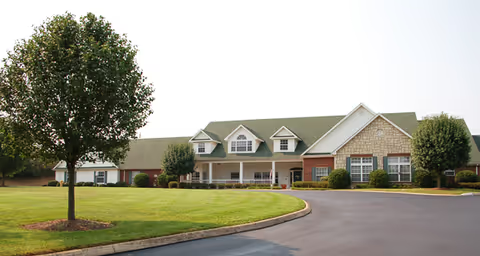
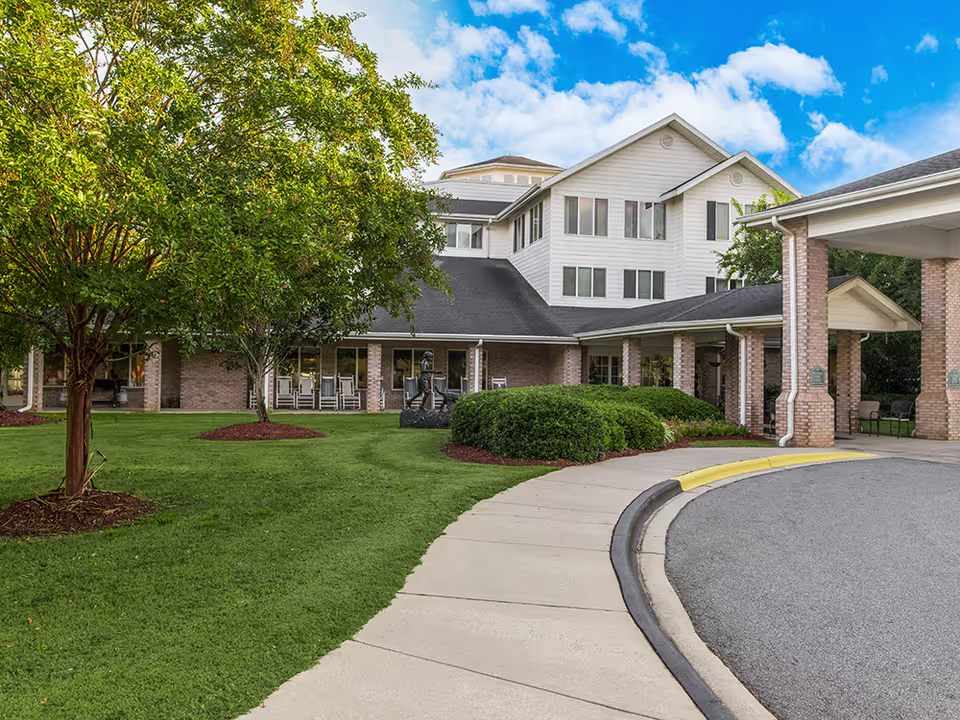
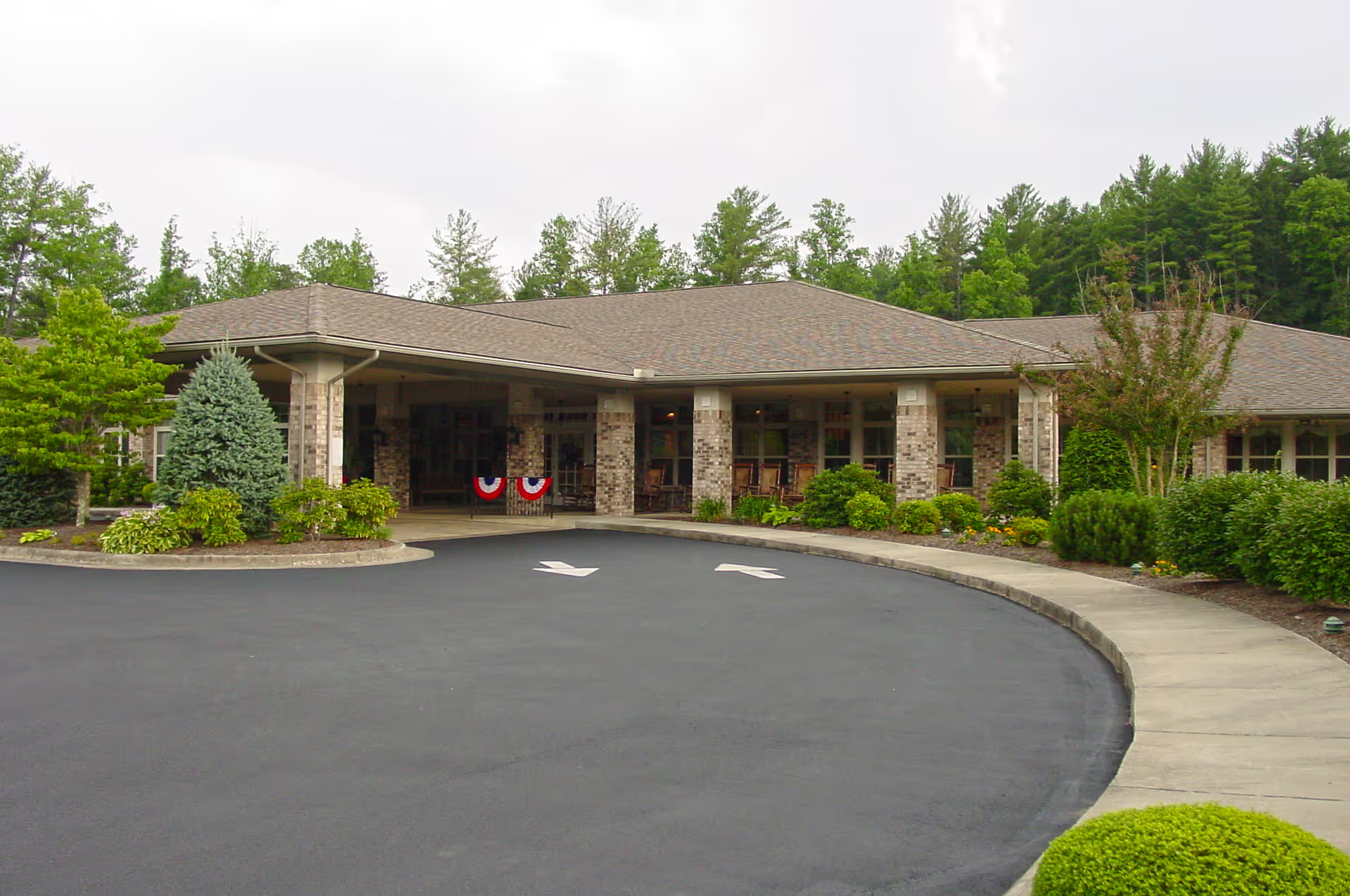
Cambridge House presents a mixed but clarifiable profile: the physical environment and many direct-care interactions receive frequent positive mention, while operational and management issues emerge as recurring challenges. The facility is described as clean, cozy, and well kept, with a generally pleasant interior and meal services prepared on site. Families and visitors commonly note caring, attentive staff members who provide individualized assistance, facilitate doctor appointments, and support mobility needs. Regular recreational offerings such as bingo, crafts, balloon toss and organized outings are available, and several reviewers highlighted smooth admissions and transition experiences when individual staff members were engaged.
Clinical and day-to-day care quality appears uneven. Many accounts praise hands-on caregiving and compassionate staff conduct, yet there are consistent concerns about medication-management processes and delays in attending to personal-care needs. These operational weaknesses have clinical implications — for example, delays in incontinence care and inconsistent responsiveness to call-buttons were noted — and prospective families should ask specific questions about medication protocols, staffing ratios, and response-time expectations during visits.
Staffing and communication are mixed areas. The facility benefits from staff who go beyond their duties and from an on-site physician in some instances, but reviewers also describe staffing instability related to layoffs and variable coverage that can affect continuity of care. Communication with families and between staff and residents is highlighted as an area needing improvement: examples include poor evening supervision leading to resident conflict, scheduling delays, and inconsistent family updates. Accessibility accommodations for residents with sensory impairments are another operational gap identified; families of deaf or visually impaired individuals should inquire about available assistive communication measures and training for staff.
Dining and activities generally receive positive notes: food quality is often described favorably, and transportation plus community outings are available. However, activity programming appears inconsistent in breadth and regularity — reviewers praised specific events but also reported a lack of structured exercise options and variability in daily programming. Facilities offer semi-private room configurations and en-suite bathrooms in some units, which many find affordable and comfortable, though shared-room arrangements may feel space-limited to some families.
Management and administrative practices show variability. Some families experienced responsive, helpful administrative staff and smooth transitions, while others described poor scheduling, perceived unhelpfulness from maintenance or administrative personnel, and broader concerns about management consistency across properties. This pattern suggests uneven leadership practices rather than uniformly poor performance; prospective families may benefit from asking for recent staffing turnover data, examples of staff training, and clarification on escalation channels.
In summary, Cambridge House combines a clean, comfortable physical environment and many compassionate caregiving staff with notable operational weaknesses in medication management, responsiveness to personal-care requests, accessibility accommodations, and administrative consistency. For families considering this facility, recommended topics to address on a tour include medication administration protocols, staffing levels at different times of day (especially evenings), response-time expectations for call-buttons, accommodations for sensory impairments, activity and exercise programming, and policies around room configurations and privacy.