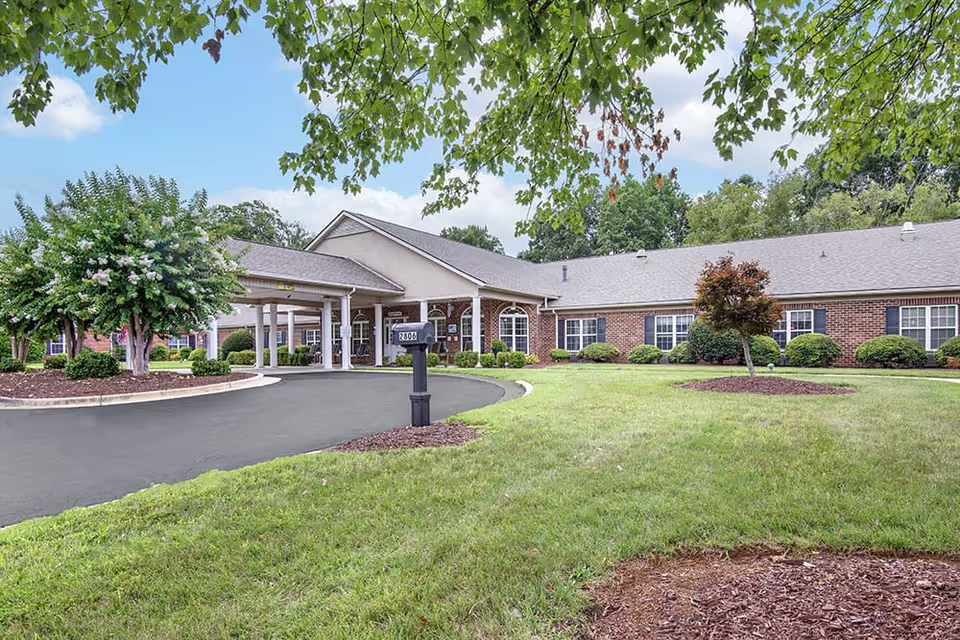
The reviews for Piedmont Village Office present a polarized picture: several accounts praise direct caregivers, family advocates, and the dining program, while a substantial set of concerns relate to sanitation, odor, and operational responsiveness. Prospective residents and families will find both positive reports of engaged staff and higher-than-typical meal quality alongside repeated mentions of facility-level problems that could affect daily living and care continuity.
Care quality and safety: Reviewers raised concerns about delays in routine assistance and waking for meals, which some felt increased the risk of pressure injuries and missed nutrition opportunities. At the same time, there are statements that individual caregivers can be caring and attentive. The pattern suggests variability in day-to-day care delivery and inconsistency in adherence to repositioning, toileting, and other scheduled assistance tasks.
Staff and culture: Comments describe a mix of staff behavior. Some direct-care employees are characterized as compassionate and engaged with family advocates, whereas other accounts point to unfriendly or disrespectful interactions and perceived unresponsiveness. Low caregiver pay was explicitly cited and may be associated with turnover or staffing instability that contributes to uneven service levels.
Dining and activities: Dining receives relatively positive notices; several reviewers compared meal quality favorably to outside restaurants. However, operational issues—such as residents not being awakened or assisted in time for meals—undermine that strength for some residents. The reviews contain limited detail about activities programs, with no consistent pattern of either robust programming or specific activity shortfalls beyond general involvement by advocates.
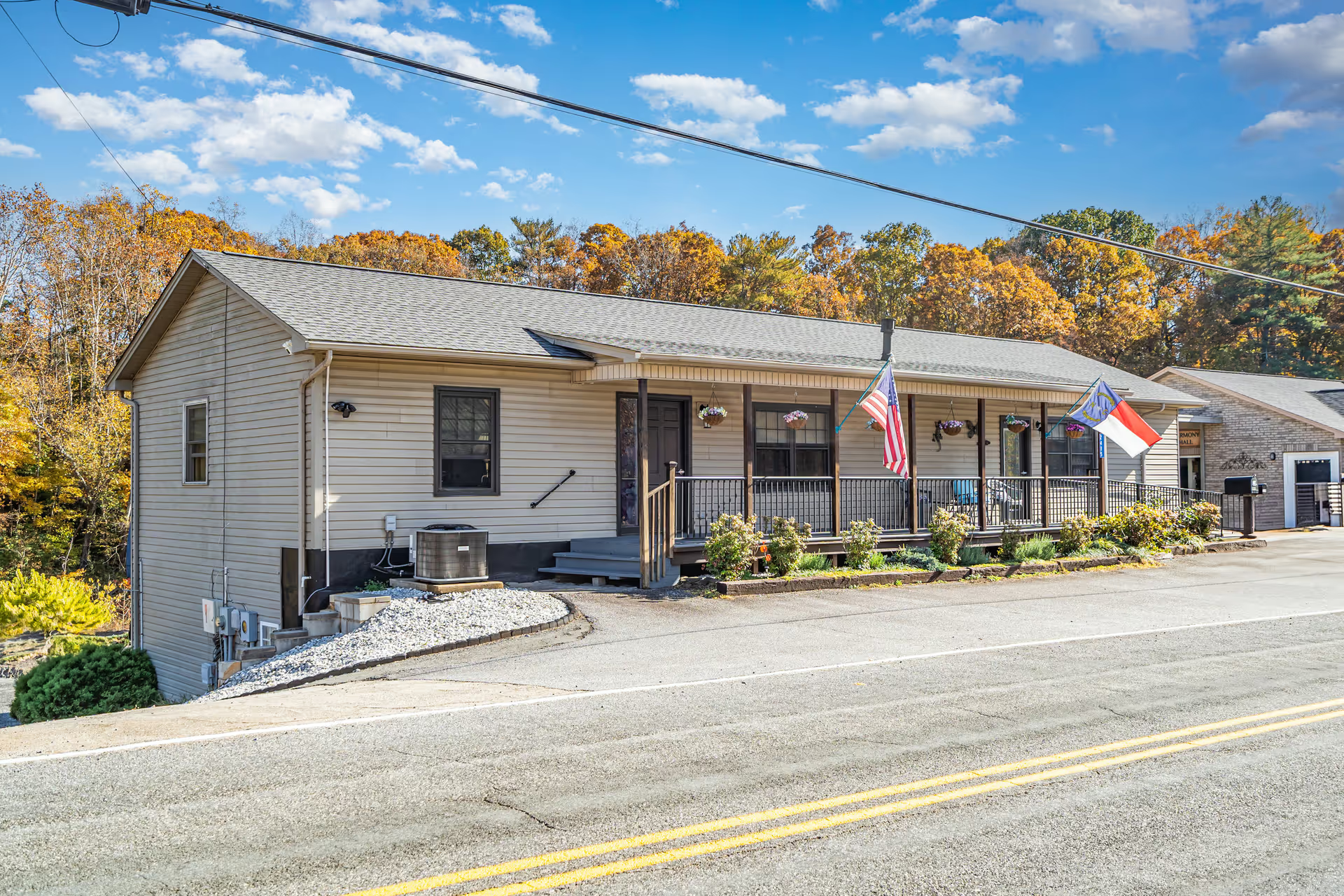
Facilities and environment: Multiple reviewers described sanitation- and odor-related issues in common and resident areas, along with concerns about ventilation and building maintenance. Those descriptions imply gaps in cleaning protocols, incontinence-care handling, and environmental controls that management should address to improve resident comfort and infection-control risk.
Management and responsiveness: There are recurring remarks about management not adequately addressing concerns raised by families or staff. This perceived lack of responsiveness, combined with staffing pressures tied to pay, appears to contribute to the operational inconsistencies described above.
Notable patterns and suggested next steps: The reviews indicate a split between positive experiences (caring caregivers and strong meals) and systemic operational problems (cleaning, odor, staffing, and inconsistent assistance). Families touring the facility should observe cleanliness and odor levels, ask about cleaning schedules, incontinence- and repositioning protocols, staffing ratios and turnover, ventilation and maintenance plans, and the facility’s process for escalating and resolving family concerns. Requesting recent inspection reports and speaking directly with unit-level staff and active family advocates can help clarify how persistent these issues may be and whether corrective actions are underway.