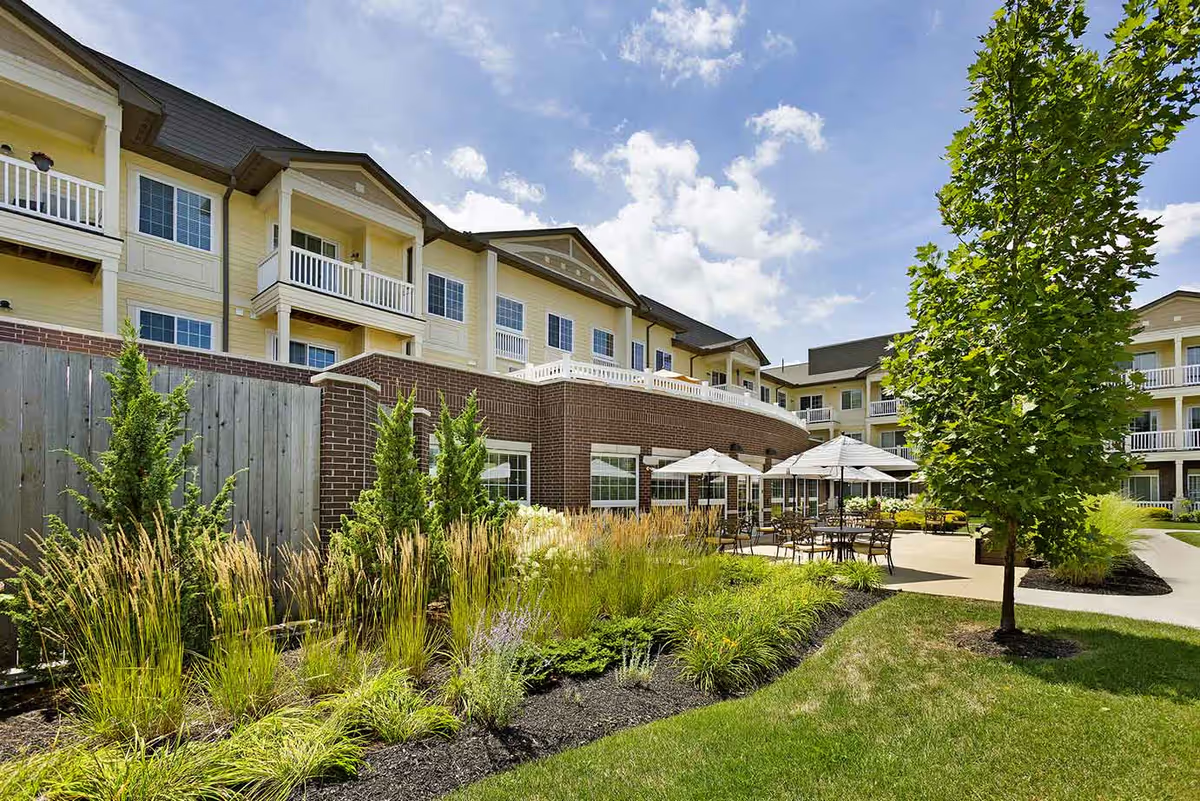
Overview: The Laurels of Heath elicits strongly mixed impressions. Many families and clinicians praise the facility’s rehabilitation capabilities, respiratory expertise, and the compassion of individual nurses, aides, and therapists. At the same time, a consistent pattern of operational weaknesses—primarily around staffing, responsiveness, communication, and some elements of clinical oversight—appears across reviews. These competing themes make the facility a place where outcomes and experiences can vary substantially depending on unit, shift, and individual staff assignment.
Care quality and clinical monitoring: Rehabilitation and respiratory care are clear strengths: several accounts describe effective PT/OT/speech programs, one-on-one therapy, and 24/7 respiratory/ventilator support that contributed to tangible functional gains and successful discharges. Conversely, reviewers also describe delays in attending to residents’ needs, inconsistent vital-sign monitoring, and medication timing problems. These descriptions point to gaps in clinical monitoring, medication-administration controls, and urgent-response processes that appear linked to staffing levels and shift coverage. There are also serious, singular regulatory concerns documented in reviews; at least one report references allegations sustained by a State Medical Board, indicating the need to review inspection and enforcement records when evaluating placement.
Staffing, culture, and communication: Staff are frequently described as caring, knowledgeable, and long-tenured, and many reviewers single out individual employees and therapy teams for high-quality, person-centered care. However, staffing shortages, high workloads, and low pay are also recurrent themes and appear to contribute to inconsistent responsiveness and varying care quality. Communication is another mixed area: some families praise clear, timely updates and hands-on administrative leadership, while others report difficulty reaching staff, use of ad-hoc personal devices rather than facility systems, and slow or ineffective responses to complaints. These patterns suggest that staff commitment is a strength, but organizational communication systems and managerial follow-through are inconsistent.
Dining, activities, and resident life: Dining and activities receive largely positive remarks. Many reviewers describe restaurant-style meals, generous portions, an on-site café/snack bar, and responsive dietary accommodations. Activity programming, music therapy, holiday events, and community involvement are commonly cited as strong contributors to resident quality of life. That said, food quality and meal temperature are sometimes inconsistent, with discrete accounts of under- or over-prepared items; families should expect variability across meals and shifts.
Facilities and housekeeping: Physical plant and amenities are often described as clean, recently renovated, and welcoming, with large private rooms and en-suite bathrooms noted as positives. Yet several reviews raise sanitation concerns, inconsistent housekeeping, and localized odor issues in certain areas or units. These observations indicate that environmental services performance may be uneven across the building and shifts.
Management, oversight, and patterns to watch: Leadership impressions vary. Some reviewers praise engaged, hands-on administrators and prompt problem resolution; others describe slow complaint handling, perceived prioritization of operational metrics over family concerns, and inadequate follow-through. Recurrent themes—staffing instability, variable responsiveness, documentation practices, and uneven housekeeping—suggest systemic operational issues rather than one-off incidents. There are also serious individual complaints (including regulatory action) that prospective families should investigate by reviewing state inspection reports and recent enforcement history.
Bottom line: The Laurels of Heath offers notable strengths in rehabilitation, respiratory care, individualized therapy, and many compassionate staff members, alongside facility amenities and an active activity program. However, variability in staffing, responsiveness, clinical monitoring, housekeeping, and management responsiveness creates an uneven overall experience. Prospective residents and families considering placement should verify current staffing ratios, ask about after-hours access and communication systems, review recent state inspection and enforcement records, and arrange an in-person tour focused on the specific unit and shift in which the resident would be placed.