Overall sentiment in the reviews is highly mixed and polarized: many families and residents praise Gaymont Care and Rehabilitation for compassionate, family-like care and strong rehabilitation services, while other reviews describe serious safety, staffing, and hygiene failures that raise regulatory and ethical concerns. Positive accounts consistently highlight staff who go the extra mile, effective therapy and rehab outcomes, attentive dementia and hospice care, and a broad team (nurses, aides, housekeeping, kitchen, laundry, therapy, activities, administration) that works together to support residents and families. Negative accounts emphasize understaffing, neglect, unsanitary conditions, medication and oxygen mishandling, and allegations of abuse — some serious enough to prompt state complaints.
Care quality and staff behavior emerge as the most frequently discussed themes, but in very different lights. Many reviewers describe staff as loving, attentive, cheerful, and family-oriented; they note frequent checks, personalized assistance, and staff who are courteous and go out of their way to help. Several reported excellent experiences with rehabilitation staff, therapy interventions, and successful recoveries, and praised ongoing support after discharge. Dementia and hospice care receive positive mention in multiple summaries where staff built special bonds with residents and treated families with kindness and respect.
Conversely, a significant portion of summaries report troubling care failures tied largely to staffing and supervision. Recurrent claims include delayed call-button response, missed medications or poorly timed meds, oxygen being turned off for extended periods, insufficient bathroom assistance, and clinical decisions such as apparent over-sedation or unnecessary confinement to a wheelchair. The most serious allegations include mistreatment and abuse by staff, and a specific complaint that an employee previously fired for resident abuse (and caught smoking on the property) was rehired — a claim that, together with mentions of state complaints, suggests lapses in hiring, supervision, and accountability in at least some instances.
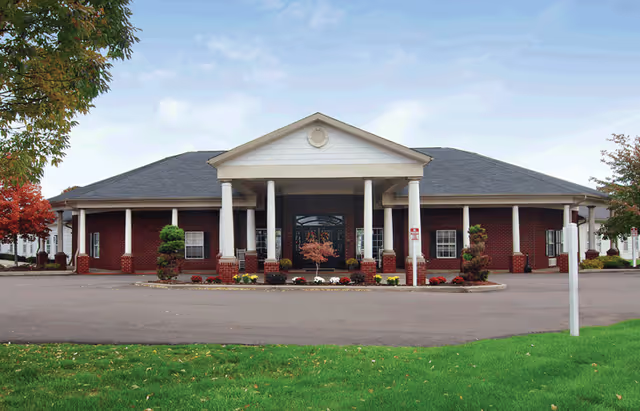
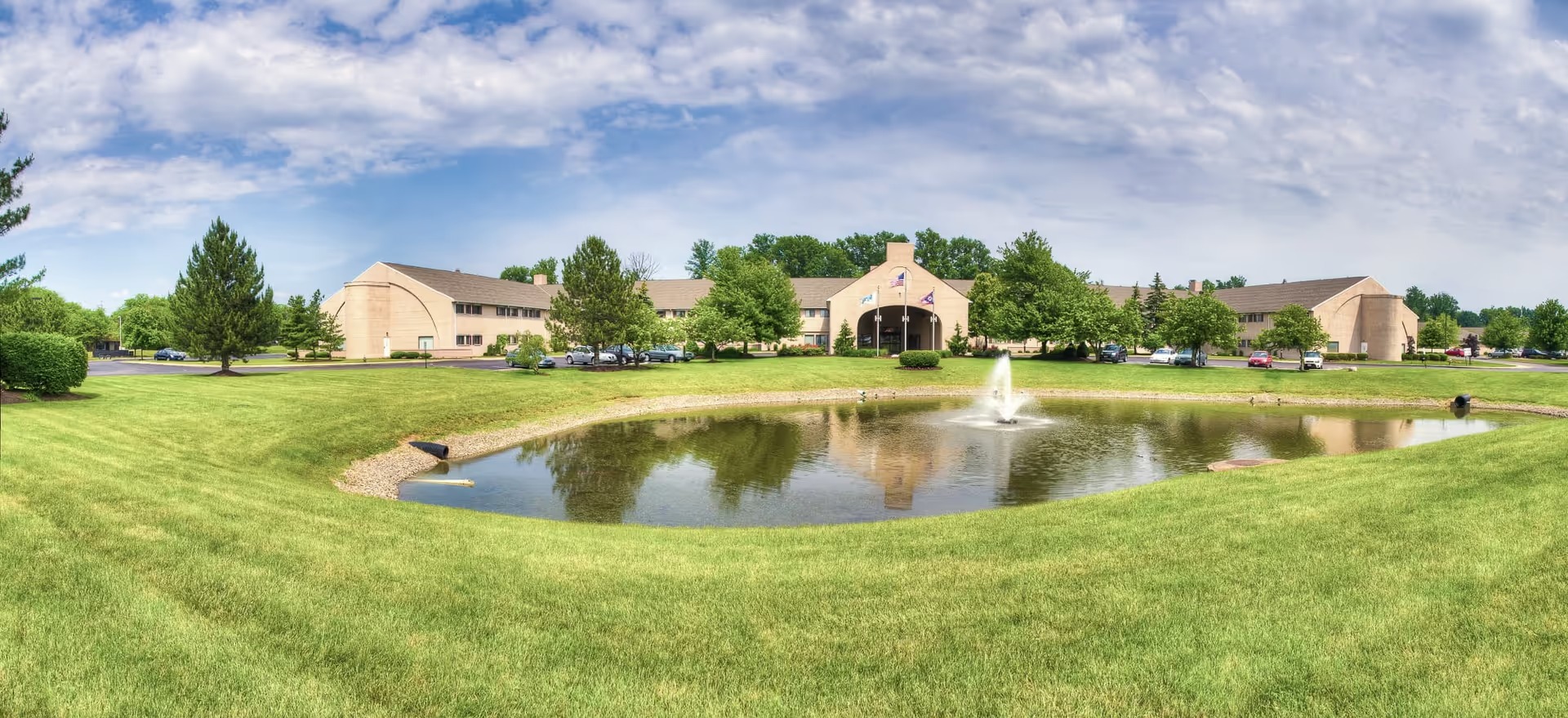
Facility condition and housekeeping are also inconsistent across reviews. Some families describe a clean, well-decorated, home-like environment with fresh coffee and pleasant common spaces, while others describe dirty, smelly, and noisy conditions, soiled sheets, reused cleaning rags, and inadequate toilet cleaning. These divergent reports suggest variability between units, shifts, or time periods — or uneven adherence to housekeeping protocols. Maintenance and aesthetic issues (hallways needing updating, general upkeep) are noted by several reviewers even when they otherwise praise the staff.
Communication and administration receive mixed reviews. Several summaries praise responsive admissions staff, clear explanations from dietary or administration, smooth check-in, and helpful updates. Other reviewers report poor communication: unanswered voicemails, phones not being returned, a doorbell/entry system that requires multiple rings (a practical access problem), billing and Medicare/insurance concerns, and critiques of management’s staffing and business decisions. The combination of responsive individual staff and uneven managerial performance suggests that frontline employees may be committed but under-supported by leadership and resources.
Dining and activities are generally described as a positive part of life for many residents, with an active activities director and a varied menu, though food quality is repeatedly called out as inconsistent or poor in some reviews. The activities program and social engagement appear to be strengths where present, contributing to the “family-like” atmosphere reported by many families.
Patterns and likely root causes: many negative accounts explicitly connect lapses in care to understaffing, budget constraints, and frequent call-offs. Reviews recommend hiring more staff and improving scheduling and supervision. The coexistence of strong, compassionate staff accounts with serious neglect and abuse claims suggests variability that could be caused by turnover, inconsistent training, uneven management oversight, and resource limitations. Reports of rehiring problematic employees and state complaints point to governance and hiring-policy issues that should be addressed to protect residents.
Recommendations implied by the reviews: prioritize staffing stability and adequate nurse/aide-to-resident ratios; strengthen hiring, background-check, and disciplinary policies; standardize housekeeping and infection-control practices; improve medication administration protocols and monitoring for oxygen/critical care needs; fix communication pathways (phone, voicemail, call-light systems, and entry doorbell); address billing transparency; and respond promptly to family concerns. Given the extremes in experiences, prospective residents and families should tour the facility, ask about staffing levels, observe cleanliness, review recent state inspection reports, and speak with current families to understand current conditions.
In summary, Gaymont Care and Rehabilitation elicits strongly positive testimony about the compassion, dedication, and effectiveness of many frontline staff — particularly in rehab, dementia, and hospice settings — but also serious, recurring negative reports regarding understaffing, safety, sanitation, medication handling, and management oversight. The reviews portray a facility capable of excellent care in many cases, but also one with systemic vulnerabilities that have, for some residents, led to neglect or worse. Addressing staffing, supervision, housekeeping, communication, and hiring/accountability practices would be essential steps to reduce the variability and mitigate the most serious concerns raised by reviewers.