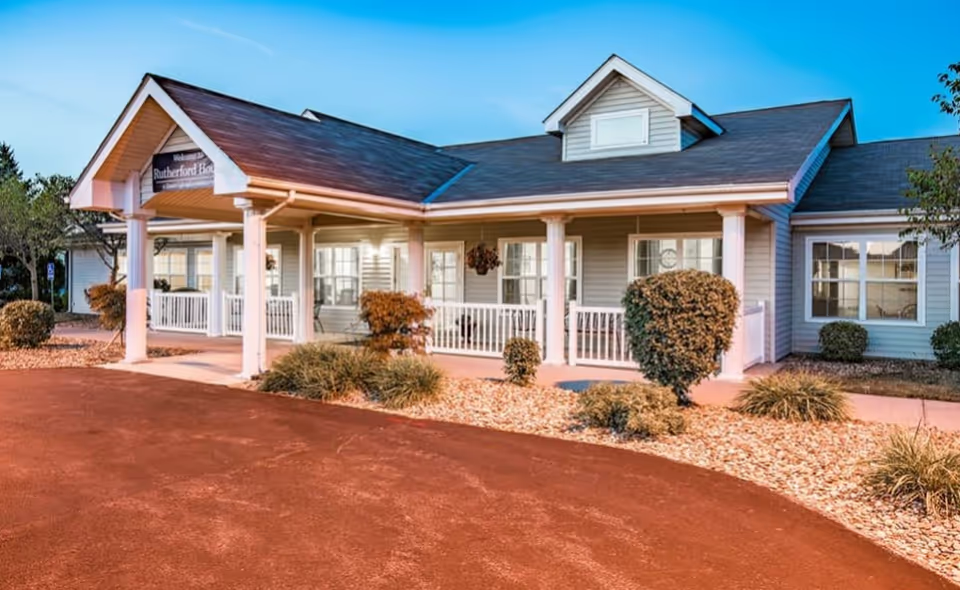
The reviews portray Otterbein Pemberville as a campus with many facility-level strengths alongside recurring operational weaknesses. Positive themes include a spacious, well-landscaped campus with pleasant outdoor spaces, accessible villas and apartments, and an on-site continuum of care that ranges from independent living through assisted and skilled nursing. Residents and families frequently highlight a strong therapy/rehab program, robust activities and outings, gardening opportunities, transportation services, and a chef-driven menu. Many accounts emphasize a warm, family-like culture among residents and direct-care staff, with long-tenured employees and visible staff camaraderie.
Care quality descriptions are mixed. Several reviewers praised attentive, compassionate caregivers and effective nursing and therapy teams, especially in rehabilitation. However, a clear pattern of operational gaps also appears: understaffing and long response times are repeatedly linked to delays in assistance, inconsistent medication administration, and uneven clinical monitoring (vital signs, pain management, and follow-up). These issues suggest variability in care depending on unit, shift, or individual staff assignment rather than a uniformly consistent standard.
Dining and activities are generally strengths but with variability. The dining program receives positive marks for menu variety and a strong kitchen leadership, yet other reviewers describe repetitive or overcooked food, temperature inconsistencies, and restrictive beverage policies. Activities programming and off-campus trips are frequently noted as well-organized and enriching, contributing to residents’ social engagement and sense of belonging.
Facility and environmental observations are similarly mixed. The campus, grounds, and many common areas are described as modern and well-kept, with specific praise for courtyards, walking paths, and on-site amenities. At the same time, some reviews raise sanitation and pest-control concerns in particular areas, and a subset of comments point to declining cleanliness in certain buildings. Accessibility considerations are raised by the need for some residents to walk outside to reach the dining/main building from villas.
Management and administrative practices show polarized experiences. Several families commend leadership, responsiveness, and clear care coordination, while others report opaque billing practices, surprise ancillary fees, lost or moved personal items, and unsatisfactory follow-up after clinical events. Communication lapses between families and the facility, and inconsistent phone responsiveness, are recurring themes that influence families’ perceptions of overall reliability.
Taken together, the pattern suggests a facility with solid structural strengths — physical plant, therapy, activities, and a core of dedicated staff — but operational vulnerabilities centered on staffing consistency, clinical follow-through, sanitation controls, and administrative communication. Prospective residents and family decision-makers should tour the campus, speak directly with unit leadership and therapy staff, and request specifics on staffing ratios, medication-administration protocols, alarm-check routines, cleaning and pest-control schedules, ancillary-fee structures, and communication/escalation procedures before making a placement decision.