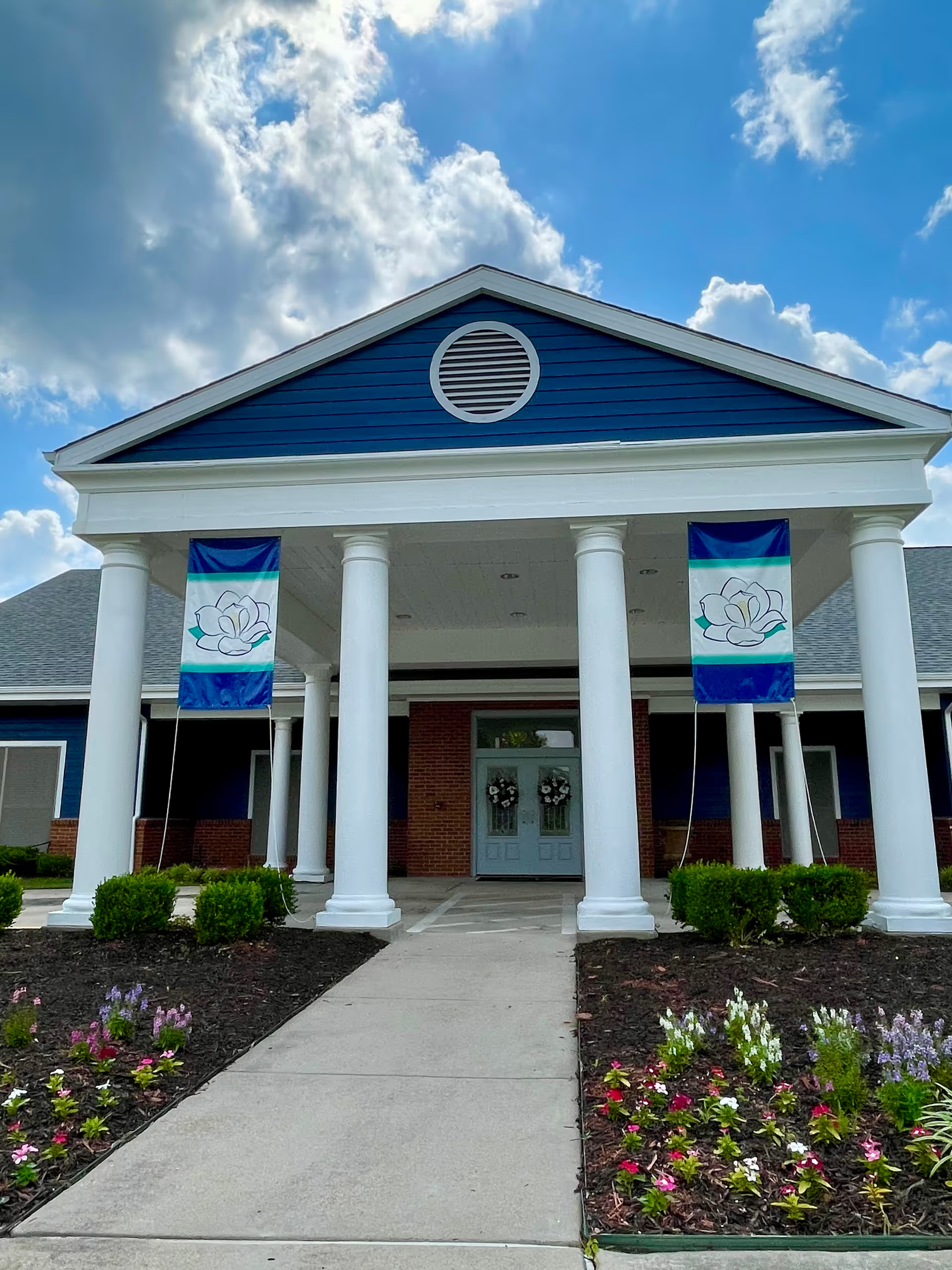
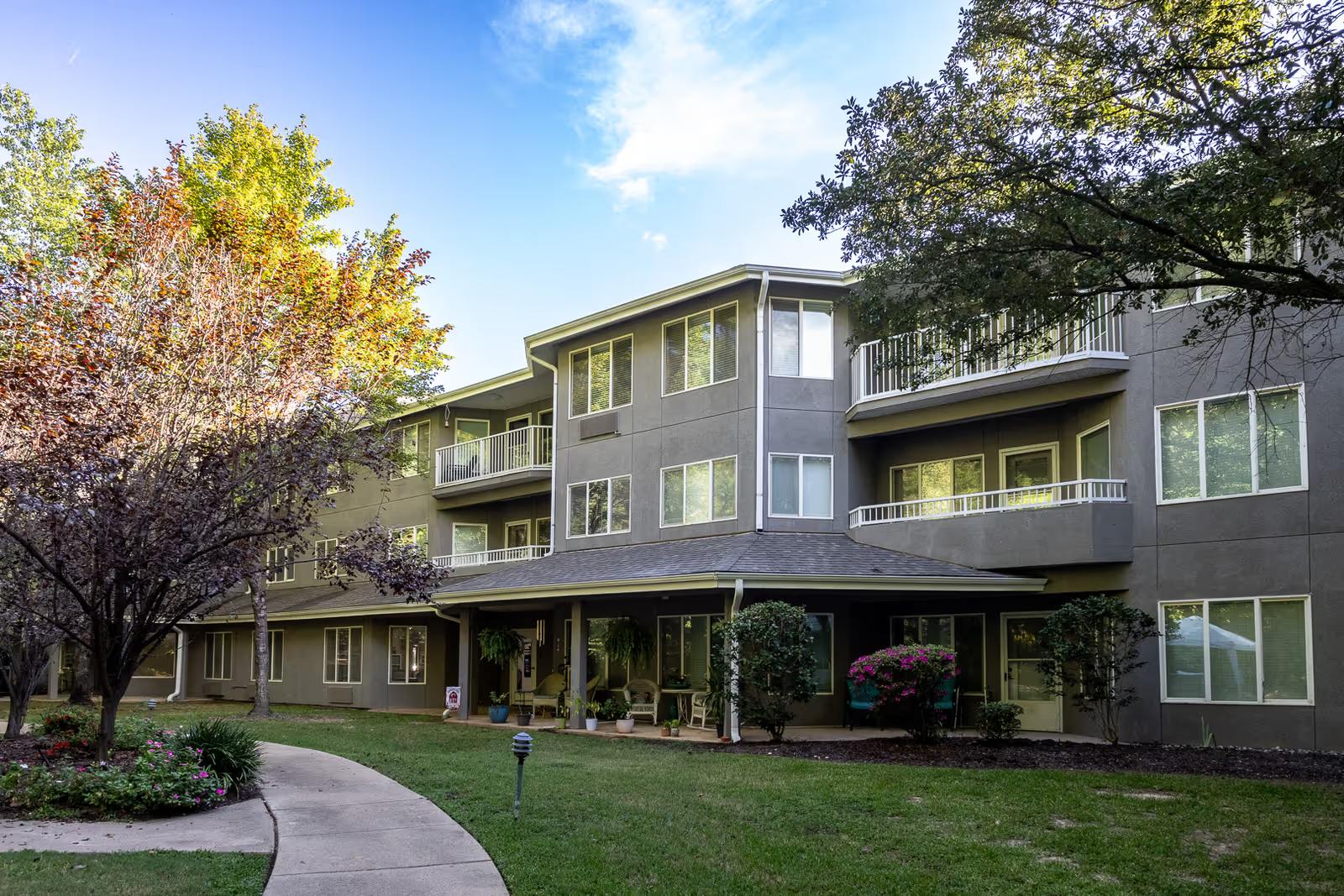
Broken Bow Health and Rehab receives mixed feedback with clear strengths in its rehabilitation services and a number of personnel-related positives, but also persistent operational and communication concerns. Clinical rehabilitation — particularly physical therapy — is repeatedly highlighted as a strength: reviewers describe effective therapy that restores strength and mobility and leads to successful discharges home. The facility has recently added a new rehab department and completed renovations such as remodeled shower rooms, which several families and former patients cited as tangible improvements.
Staff behavior and culture elicit divergent impressions. Many accounts emphasize a supportive, family-like atmosphere, respectful interactions, and staff who take pride in their work; some reviewers explicitly described the facility as a good place to work. Conversely, other accounts describe inconsistent responsiveness, abrupt or insensitive communication, and episodes where staff professionalism and patience were perceived as lacking. These contrasting reports suggest variability in staff performance and tone across shifts or units.
Operational challenges appear repeatedly. Reviewers note frequent room relocations that can disrupt continuity of care, delays in the delivery of amenities (for example, TV or phone service), and difficulty reaching the facility by telephone. There are also concerns about clinical oversight and monitoring in some accounts, which reviewers linked to safety and care-delivery issues. A small number of reviews contain serious allegations that imply potential legal or regulatory risk; these are significant and prospective families should verify the facility’s current regulatory and incident history.
There is limited detail in the reviews about dining and organized activities. The available comments do not provide a consistent picture of food quality or the activity program’s scope. Facilities-wise, reviewers point to recent capital improvements and an overall clean environment in some areas, while operational problems (phone access, service delays, room moves) detract from the resident experience.
Management and leadership are in transition, according to several reviews: new ownership and management were noted alongside the introduction of a new rehab department. Some reviewers attributed positive changes — improved rehab outcomes and facility updates — to those leadership changes, while others continue to express dissatisfaction with responsiveness and conflict resolution. Pricing and perceived value for services was raised as a concern by some families.
For prospective residents and families: the facility demonstrates clear strengths in post-acute rehabilitation and has made visible facility investments. At the same time, variability in staff responsiveness, operational continuity, and unresolved serious allegations warrant careful inquiry. Recommended topics to address during a visit include current staffing levels and shift patterns, therapy outcomes and average length-of-stay for return-to-home cases, phone and family-communication protocols, how room moves are managed, pricing and billing practices, and the facility’s recent inspection and incident records.