Reviews reflect a wide range of family experiences at Lyonsview Health and Rehabilitation Center, with many accounts praising clinical rehabilitation, individual caregivers, and the activities program, while other accounts describe operational and clinical inconsistencies that warrant attention.
Care quality appears mixed. Several families describe notable recovery outcomes attributable to an effective therapy department and attentive nursing — patients progressing to improved mobility and returning home. At the same time, reviews raise concerns about inconsistent clinical processes: delayed medication delivery, missed or irregular vital-sign checks, and at least one allegation of improper clinical technique during catheter insertion. These patterns suggest variability in clinical adherence and monitoring across shifts.
Staff performance is a clear strength for many reviewers: numerous caregivers, CNAs, therapists, and certain supervisors are described as compassionate, responsive, and willing to go beyond basic duties. Activity staff receive consistent praise for engaging, themed programming and social outings that improve resident quality of life. However, short staffing and high turnover are recurring themes; staffing constraints are linked to slower response times, delayed toileting or personal care, and stressed frontline employees.
Dining and nutrition receive mixed evaluations. Dietary staff are commended for respecting restrictions and for friendliness, and some reviewers rate the food positively. Conversely, others describe unreliable meal-service continuity, cold or repetitive meals, and limited variety at times, indicating variability in kitchen service execution.
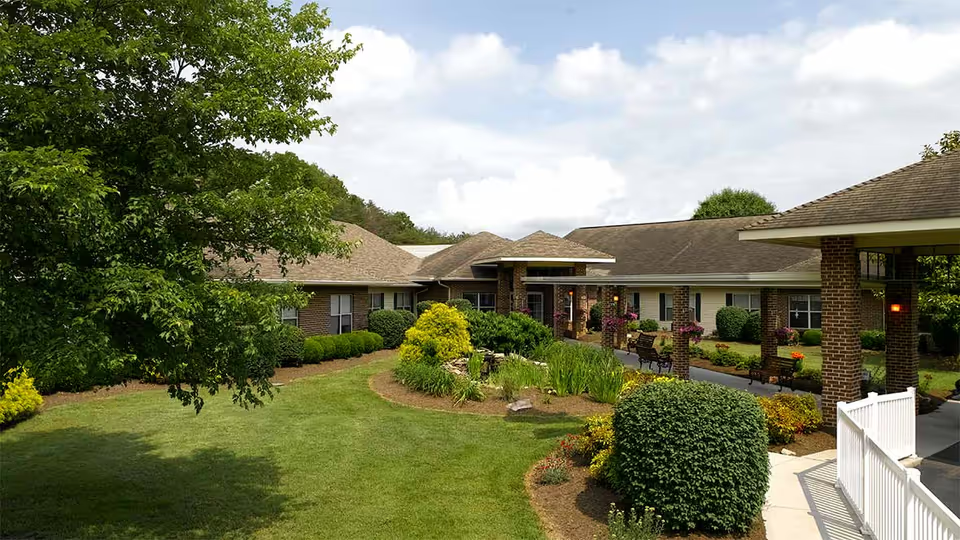
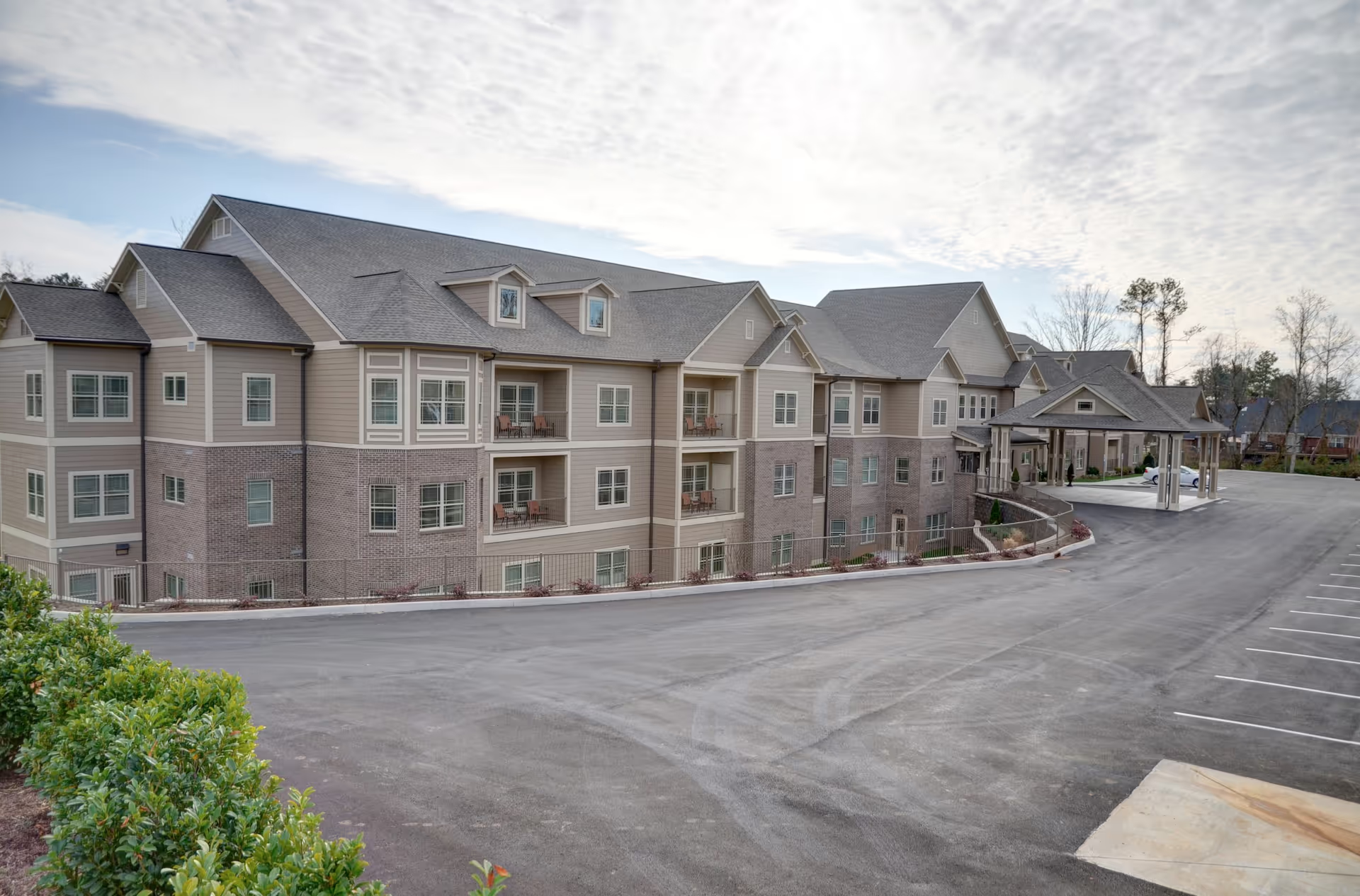
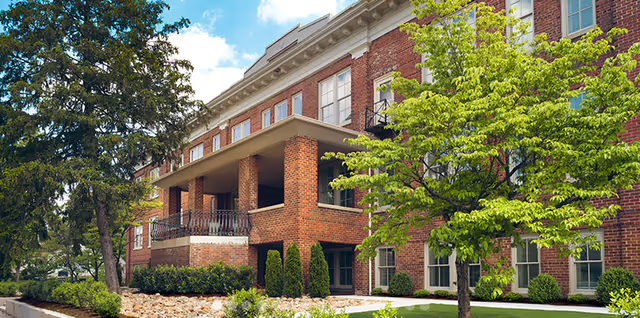
Facility conditions show both improvements and shortcomings. Several reviews note renovated, clean private rooms and updated communal areas, while others point to overcrowded wings, hot or poorly ventilated rooms, shared shower logistics during quarantine, and sanitation or odor concerns in parts of the building. These differences suggest unevenness in maintenance and housekeeping coverage.
Management and administrative responsiveness are likewise variable. Some families praise administrators and unit leaders for hands-on involvement and effective communication; others report delayed grievance follow-up, unresolved lost-item claims, billing confusion, and problematic discharge coordination. These operational gaps — especially around property controls, discharge paperwork, and billing — represent practical pain points for families during transitions.
Notable patterns: (1) strong rehabilitation and activity programming often coexist with (2) operational inconsistencies driven by staffing and communication gaps. Where leadership and staffing are steadier, families tend to report better outcomes and experiences; where staffing and coordination fluctuate, clinical and service issues become more pronounced.
For prospective residents and families: a focused tour and direct questions will be helpful. Ask about current staffing ratios on the relevant unit and typical staff turnover; medication-administration and vital-sign monitoring protocols; meal-service schedules and temperature/quality controls; property-loss procedures; infection-control and visitation policies; and the facility’s discharge and billing workflows. Doing so can clarify whether the facility’s strengths align with your priorities and whether operational concerns have been recently addressed.