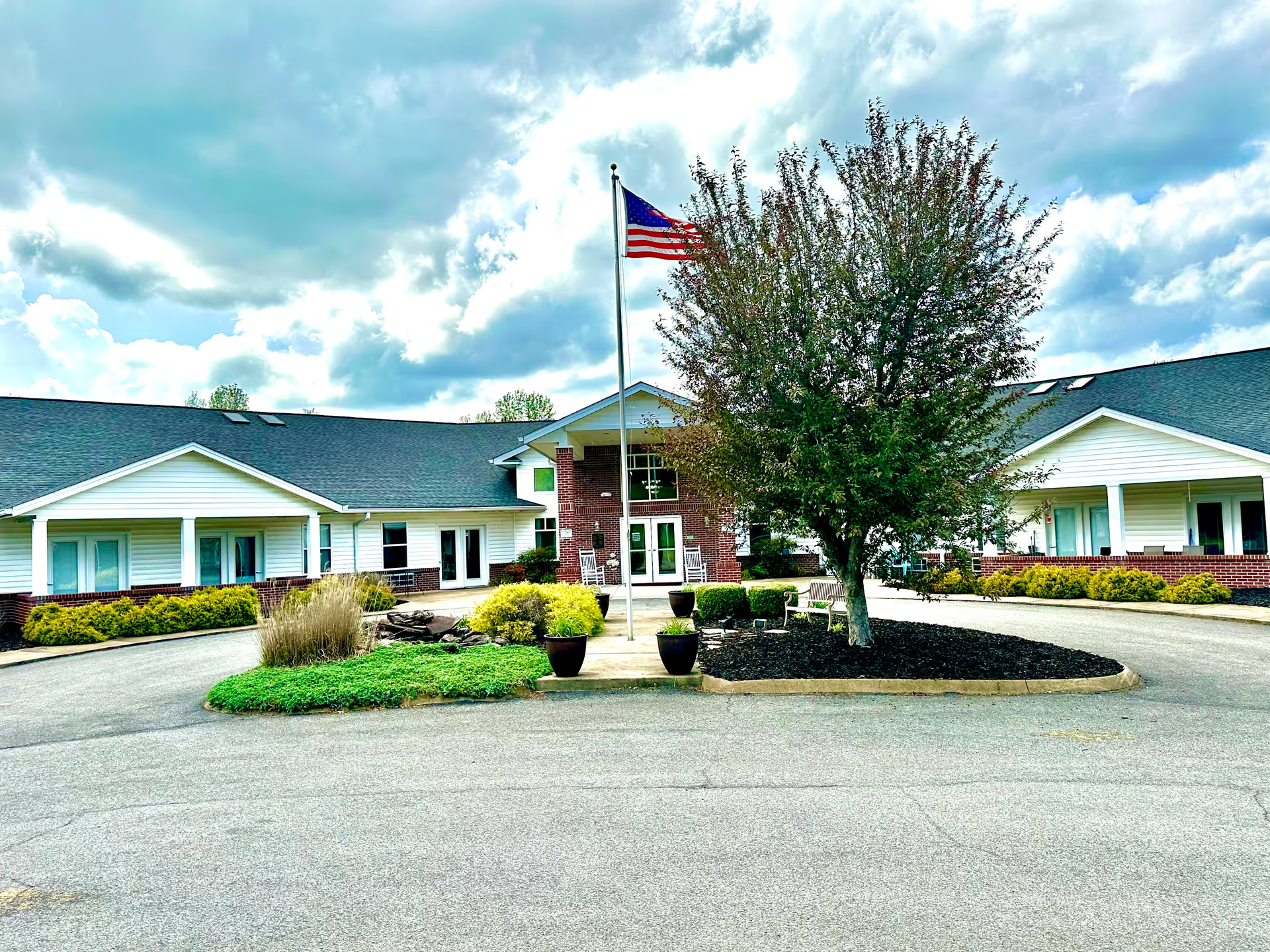
Summative overview Hardin Medical Center elicits highly polarized experiences. Many reviewers describe clinicians and teams who provide timely, effective, even life‑saving care — examples include rapid triage, skilled physicians in surgery, obstetrics and cardiology, responsive respiratory therapy, and efficient outpatient imaging. Nursing staff are frequently praised for compassion and attentiveness, and several visits report clean, well‑maintained units and smooth perioperative or birthing experiences.
At the same time, a substantial portion of accounts point to operational weaknesses that directly affect patient experience and perceived clinical safety. Common clinical concerns include inconsistent diagnostic evaluations, delayed or incorrect imaging interpretation, variable pain‑management practices, and gaps in monitoring and escalation for unstable patients. Emergency‑department capacity and flow are recurrent issues: long wait times, hallway or overflow care, and delayed imaging/results are described repeatedly and contribute to delays in treatment.
Staffing and communication emerge as central drivers of variability. Many families praise individual nurses and physicians for professionalism and clear explanations, but numerous others report rude or dismissive interactions, inconsistent bedside manners, and frequent staff turnover. Interdepartmental coordination and documentation problems — misplaced paperwork, mixed medical records, duplicate testing, and poor handoffs — appear repeatedly and compound clinical inefficiencies. Reviewers also describe supply limitations and constrained specialist coverage after hours, which can necessitate transfers to larger centers for definitive care.
Administrative and facility-level issues are also prominent. Multiple accounts cite billing opacity, surprise out‑of‑network charges, and difficulty getting billing questions resolved. Facility limitations include privacy and patient‑flow constraints in a busy ED, inconsistent cleanliness in certain areas, and scheduling restrictions for some diagnostic services. There are also concerns about leadership responsiveness to patient complaints and questions about online feedback management.
What this pattern means for prospective patients and families: experiences appear highly dependent on time of presentation, specific clinicians on duty, and departmental capacity. For routine outpatient or scheduled procedures many visitors had positive, efficient encounters; for acute or complex emergencies reviewers describe a wider range of outcomes, from rapid stabilization to delays requiring transfer. Practical steps to mitigate risk include bringing current medical records, reconfirming insurance and in‑network coverage before elective care, asking for clear discharge instructions and follow‑up plans, and being prepared to escalate concerns about monitoring or pain control.
Areas for management focus To improve consistency, the facility would benefit from strengthened ED capacity and patient‑flow processes, standardized diagnostic and monitoring protocols, clearer interdepartmental communication pathways, and enhanced billing transparency. Targeted efforts to stabilize staffing, improve bedside communication training, and address sanitation and supply issues would likely reduce many of the recurrent complaints. Overall, Hardin Medical Center provides demonstrably strong care in some contexts, but operational variability and communication gaps create uneven patient experiences that prospective patients and families should consider when choosing care settings.