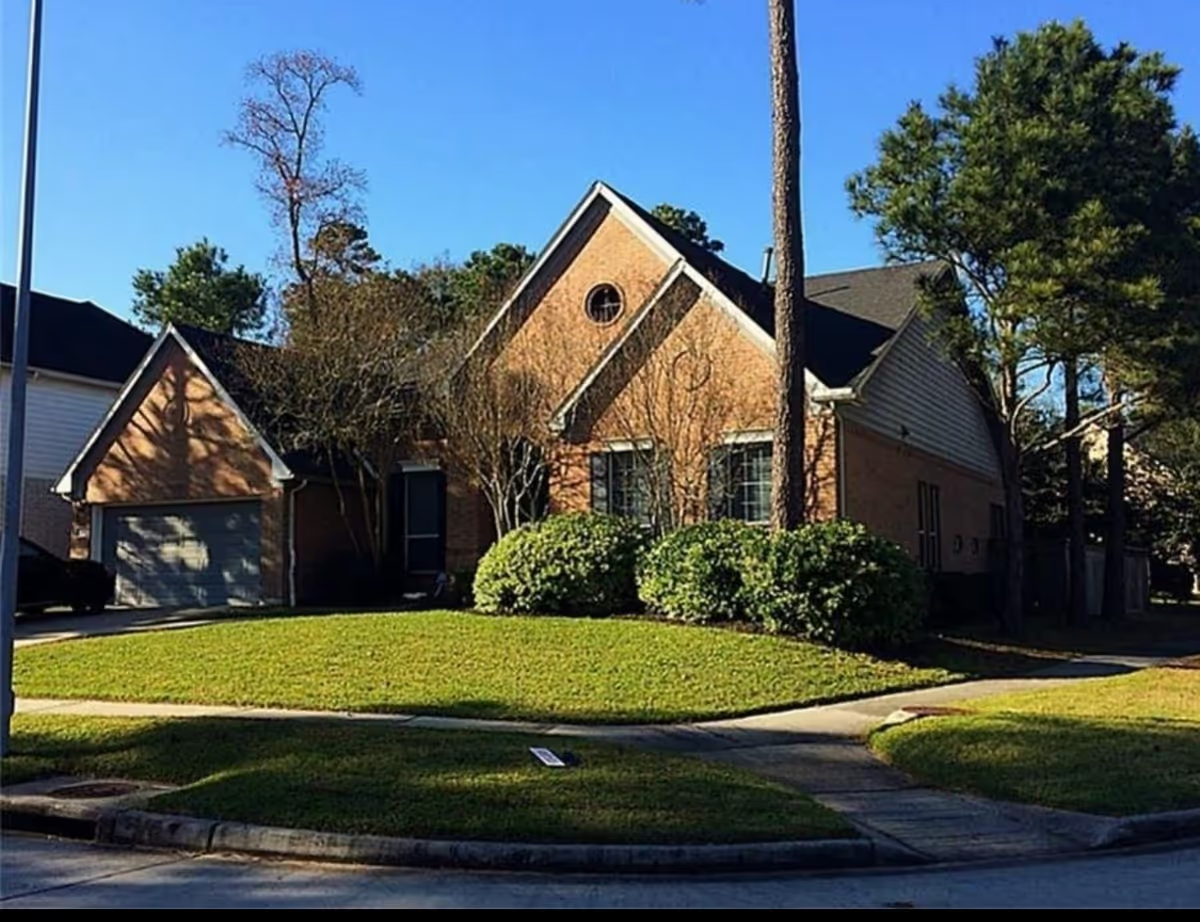
Reviewer feedback for Dayton Nursing and Rehabilitation is mixed, with clear patterns of both strong, person-centered caregiving and serious operational concerns. Several families praised direct caregivers for being attentive, compassionate and providing one-on-one engagement; those comments describe a family-like atmosphere and a community-focused team, and multiple accounts singled out recent ownership changes and responsive administration as positive developments. At the same time, other accounts describe material and process issues that affected day-to-day resident experience.
Care quality appears inconsistent across reviews. Positive comments highlight individualized attention, a rehabilitation focus and apparent gains for residents who remain longer. Conversely, some accounts describe delays in attending to resident needs, irregular bathing and personal-care schedules, and instances where families moved residents because expectations for basic care were not met. There are also indications of gaps in discharge planning and care-continuity processes that can lead to placement changes or transitions that families find disruptive.
Staff behavior and communication form a notable area of divergence. Many reviewers characterize the caregiving staff and management as responsive and compassionate; others cite inconsistent professionalism, including abrupt or unhelpful phone interactions. More serious concerns include restrictive policies limiting resident communication and access to personal items, and allegations of intimidating or harassing conduct by staff. These latter claims are serious and are described in a limited number of narratives, while other reviewers directly contradict them by describing supportive, family-like care.
Facility- and environment-level comments are generally positive about cleanliness and upkeep, but isolated sanitation and odor concerns in resident rooms were raised and should be investigated during a visit. Several reviewers identified shortcomings in bathroom and transfer equipment that could affect resident safety and comfort. There is limited information about dining and formal activities in these summaries; however, the rehabilitation and people-first emphasis noted by some families suggests an active therapy orientation for certain residents.
Management and leadership receive favorable mentions from families who experienced responsive administration and a listening management team following ownership changes. The mixed nature of feedback suggests variability by unit, shift, or individual staff members rather than a uniformly consistent experience. Prospective residents and families would be advised to tour the facility, ask specific questions about bathing and personal-care schedules, inspect adaptive equipment, clarify communication and personal-item policies, and inquire about complaint-resolution processes and staffing levels across shifts to get a clearer picture of current operations.