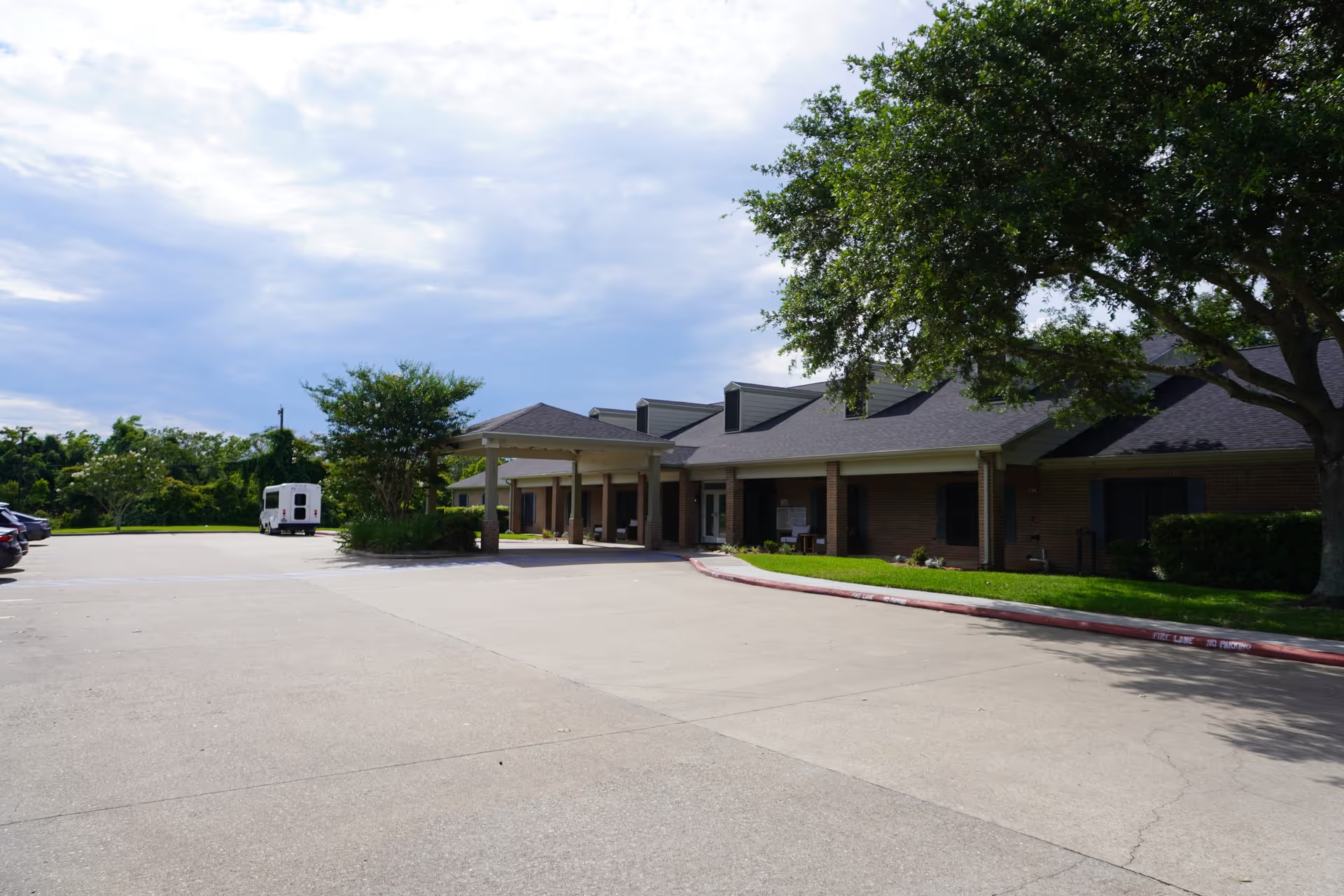
The Shoal elicits strongly mixed impressions. Many families and residents describe a facility with attractive grounds, bright public spaces, private rooms and useful on‑site amenities such as a therapy gym and hair salon. The rehabilitation program and therapy teams receive frequent praise for producing measurable mobility gains and successful discharges. Multiple reviews highlight individual staff members and administrators who are highly engaged, communicative, and effective at coordinating transitions, providing regular family updates, and delivering personalized attention.
At the same time, reviewers raise recurrent operational concerns that affect clinical safety and basic care. The most consistent themes are perceived understaffing and uneven staff training, which reviewers link to delays in assistance, inconsistent bathing and linen practices, missed or late medication administration, and gaps in transfer and fall‑prevention procedures. Several accounts describe delayed clinical evaluation and inconsistent wound or infection management; these items suggest a need for clearer clinical oversight and protocols for timely escalation.
Sanitation and housekeeping are another area of variability. While parts of the facility are described as clean and well‑maintained, other reports indicate lapses in routine cleaning, odor control, and incontinence‑care practices in particular units or shifts. Dining impressions are likewise mixed: some families praise accommodating meal service and dietary options, while others note repetitive menus and uneven meal quality. Activities programming and social engagement are frequently praised, with an active activities director and a range of events that families value.
Management and administrative performance show a split pattern. Several reviewers commend accessible administrators and strong admissions or case‑management support; others report difficulties reaching leadership, delayed responses to family concerns, and problems with billing or property handling. The presence of standout individual staff and engaged administrators is a positive, but uneven leadership accessibility and business‑office issues are recurring operational weaknesses.
Notable patterns: high‑quality therapy and many compassionate caregivers coexist with operational inconsistencies that have clinical and safety implications. Prospective residents and families should perform an on‑site assessment focused on current staffing ratios, nursing coverage, medication‑administration protocols, wound‑care processes, fall‑prevention measures, and routine cleaning schedules. Ask for the name and availability of the clinical director, recent staffing levels on the unit, wound‑care and infection‑control protocols, and documentation of how family concerns and billing issues are handled. These checks will help clarify whether the strengths observed by many families are reliably present for a particular unit or shift.