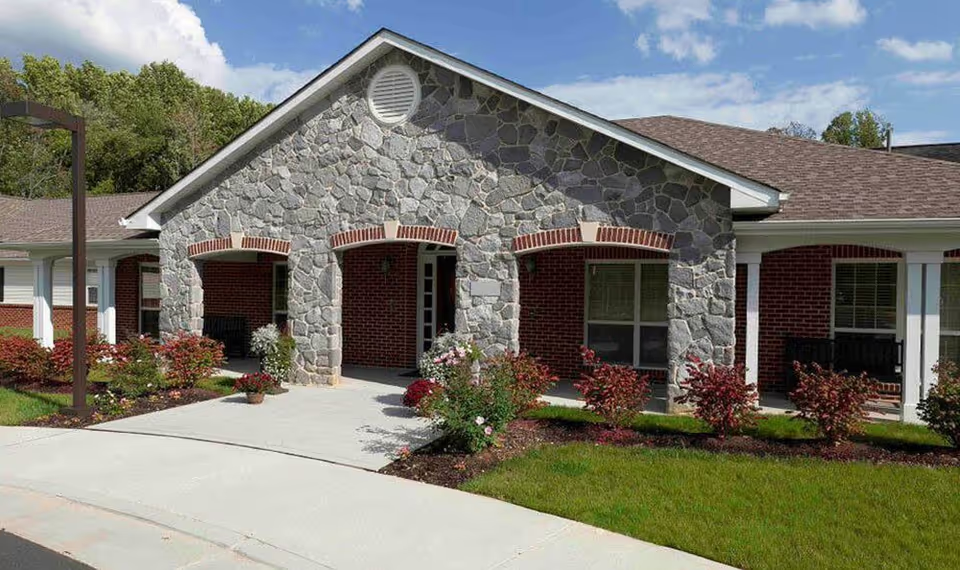
The reviews for Inova Burke Health & Rehab show a highly polarized set of experiences: many families and patients report excellent rehabilitation outcomes and praise individual staff members and departments, while a substantial number of reviews document serious operational and care concerns. The facility is frequently described as new, clean, and well-maintained with spacious private rooms and a comfortable physical environment. Housekeeping, front-desk reception, and several named staff (admissions, therapy, and certain nurses/CNAs) receive consistent positive mentions. The standout strength across the positive reviews is the therapy program — physical and occupational therapy teams are repeatedly credited with producing measurable recovery, improved mobility, and successful discharges. Wound care, PICC-line care, and dedicated rehab-focused treatment are noted as competent and, in many cases, excellent. For families seeking short-term rehab, many reviewers recommend the facility, citing helpful admissions, coordinated care planning, and attentive therapists and aides who go above and beyond.
Despite these strengths, an equally strong and repeated theme is inconsistent or poor performance in core nursing and operational areas. Multiple reviews describe long delays in responding to call bells and routine requests — delays quantified in reports ranging from 10 to 45 minutes — and attribute slow responses to heavy workloads and staffing shortages. Several reviewers explicitly report understaffing, high night-time ratios (one reported 1:14), frequent use of agency staff, and high turnover. These staffing constraints appear to produce uneven bedside care: while many direct caregivers (CNA/RN/LPN) are described as compassionate and competent, other accounts document missed basic needs (soiled clothing or bedding left for long periods, meals not delivered, teeth/face not washed, no bed baths offered), bedpan issues, and delays that led to weight loss, infections, or clinical decline for some residents.
Communication and administrative coordination are another major area of mixed feedback. Some families highlight smooth transitions, proactive updates, and helpful discharge planning from specific individuals (e.g., admissions and certain social services staff). However, a large subset of reviews reports poor communication from administration and Social Services: unresponsive or disappearing social workers, lack of information about patient status or discharge plans, and billing or records problems (including charged activities that were not attended and out-of-pocket fees for days that were supposed to be covered). There are also multiple reports of discharge equipment not being provided despite forms, and of poor coordination that left families scrambling post-discharge.
Safety and quality-of-care concerns are the most serious negative theme, and several reviewers describe alarming incidents. These include reports of patients left soaked or in soiled clothes for extended periods (one report cited being left in the same clothes for 72+ hours), patients reportedly going long periods without food, delays in recognition or response to medical emergencies (oxygen not monitored, foaming at mouth), development of untreated rashes or burns, catheter/catheterization delays leading to infection, and at least one account of a patient death with concerns about monitoring and post-event communication. There are also isolated but severe allegations of misconduct and safety breaches (attempted sexual assault claimed in one review), misplaced or mishandled personal items (medical tubing intubation tube found in belongings), and laundry mix-ups. These reports indicate inconsistent monitoring and escalation practices across shifts and staff.
Dining and nutrition receive wide-ranging comments. Many reviewers describe the food as bland, oversalty for some patients, reheated leftovers, or simply inedible; other reviewers praise the dietary team and report good meals and accommodations for dietary needs. This variability suggests inconsistent meal preparation and accommodation practices — a particularly consequential issue for residents with dietary restrictions (diabetes, edema) where some reports claim inappropriate meal content or poor diabetic-friendly choices.
Culture, teamwork, and staff variation are recurring patterns. Direct caregivers and therapists are often praised for compassion and skill; several reviewers name individuals who provided exemplary care. Yet management, social services, and some nursing teams are often characterized as uncommunicative, defensive, or dismissive. Multiple reviewers note that direct-care staff try to provide high-quality care but are undermined by poor teamwork, insufficient staffing, or inadequate managerial support. Language barriers and accents are frequently mentioned as hindering communication with some staff members.
Activities, visitation, and COVID protocols are mixed. Some reviewers praise the activities team and the environment as calm and pleasant; others report restricted access to group therapy or gym due to COVID limits, little engagement or activity programming, and austere rooms resembling hospital settings. A number of reviewers also describe unpleasant odors or facility maintenance issues in isolated areas.
Overall, the reviews present a facility with clear strengths in physical space, cleanliness, and a strong rehabilitation program that helps many patients. However, those positive outcomes coexist with systemic operational weaknesses in staffing, nursing consistency, communication, discharge planning, and dining. The most urgent concerns raised are not isolated inconveniences but reports of neglect and safety lapses that led to clinical decline in multiple accounts. For prospective residents and families: the facility may be an excellent choice for focused rehab when the therapy team and certain nurses are available and engaged, but the variance in nursing responsiveness, social services performance, and administrative oversight suggests you should (1) confirm staffing levels and escalation protocols for your level of medical need, (2) identify and document primary contacts (therapist, nurse, social worker) and contingency plans, (3) closely monitor nutrition and hygiene care, and (4) insist on clear written discharge plans and equipment confirmations prior to leaving. Management attention to staffing, consistent clinical monitoring, and improved communication would likely reduce the most serious negative patterns reported in these reviews.