Overview Pine Ridge Post Acute generates strongly mixed impressions. Many families and residents praise the facility’s physical environment, therapy teams, and individual caregivers; others describe significant operational gaps that materially affected care. The pattern in the reviews suggests a facility with substantial strengths in rehabilitation services and some compassionate staff members, paired with recurring systems-level weaknesses that produced inconsistent day-to-day experiences.
Care quality and clinical oversight Clinical strengths center on the therapy program and certain nursing staff. Multiple accounts emphasize effective, goal-oriented PT/OT that helped patients progress, and several nurses and aides received commendation for knowledge and bedside manner. At the same time, there are recurrent concerns about medication administration, oxygen supply management, and emergency responsiveness. Reviewers described delays in responding to call systems and inconsistencies in clinical monitoring and documentation. Those patterns point to variability in skill mix and supervision rather than uniform clinical failure: some shifts appear well-managed while others fall short of expected practice standards. There are also reports suggesting gaps in physician availability and in formal clinical assessment frequency.
Staff, conduct, and communication Feedback about staff is polarized. Many reviewers singled out individual CNAs, nurses, therapists, and activity staff as attentive and compassionate. Conversely, other reviewers experienced unhelpful or brusque communication, slow responses to requests, and instances where staff conduct raised concern. Family communication and documentation practices were frequently described as insufficient: delayed care plans, slow social-worker follow-up, and difficulty obtaining clear clinical updates. High staff turnover and reliance on agency staff were noted and likely contribute to variability in training, continuity of care, and interpersonal consistency.
Dining, activities, and ancillary services Ancillary services present a mixed picture. The therapy and activity programming receive consistent positive marks for engagement and effectiveness. Some reviewers appreciated social staff, a caring hairdresser, and supportive hospice coordination. Dining quality was frequently criticized for poor temperature control, repetitive menus, and inadequate diabetic/diet accommodations; others enjoyed the food and reported pleasant mealtimes. These differences suggest inconsistent kitchen performance and a need to clarify dietary procedures for residents with specific needs.
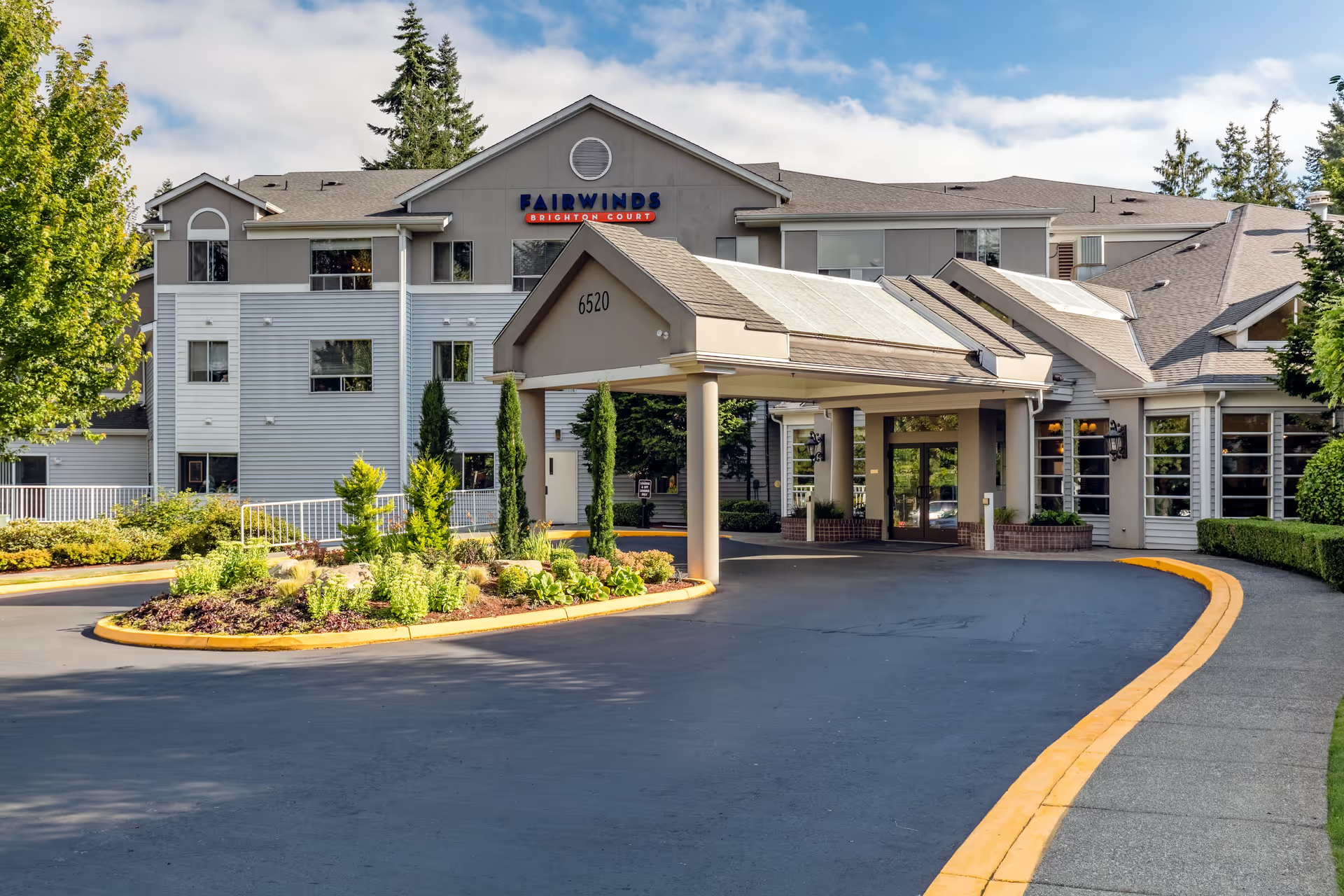
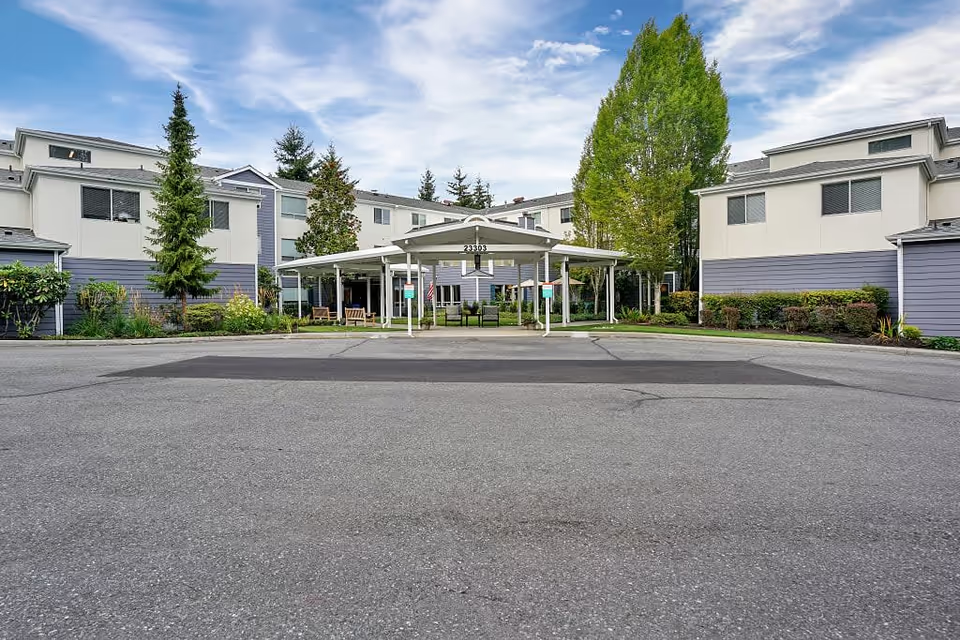
Facilities and infection control The building and public areas are regularly described as modern, well-maintained, and clean at first glance. Several reviewers noted comfortable, no-frills rooms and a pleasant lobby. However, there are recurring sanitation and incontinence-care concerns referenced in several accounts, as well as at least one reported infection-control event that reviewers felt was not followed up on adequately. Those comments indicate a gap between the facility’s physical condition and some aspects of routine room-level hygiene or outbreak follow-through.
Management, safety, and administrative issues Reviewers describe problems with management responsiveness, transparency around billing, and operational coordination. Specific patterns include undisclosed extra charges at admission, delays in implementing care plans, and inconsistent enforcement of safety and transfer protocols that correlate with fall and injury reports. Reliance on agency staff, discrepancies in documentation, and occasional absence of a physician on site were also cited as factors amplifying risk. A small number of reviews referenced alleged inappropriate staff conduct; such claims are serious and were raised alongside calls for regulatory attention in some accounts.
Notable patterns and guidance for families Overall, Pine Ridge Post Acute appears to offer strong rehabilitative capability and some highly regarded staff, but the experience may vary substantially by unit, shift, and individual caregivers. Prospective families should expect a mixed performance profile and consider on-site verification. Recommended focus areas during a tour: inquire about typical staffing levels and agency use by shift, oxygen and emergency backup procedures, medication-administration checks, infection-control policies and recent inspection history, call-bell response times, dietician involvement for special diets, therapist schedules and expected therapy minutes, documentation and family-communication processes, and billing disclosures. Asking for references from recent families and reviewing state inspection or complaint records may help clarify how broadly the cited operational concerns apply.