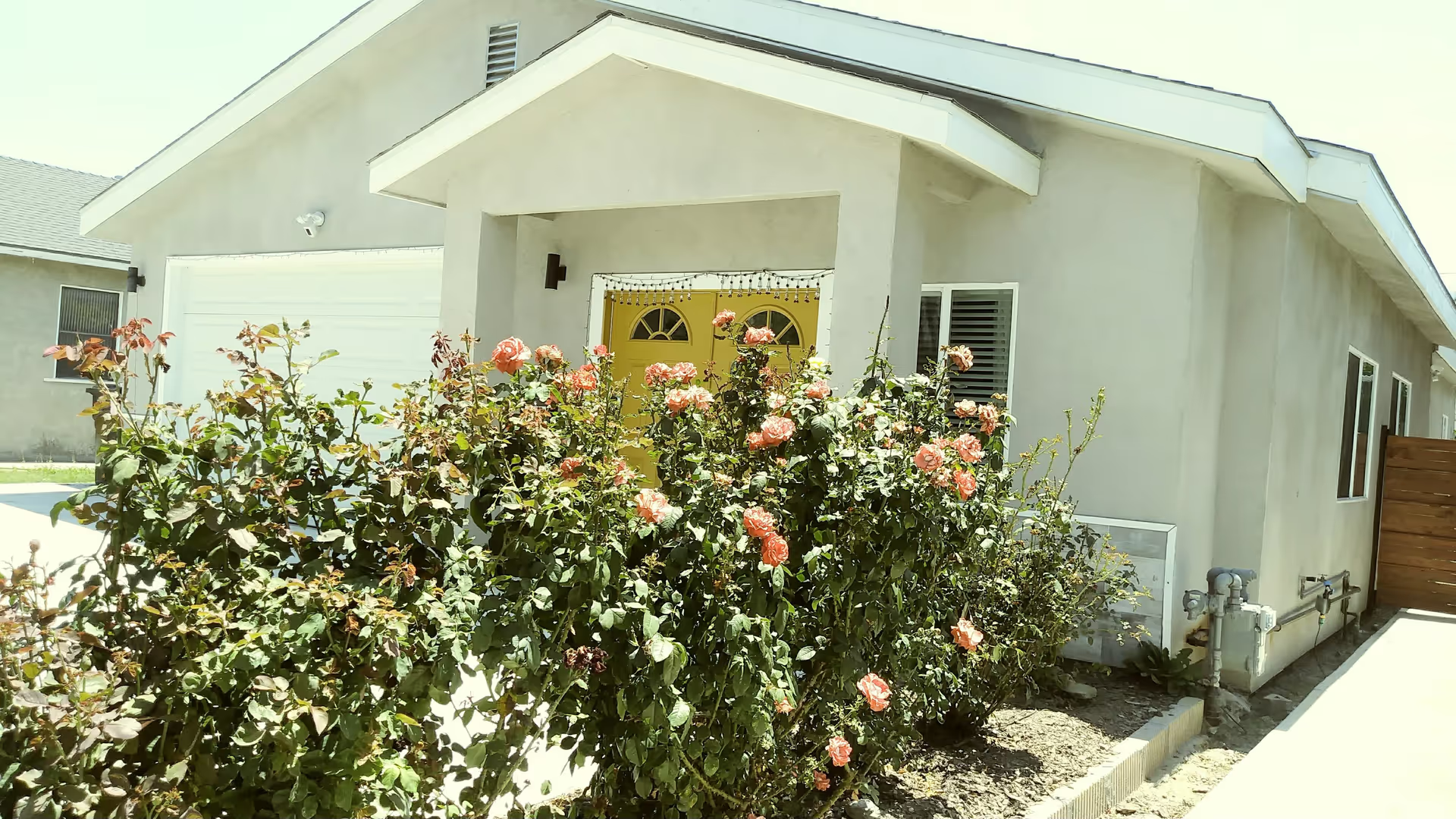
Reviews of Lifestream Home Care II present a mixed picture with clear strengths alongside several operational weaknesses that prospective residents and families should evaluate. Many accounts highlight strong clinical leadership and day-to-day caregiving: an RN manager described as knowledgeable, caregivers characterized as attentive and caring, and a generally well-maintained common environment. Those positives are reflected particularly in reports about meal variety and quality, with several mentions that dinners and the overall menu are better than average.
At the same time, there are recurring concerns about consistency of care and staff preparedness. While licensed clinical leadership is noted positively, some live-in assistants are described as insufficiently trained, suggesting variability in staff skill and supervision across shifts. This inconsistency appears to translate into uneven care quality and occasional communication and workplace-safety tensions among staff. Families should probe staffing models, training programs, and supervision practices to determine how the facility minimizes variability in resident care.
Dining receives mixed but specific commentary: the facility offers varied and well-prepared meals, yet portion sizes and meal sufficiency are questioned in some accounts. Prospective families should clarify portion standards, special-diet accommodations, and how meal service is adjusted for residents with higher nutritional needs. There is limited information about scheduled activities or enrichment programs in the available summaries; activity offerings are not a prominent theme and merit direct inquiry during tours.
Facility-level observations are similarly mixed. Common areas are described as well-kept, but room-level furnishings and bedding are sometimes characterized as basic and below expected comfort levels. Personal-care routines are another operational area of concern: descriptions suggest a limited bathing frequency and reliance on sponge baths in some cases, which points to a need to confirm personal-care schedules, hygiene protocols, and how individualized care plans are implemented.
Management and policy issues are a notable pattern. Reviews alternately describe management as helpful and knowledgeable and as prioritizing business considerations, producing a perception of uneven administrative emphasis. There are also specific concerns about infection-control and screening practices; given the potential impact on vulnerable residents, families should request the facility's documented infection-prevention policies, recent training records, and examples of how the facility handled recent infectious events. Price and value are other recurring themes—several comments suggest services may be minimal relative to cost—so clarify what is included in fees and what constitutes additional charges.
Overall, Lifestream Home Care II shows strengths in clinical leadership, individual caregiver attentiveness, and meal quality, but exhibits inconsistent operational practices in staff training, infection control, personal-care frequency, and in-room comfort standards. Prospective residents and their families are advised to ask targeted questions during visits: staffing ratios and turnover, training and supervision processes, RN oversight and incident reporting, bathing and personal-care schedules, bedding/furnishing standards, meal portions and special-diet handling, infection-control and screening policies, and a full breakdown of fees versus included services. This will help determine whether the facility’s strengths align with a family’s care expectations and whether the noted operational gaps have been addressed.