The reviews present a mixed but consistent picture: families and visitors frequently praise the staff culture and social environment, while expressing operational and facility-related concerns. Strengths cluster around caregiving style, community atmosphere, and dining; weaknesses center on cleanliness, building maintenance, and after-hours administrative coverage.
Care and staff: Reviewers emphasize that caregiving is compassionate, patient, and emotionally attentive. Caregivers are described as conscientious and focused on resident comfort; management during daytime hours is generally seen as capable and engaged. The facility appears to perform well for residents who need assisted living-level support and social engagement, but reviewers indicate that the site is not configured for high-acuity, full-time nursing needs. The combination of limited clinical capacity and reduced overnight staffing/administrative coverage suggests families should verify whether the facility’s capability matches a prospective resident’s care requirements.
Dining and activities: Dining is frequently noted as a positive feature — meals are described favorably and staff often extend invitations to join meals, reflecting an open-door, communal approach. The owner’s active involvement and the facility’s family-style tone support regular social interaction and peer bonding; several accounts describe a secure, home-like atmosphere with opportunities for residents to form close relationships.
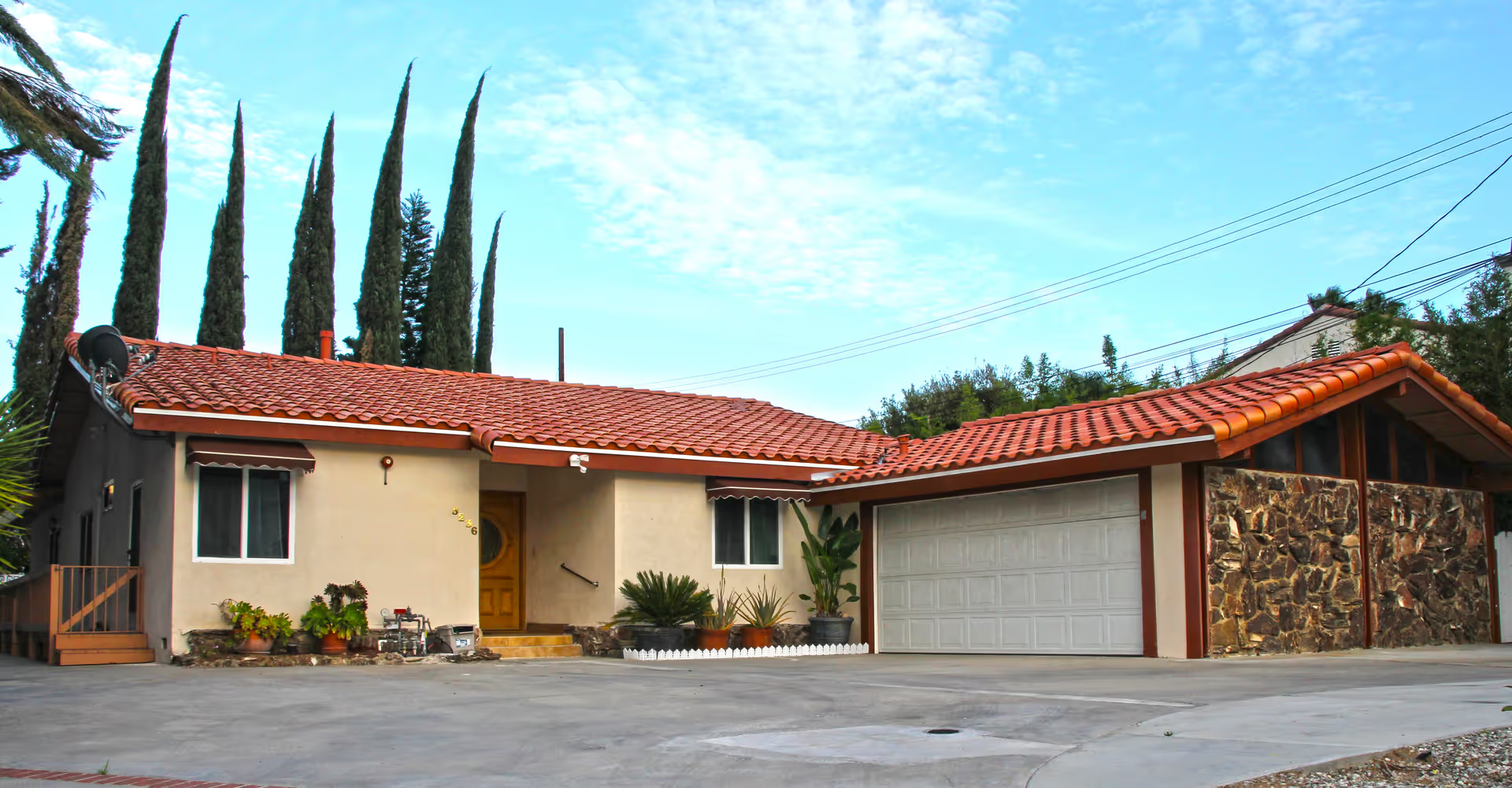
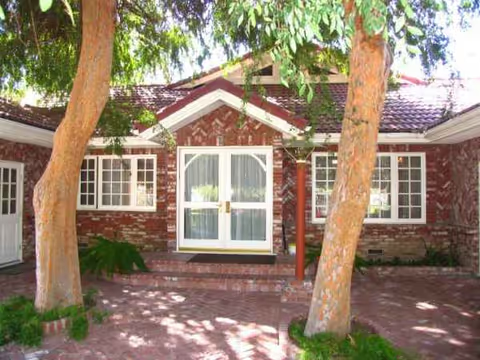
Facilities and safety: Multiple reviews raise sanitation concerns specifically tied to kitchen and common-area practices, and they also indicate pest-control issues. Physical plant problems are another recurring theme: exterior walkways and building elements are described as poorly maintained, with cracks and instability noted on the grounds. These observations point to ongoing maintenance and grounds-stability needs that prospective families should inspect in person.
Management and policies: Daytime leadership is generally characterized as effective, sometimes strict but well-meaning, and protective of residents’ welfare. At the same time, reviewers report limited after-hours responsiveness from administrators and express concerns about the tone used when addressing payment issues. The facility’s operational preferences—such as an emphasis on shared-room placements—may suit individuals seeking companionship and a lower private-room cost, but may not be acceptable to those desiring private accommodations.
Notable patterns and guidance: Overall, the Willows appears to offer a strong social and caregiving culture for lower-acuity residents who value community and owner engagement. However, the pattern of sanitation and maintenance issues, pest-control concerns, limited clinical capacity, and reduced after-hours coverage are important operational traits to evaluate. Prospective residents and families should schedule an in-person tour that includes inspection of kitchen and common areas, a review of pest-control and sanitation records, clarification of overnight staffing and emergency response protocols, and a discussion of room-placement policies and billing communication practices before making a placement decision.