Across the aggregated reviews, the facility presents a split profile: many families and patients praise the therapy program, individual caregivers, and the physical environment, while operational inconsistencies create safety and satisfaction gaps. The therapy department (PT/OT) receives frequent positive mention for clinical skill, multiple treatment rooms, and measurable rehabilitation progress. Numerous individual staff members—nurses, CNAs, admissions personnel, environmental staff, and dietary workers—are described as compassionate, attentive, and effective; these staff are often credited with positive patient experiences and good clinical outcomes.
Care quality shows marked variation. Reviewers highlight skilled bedside clinicians and positive examples of attentive nursing; however, there is a recurrent pattern of inconsistent nursing responsiveness, especially overnight and on weekends, resulting in extended waits for assistance. Clinical process weaknesses appear in medication administration (missed doses, incorrect medications, gaps in insulin/sugar-monitoring and delayed antibiotics), wound-care follow-up, and infection management. Several accounts describe delays or lapses that led to emergency transfers or readmission. These issues suggest uneven clinical oversight and variability in adherence to care protocols.
Staffing and conduct are polarizing themes. While many comments single out individual CNAs, nurses, and therapists for exemplary care, other reports describe staff as overextended, distracted, or brusque—particularly during shift changes, nights, and weekends. Reviewers repeatedly cite high workload (large nurse-to-patient ratios), role-stretching, and turnover as contributors to inconsistent bedside care. Communication tone and responsiveness from some administrative or social-work staff are described as defensive or unhelpful in some cases, whereas other leaders are praised for open-door responsiveness and effective problem resolution.
Dining and activities are mixed. The dining program has advocates—several reviewers specifically praise the chef, meal variety, and accommodating staff—yet there are frequent complaints about meal temperature, missing items, small portions, and inconsistent tray completion. Activity programming receives limited praise overall; some residents enjoy offerings, but others characterize activities as minimal or constrained during infection-control restrictions.
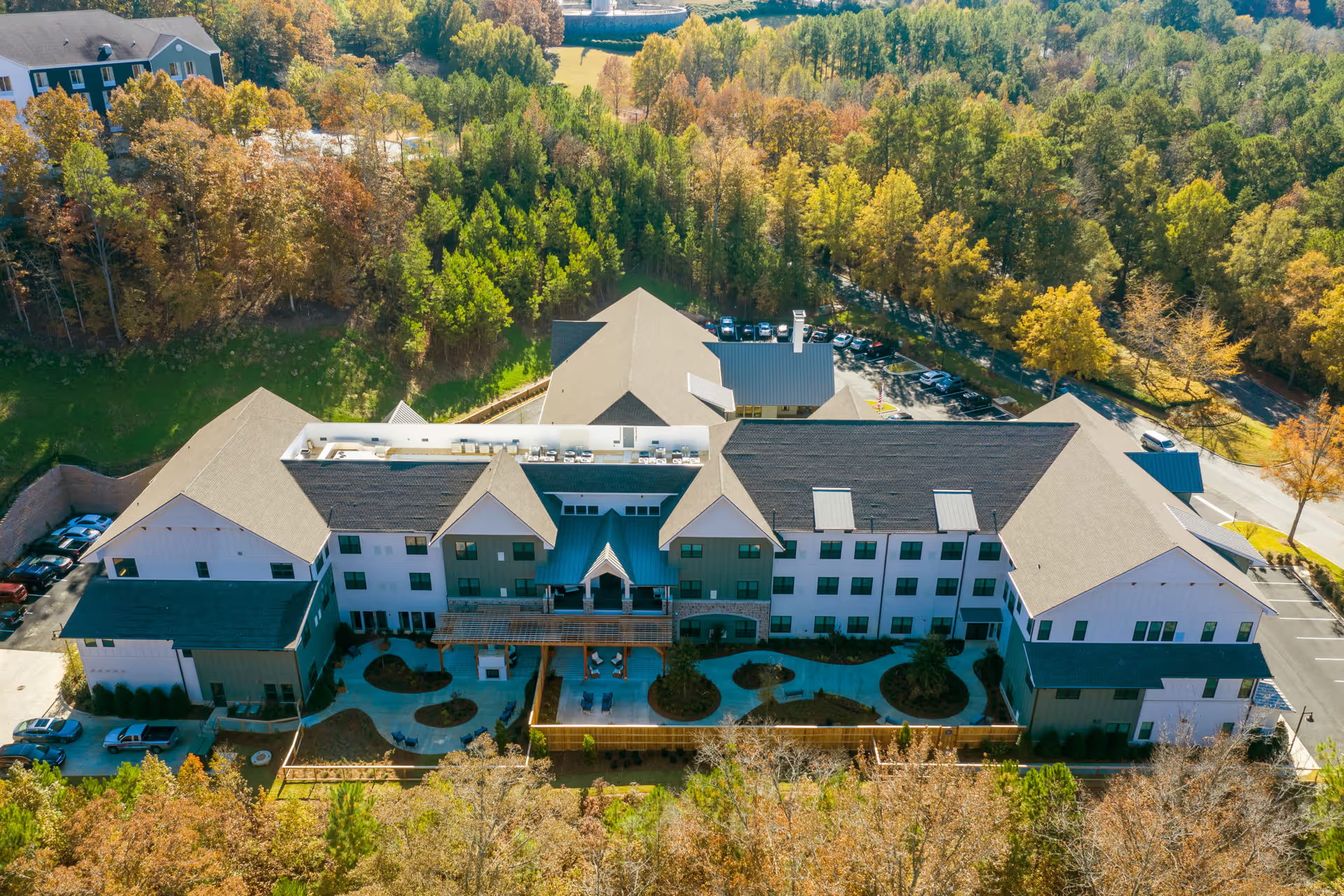
The facility infrastructure and amenities earn consistent positive comments: attractive, clean interiors, private rooms with large bathrooms, well-kept outdoor spaces, and adequate therapy environments. Nonetheless, maintenance and sanitation issues are reported in certain rooms (including pest-control concerns and incomplete repairs), indicating variability in environmental maintenance performance.
Administrative and operational patterns of concern include inconsistent discharge planning and home-health coordination, billing and insurance confusion, and intermittent lapses in laundry and personal-property management. More serious allegations—such as missing items and problems obtaining post-death documentation—have been raised and in a few cases prompted family escalation to ombudsman or regulatory contacts. These appear to be isolated but consequential for affected families and indicate gaps in administrative processes and accountability.
Overall, prospective residents and families should weigh the facility’s strong rehabilitation resources, valued individual caregivers, and attractive campus against recurring operational weaknesses: inconsistent nursing coverage (especially nights/weekends), variable medication and wound-care practices, uneven communication from administration, and sporadic issues with sanitation, laundry, and property management. When considering admission, families may benefit from clarifying expected staffing levels during the intended stay, specific medication and wound-care plans, discharge and home-health processes, and mechanisms for escalating concerns should problems arise.