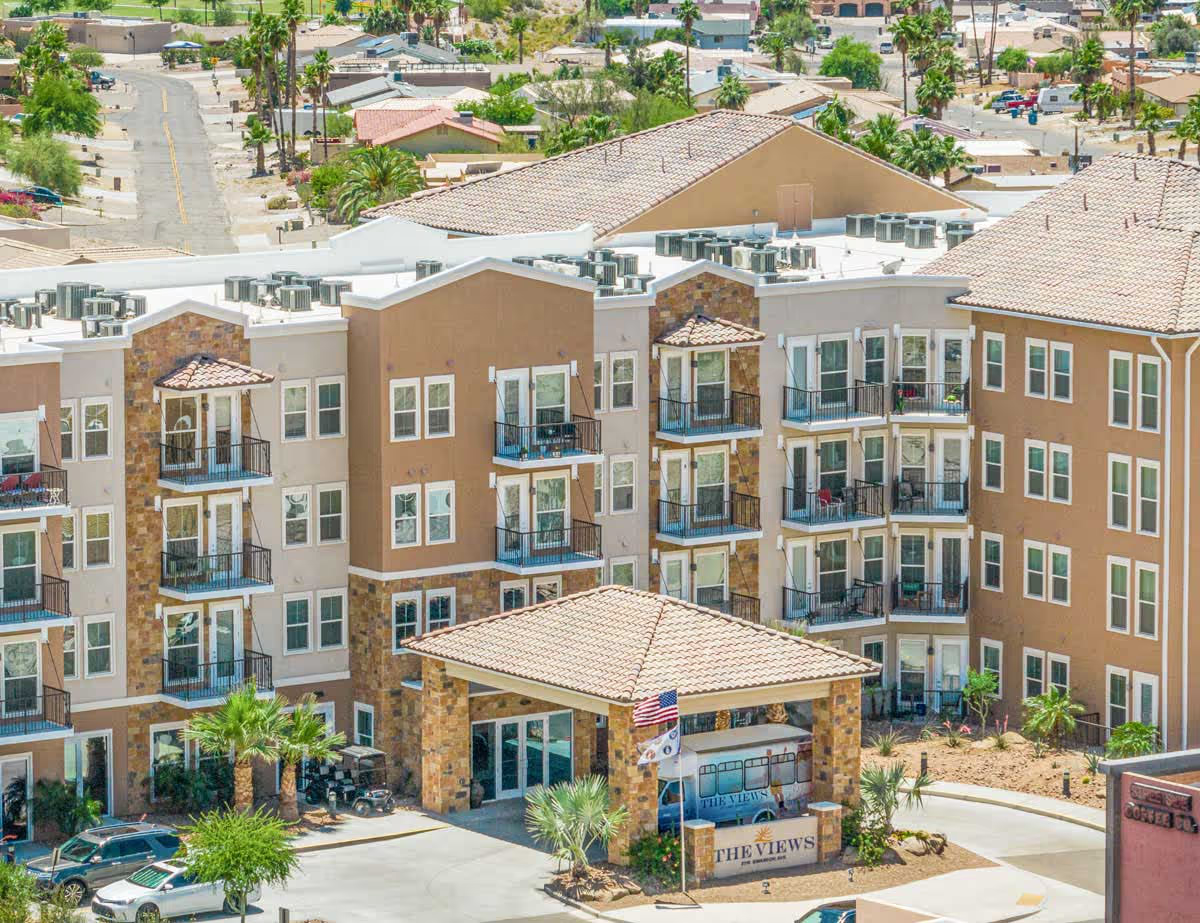
Silver Creek Assisted Living is described across reviews as a community with a strong emphasis on personalized, family-style care and active social programming. Clinical supports are a notable strength: the facility advertises three levels of care with around-the-clock nursing availability, certified caregivers, coordination of medications and doctor appointments, and access to physical therapy and mobility assistance. Several families credited the environment with stabilizing or improving residents’ mental and physical health, and reviewers frequently highlighted attentive, respectful interactions between staff and residents.
Staffing and leadership are repeatedly praised. Reviewers describe owners and managers as visible and communicative, with caregivers characterized as kind, engaged, and consistent. Memory-care provisions and staff training for dementia are noted as strengths; the secure-design features of the memory unit are seen as supportive of resident safety and social engagement. At the same time, some reviewers indicated variability in admission assistance and application follow-through, and a few families wished for more formalized help with public-benefits enrollment such as Veterans or ALTCS processes.
Dining and activities are prominent positive features. The community emphasizes restaurant-style, customizable meals served three times daily, weekly housekeeping, and an on-site salon. Activity programming appears robust: an activities director, a wide range of in-house options (arts and crafts, bingo, singing classes, swimming, shuffleboard), and regular outings to restaurants, shopping, and movies. Many reviewers reported that residents are active, engaged, and socially connected.
The physical environment is generally described as clean, well-decorated, and well maintained, with attractive outdoor spaces — a courtyard, gazebo, walking paths, and a swimming pool — and spacious communal dining and lounge areas. Apartments often include features such as balconies/patios, wet bars, or refrigerators. However, reviewers also noted operational and physical-plant inconsistencies: some described delayed maintenance responses (for example, roof/ceiling repairs), pest-control concerns in portions of the facility, and variation in room size, interior lighting, and views. Accessibility is generally supported (ramps, low-step tubs), but there are reports of limitations for certain mobility devices in parts of the three-story building.
Safety and security impressions are mixed. While many families feel the community is safe and well supervised, a small number of reviewers described incidents involving personal-property loss and access-management problems; these point to potential gaps in property safeguards, surveillance coverage, or incident documentation. Relatedly, a few reviewers experienced challenges during the admissions process, citing restrictive policies regarding state-assisted placements and uneven application support.
Overall, Silver Creek projects a strong caregiving culture with plentiful activities, appealing dining, visible leadership, and attractive outdoor amenities. Prospective residents and families should weigh those strengths against operational caveats: ask specific questions about maintenance-response times, pest-control protocols, security and surveillance practices, accessibility for particular mobility needs, and the facility’s policy on state-assisted admissions. Visiting multiple unit types and reviewing staffing schedules, maintenance logs, and benefit-enrollment support procedures will help determine whether the facility’s pattern of care and operations matches a particular resident’s needs.