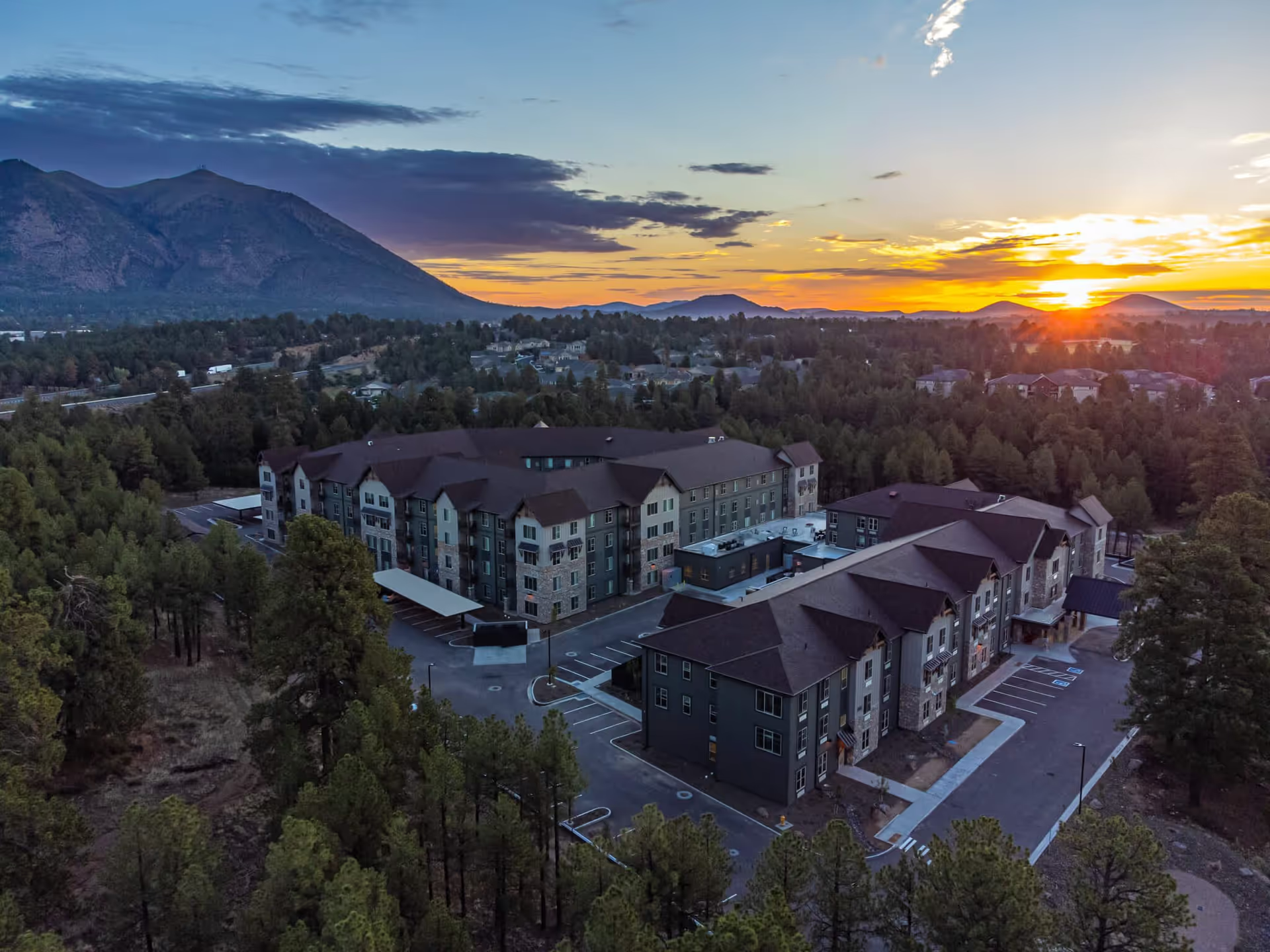
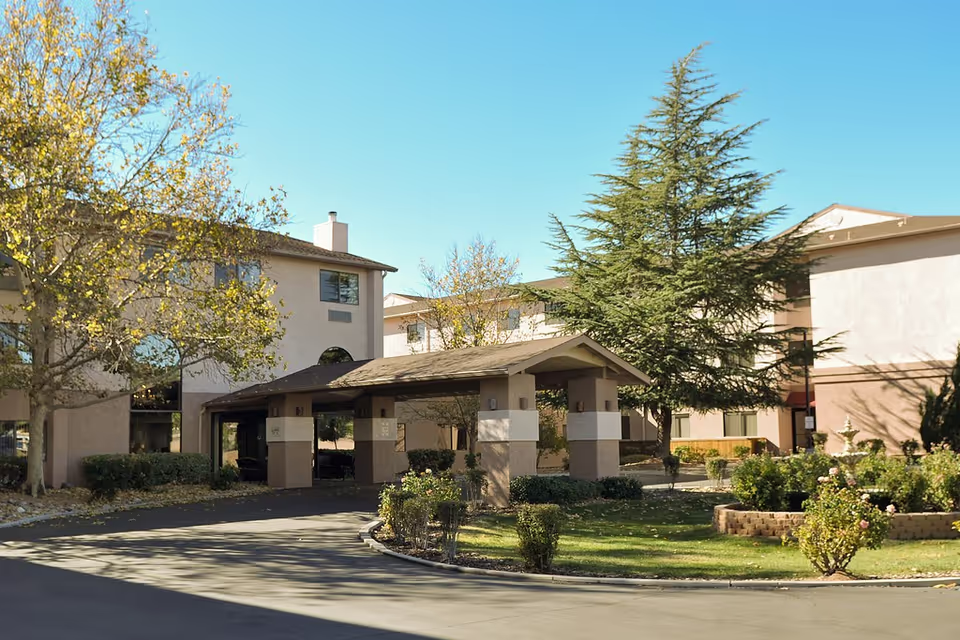
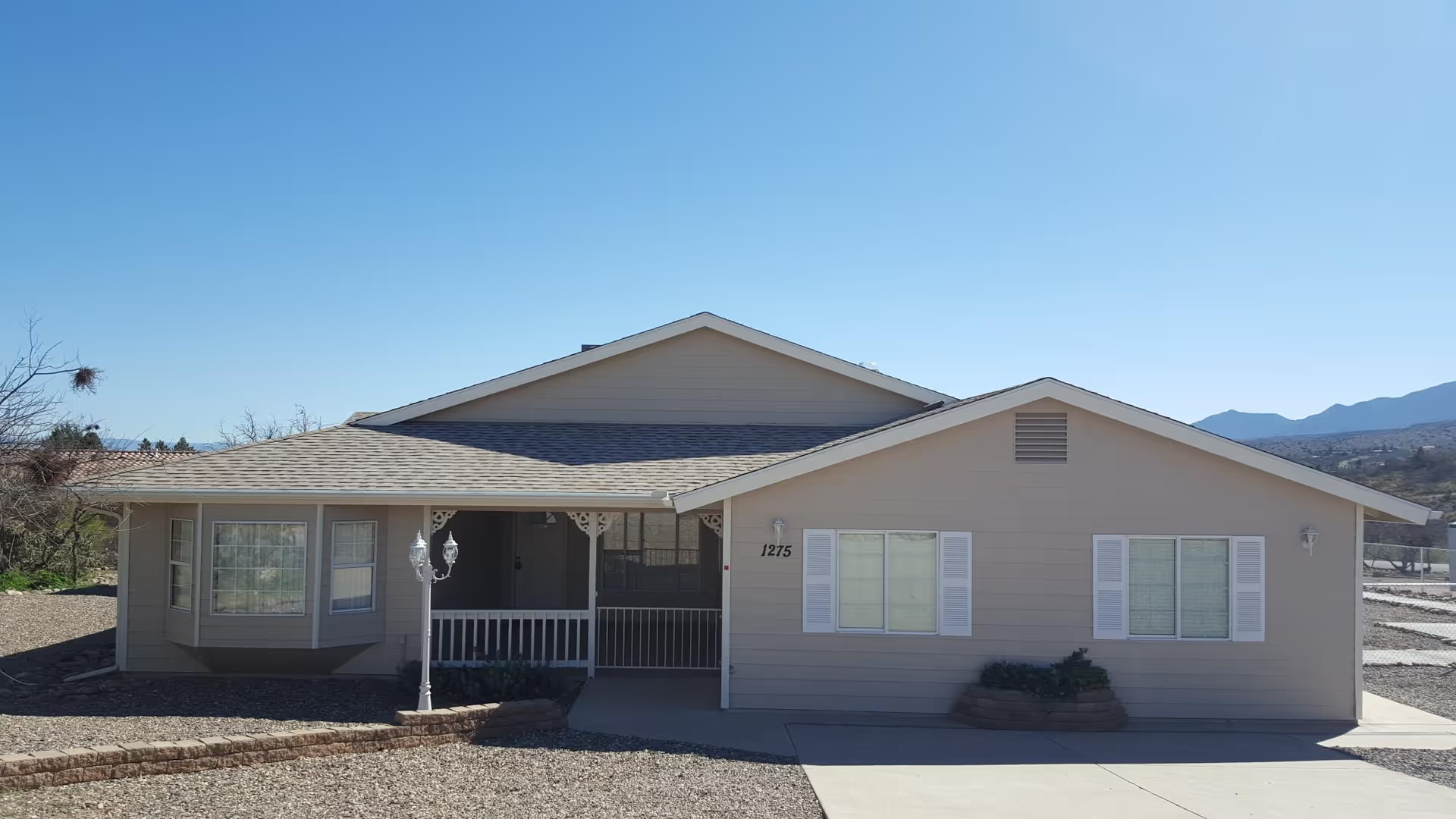
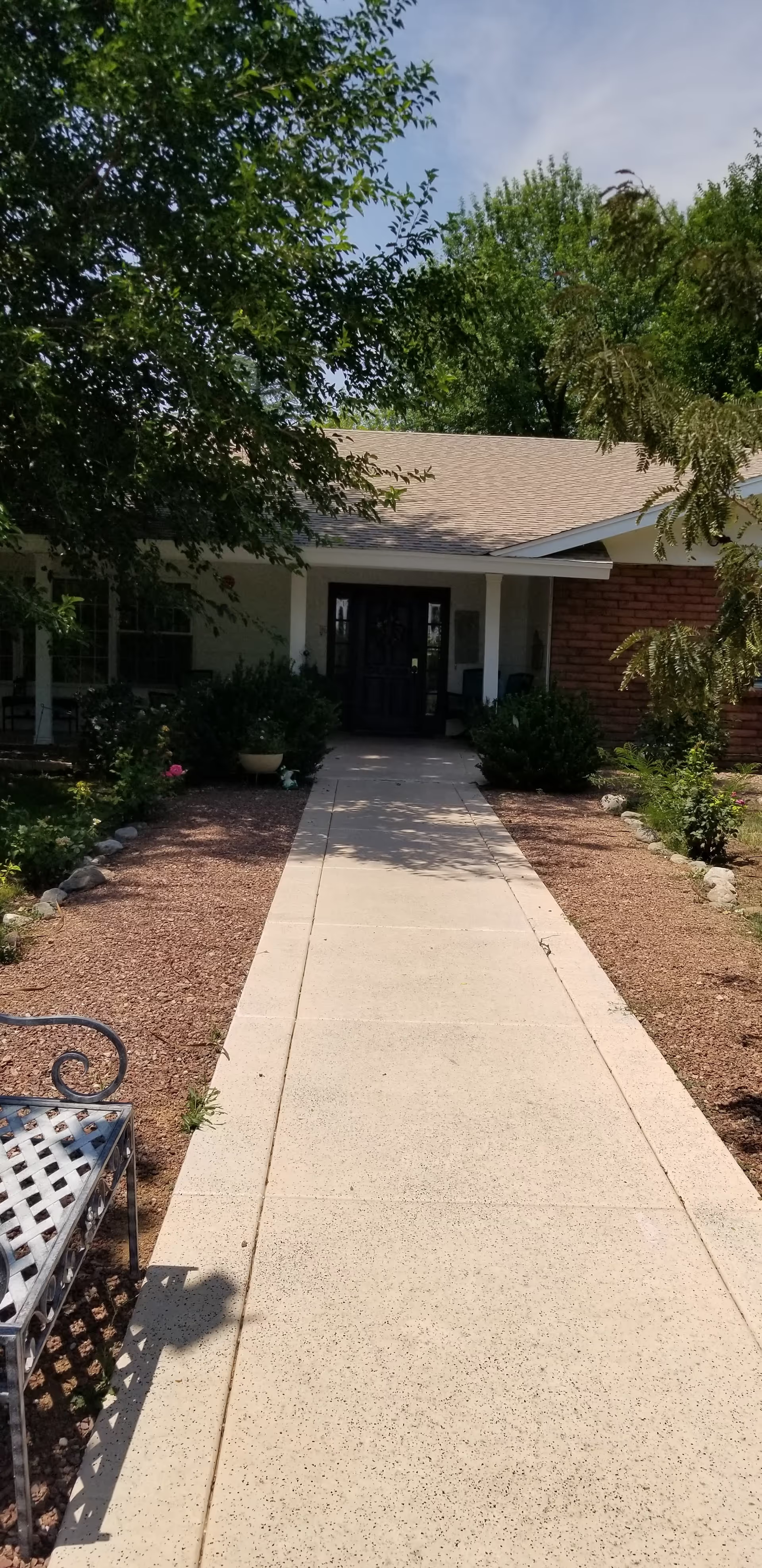
The Peaks presents a visually appealing campus and an active community life that many residents and families value. The facility's physical attributes are frequently praised: well-maintained grounds with mountain and tree-top views, private bungalows and balcony-equipped rooms, a wheelchair-accessible therapy pool, a salon, and an onsite rehabilitation gym. Independent living units and some lodge rooms receive particular mention for comfort and amenities. The proximity to a major hospital and availability of specialty teams such as wound care and physical therapy are notable operational strengths.
Dining and activities are consistent strengths for many residents. Reviewers often describe restaurant-style dining, varied menus, and standout meals (including weekly gourmet offerings). The activities program is broad and active — musical performances, live happy-hour music, film screenings, book clubs, speakers, field trips, exercise classes, and spiritual programming are regularly cited. Transportation for outings and an engaged resident council contribute to a social environment that many residents find stimulating and home-like.
Care quality and staff performance appear uneven. Numerous accounts highlight compassionate, attentive caregivers and capable nurses, with specific praise for quick assistance, polite CNAs, and staff who foster close resident relationships. At the same time, reviews also describe recurring operational weaknesses: staffing shortages and turnover, inconsistent clinical training, medication-administration issues, and delays in responding to medical needs. These patterns seem to affect assisted living and higher-acuity lodge care more often than independent living, producing a polarized set of experiences across families.
Management, communication, and business practices are another area of mixed feedback. Positive comments note helpful executive leadership, reachable administrators, and responsive maintenance. Conversely, many families describe poor phone responsiveness, limited nursing-station communication, and case-management friction. Billing and ancillary charges are a frequent concern: reviewers cite opaque a la carte fees, expectations to supply personal items, and restrictive pharmacy arrangements with perceived price issues. Several families also raised concerns about transparency around discharge or resident-removal decisions, and there are a small number of serious individual claims that families characterized as significant; these warrant direct inquiry by prospective families.
Notable patterns for prospective residents and families: independent living and the community’s social amenities tend to receive consistently favorable reports, while assisted-living and post-acute care experiences are more variable. Key operational risks raised across reviews include staffing consistency, clinical-training standards (especially for dementia care), medication management, and family communication. There are also intermittent sanitation and pest-control concerns referenced. Prospective families should consider on-site observation of staff–resident interactions, verification of current staffing ratios and dementia-care training, review of medication and pharmacy policies, and clear explanation of all fees and transition/discharge procedures before committing.