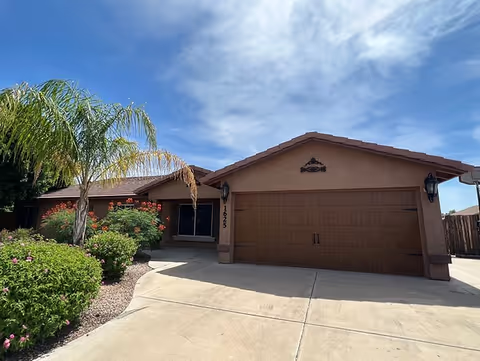
The reviews indicate a facility with notable strengths alongside operational concerns. Many families and an internal workforce describe compassionate, personalized caregiving delivered by friendly, state-certified staff and an engaged ownership team. Cleanliness and a well-maintained interior are commonly praised, and several reviewers cited an overall positive transition experience for residents, including on-site meal service that relieves families of cooking and shopping responsibilities. Management longevity, responsiveness, and a cohesive team culture are additional positives; the presence of a waitlist suggests local demand for the community.
Care and staff: Multiple accounts emphasize individualized attention, strong resident–staff relationships, and staff members who provide comfort and reassurance to families. State certification and a stable ownership commitment are listed as strengths. However, reviewers also raised concerns about staff conduct and variable professionalism, as well as delays in responding to resident calls for assistance. There are operational implications that suggest variability in day-to-day caregiving consistency—families should evaluate staffing levels, turnover, training practices, and response-time protocols during a visit.
Dining: Dining is a mixed picture. Positive comments highlight satisfying meals for some residents and the convenience of an on-site meal program. At the same time, reviewers describe inconsistent meal quality, taste issues, and menu choices that some families found inappropriate for older adults; there are also specific concerns about adherence to individual dietary restrictions and the nutritional balance of some offerings. Prospective residents should request sample menus, clarification on how dietary accommodations are handled, and examples of how special diets are documented and monitored.
Safety, clinical oversight, and property concerns: A few reviews raise serious operational concerns that go beyond preference—including allegations of medication mishandling and personal-property misappropriation. In addition, reviewers described delays in assistance and situations that suggest gaps in medication controls and response protocols. These items point to the need for explicit information about medication-administration procedures, inventory and security practices for resident belongings, incident-reporting processes, and regulatory or licensing compliance records.
Management, communication, and transparency: Management receives both praise for responsiveness and criticism for inconsistent communication or misleading statements. The coexistence of positive owner engagement and concerns about transparency suggests variability in how issues are communicated to families. During a tour, families should ask for written policies on complaints, staffing ratios, staff training, medication management, meal planning, and how the facility documents and responds to incidents.
Notable patterns and recommendations: Overall, the facility appears capable of providing compassionate, personalized care in a clean environment with an invested staff and owner. Persistent themes to validate further include consistency of meal service and dietary adherence, robustness of medication and property-controls, timeliness of staff responses, and clarity of management communication. Before making a placement decision, families should request references from current residents’ families, review recent inspection and complaint records, observe staff–resident interactions in common areas, tour dining areas during a meal, and ask for written protocols for the specific concerns noted above.