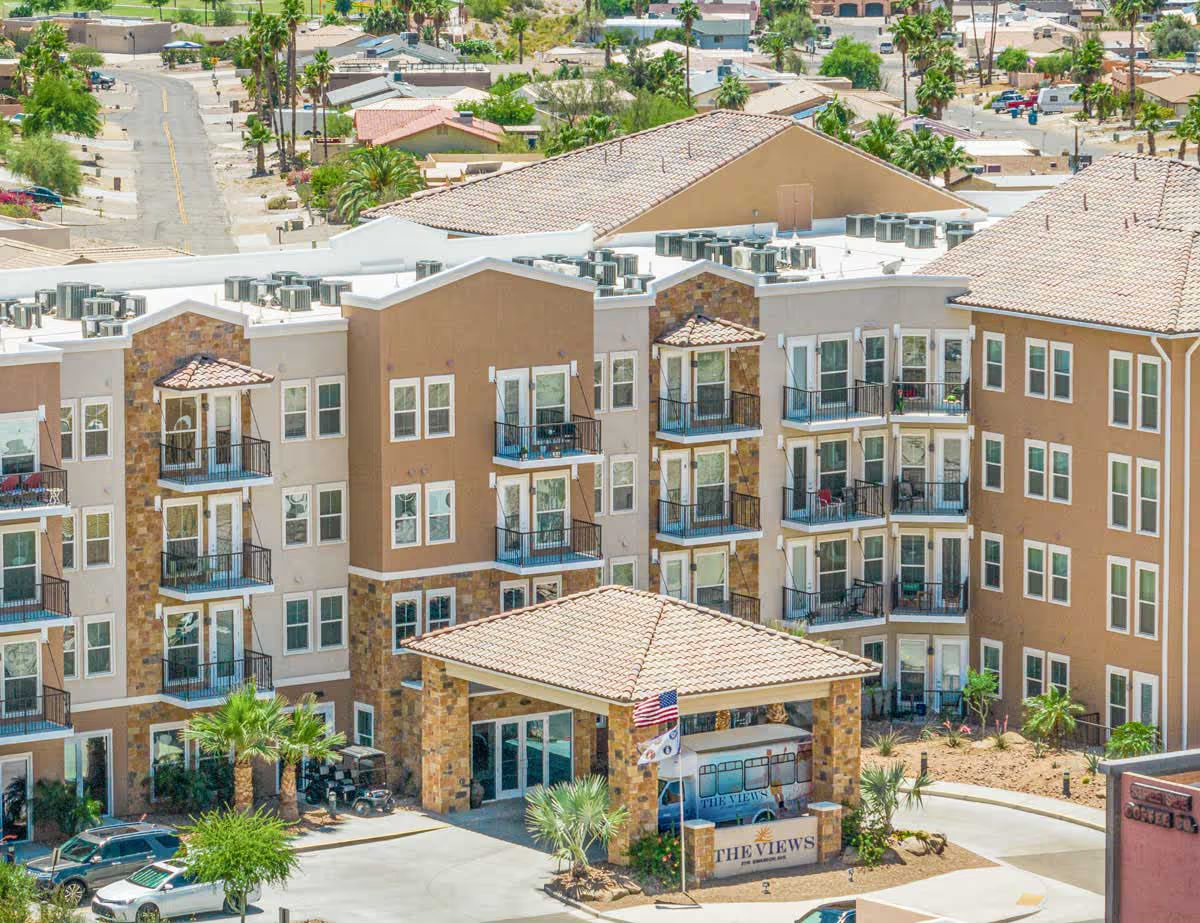
The Lingenfelter Center for Alzheimer's Care presents a mixed but generally favorable profile for families seeking memory-care and skilled rehabilitation services. Many reviewers highlight consistent strengths in direct resident care: staff and nursing assistants are frequently described as compassionate, respectful, and attentive; individualized care plans and feeding assistance are available; and rehabilitation services (PT/OT) are credited with tangible progress for residents. The facility supports family contact through visiting rooms and remote video calls, and several reviewers described a family-like atmosphere and a supportive workplace culture among caregivers.
Dining and activities are notable strengths. Multiple accounts reference well-prepared meals with choices and regular mealtime support for residents who need assistance. The program of daily activities appears broad and active, including outings, live groups, therapy animals, and in-house social programming that families valued. Facilities and grounds are regularly described as clean and well maintained, with outdoor patios, walkways, landscaped grounds, an on-site chapel and coffee shop, and spaces set up for family visits.
At the same time, reviews indicate operational and management-level issues that prospective families should probe. Staffing levels are described as variable, with some reviewers citing understaffing and coverage gaps; relatedly, there are recurring concerns about inconsistent staff conduct or tone toward residents. Several reviewers raised specific concerns about adherence to clinical instructions — for example, prescribed diets and medication-management practices — and about changes to medications or clinical decisions without clear family communication. A small but significant set of comments point to delays in incident response and limited follow-up or explanation from leadership when families raise concerns.
Physical layout and resource constraints appear in multiple comments: shared or dual rooms and repurposing of common areas (such as dining space) can affect privacy and the resident experience. A few reviewers described housekeeping or localized odor concerns. Cost perceptions vary; while some families view the center as good value, others perceive the pricing as high relative to expectations. Finally, there are isolated but serious claims about organizational transparency that prospective families may wish to clarify directly with administration.
In sum, the Lingenfelter Center demonstrates clear strengths in compassionate hands-on care, rehabilitation outcomes, meal support, and a robust activity program within a well-maintained campus. However, operational inconsistencies — particularly around staffing continuity, clinical-adherence practices, leadership communication, and space configuration — are recurring themes. Prospective residents and families should consider targeted questions about staffing ratios and schedules, medication and diet management protocols, incident response and family-notification procedures, room assignments and privacy, and a clear explanation of costs before making a placement decision.