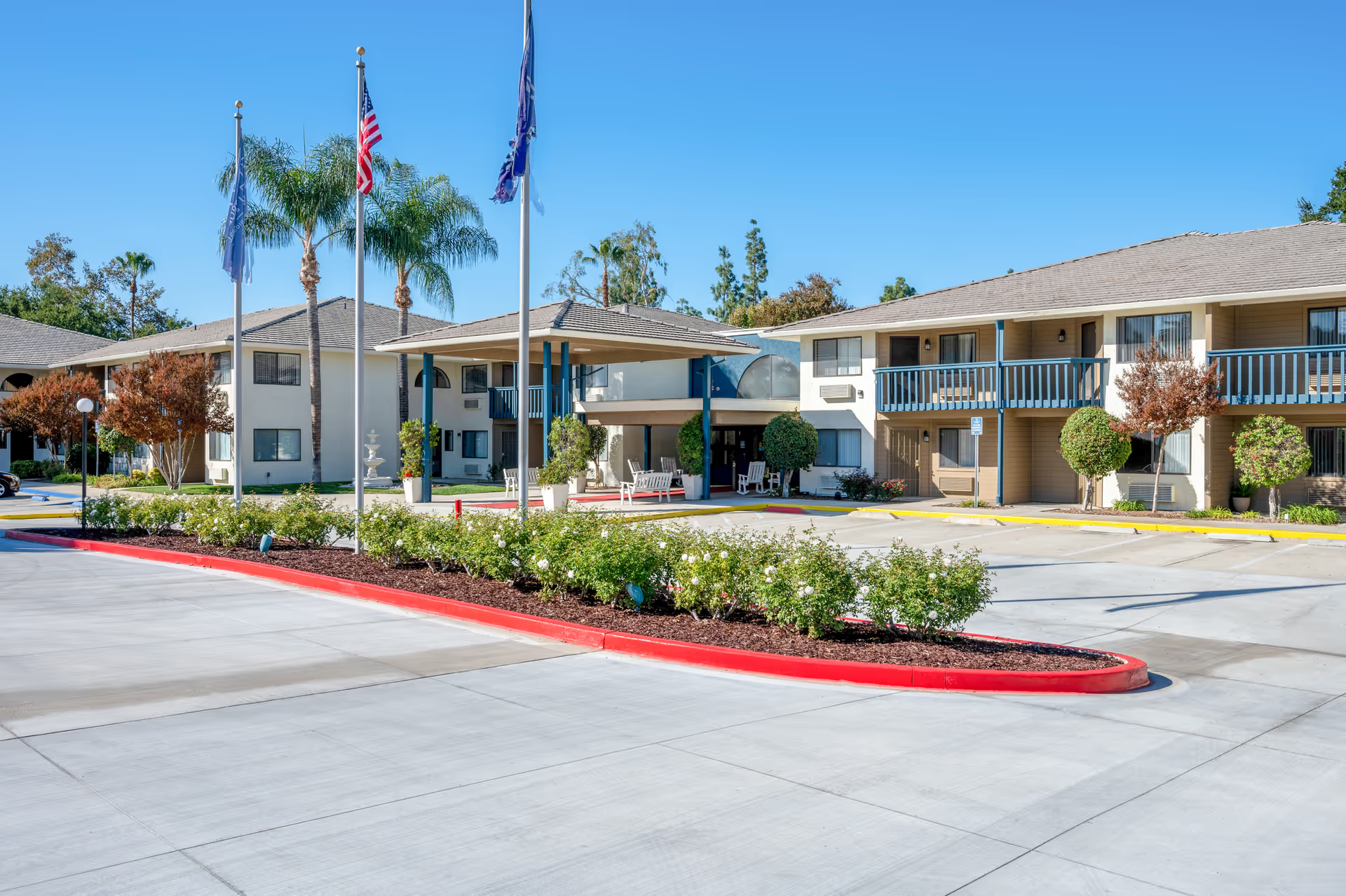
Reviewers describe a facility with a mix of clear strengths alongside recurring operational concerns. Positive comments center on direct care elements: staff are often characterized as compassionate and clinically professional, with assistance such as daily bathing and private bedrooms highlighted as consistent aspects of resident care. The facility is also described as clean and home-like, with on-site hospice coordination available for end-of-life needs. Families note structured communication practices including weekly updates, photos, and direct phone contact, and several reviewers found leadership — particularly the director — accessible. Infection-control measures related to COVID-19 were also cited as a strength.
At the same time, a pattern of staffing and supervision issues emerges. Multiple reviewers describe instances of inattentive staff behavior during shifts (e.g., prolonged personal conversations, screen-based activities, or passive TV-watching) that contributed to perceptions of insufficient supervision and attentiveness. These accounts combine into operational concerns about inconsistent staff professionalism and an inability to reliably deliver the advertised 24/7 level of care. Relatedly, some reviewers described conflicts and communication breakdowns with staff and ownership when families raised questions or sought clarifications.
Facility-level operational weaknesses extend to visitor access and management transparency. Several accounts indicate restrictive or inconsistently applied visitor policies, including situations where families felt locked out or told visitation was controlled by an authorized decision-maker. Those reports dovetail with perceptions of preferential treatment toward legal representatives (POAs) and questions about how decisions are communicated and enforced by ownership. Sanitation concerns were also raised in the context of shared items and beverage service, suggesting the need for clearer procedures and oversight in that area.
Activity programming and the day-to-day environment are described unevenly. While the setting is generally viewed as comfortable and clean, some reviewers observed limited resident engagement or activity facilitation during staff shifts, and others felt room layouts and excessive furnishings could create accessibility and safety obstacles for residents with mobility limitations. These observations point to opportunities for improvement in environmental design and activity staffing.
Practical guidance for prospective residents and families: during a visit, confirm staffing levels and schedules (including night coverage), ask to observe or review recent communication samples and infection-control protocols, inquire about visitor policies and how POA instructions are handled, and assess room layout for mobility needs. Request information on staff training and supervision practices, as well as how the facility documents and responds to family concerns. Overall, the facility offers several substantive care strengths, but families should verify operational consistency and management transparency to ensure those strengths are reliably delivered.